Desert Province of Faltyra
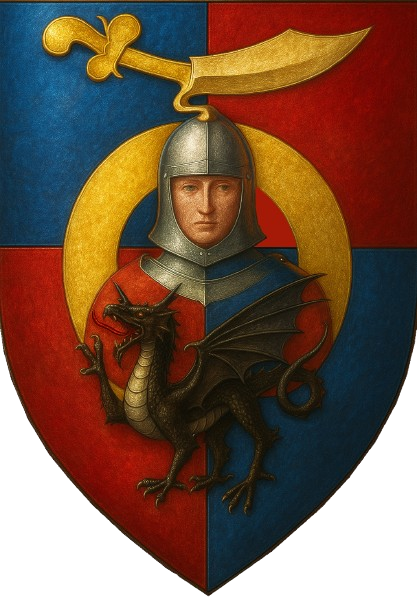
The Desert Province of Faltyra is not only the heart and soul of the Faltyr Empire but also the spiritual and political epicenter of a civilization that stretches across vast stretches of arid, sun-baked lands. This province is steeped in history and mythology, its arid expanse dotted with sacred ruins, ancient dragon temples, and forgotten monuments that whisper of a time when mighty draconic beings once ruled the skies.
Vhashkent, the capital city, stands as a symbol of the Empire's enduring strength and authority. Built amidst the harsh desert sands, this majestic city is renowned for its towering spires, built from the black stone found only in the deepest chasms of the desert. Vhashkent is home to the Imperial Throne, where the Emperor rules with both divine right and absolute power. The city's design is a testament to the mastery of the Empire's architects, with its grand avenues lined with statues of dragons, both living and long extinct, symbolizing the eternal bond between the Faltyr people and the creatures they once revered.
The province's most notable feature is its collection of sacred ruins, the remnants of a once-thriving civilization that predates the current Empire. These ruins are scattered across the province, many buried beneath the endless dunes, though some have been uncovered by time and the unyielding winds. It is said that within these ruins, ancient secrets about the rise of dragons and the early rulers of Faltyra lie waiting to be discovered. These ruins also house forgotten temples dedicated to the Great Dragon Lords, where worshippers come from far and wide to pay homage and seek guidance from the long-gone deities. The temples are known for their awe-inspiring architecture, massive stone structures adorned with intricate carvings of dragons and celestial beings that are said to have guided the empire in its formative years.
The dragon temples of Faltyra are a significant cultural and spiritual element of the province. These grand structures are not only places of worship but also centers of learning and political influence. The Faltyr Empire is known for its unique relationship with dragons, once believed to be messengers of the gods. Some say that the emperors themselves trace their lineage back to the dragons, a belief that strengthens their divine right to rule. Within these temples, dragon priests offer cryptic prophecies and conduct sacred rituals that are believed to maintain the harmony between the mortal world and the celestial beings.
Despite the harsh desert environment, Faltyra is also an agricultural wonder, where oasis cities thrive, nourished by underground rivers and carefully managed irrigation systems that date back to ancient times. These oasis cities serve as vital trade hubs, connecting the Faltyr Empire with neighboring realms. The desert is not just a barren wasteland but a vital lifeblood for the Empire, providing precious minerals, spices, and rare resources found nowhere else in the world.
The culture of Faltyra is deeply intertwined with its harsh landscape. The people of the province are known for their resilience, adaptability, and spiritual devotion. They live in harmony with the desert's unforgiving nature, drawing strength from the same ancient forces that shaped the land and their empire. Pilgrimages to the sacred ruins and dragon temples are common, and the people celebrate festivals dedicated to the dragons, marking the changing of seasons and honoring the spirits of the desert.
The Desert Province of Faltyra continues to be a place of great mystery and power, where the past and present intertwine in the heat of the sun and the whisper of the winds across the sands. As the seat of imperial power, it is a realm where faith, history, and politics converge, creating a land that is as enigmatic as it is revered.
Geography
The Desert Province of Faltyra is a vast, untamed expanse that stretches across the southern reaches of the Faltyr Empire, a region defined by its harsh desert climate and rugged landscapes. From its endless rolling sand dunes to its sun-scorched wastelands, Faltyra is a land of extremes, where life clings to existence against the backdrop of an unforgiving environment. Despite its apparent desolation, the province holds secrets beneath its surface, ancient ruins, sacred temples, and vital resources that have allowed the Faltyr people to thrive for centuries.
Terrain: The heart of Faltyra is dominated by expansive sand dunes and barren desert plains, which form an almost impenetrable barrier between the province and the outside world. These deserts, which stretch across miles of land, seem endless, creating an oppressive and isolating landscape. Yet, even in this desolation, there are signs of life. Rugged mountain ranges rise from the flat desert floor, and jagged rocky plateaus dot the horizon, offering shelter and natural fortifications for the province's inhabitants.
While much of Faltyra is inhospitable, the terrain is not without its pockets of vitality. The northern desert is known for its high dunes and blistering heat, but to the south, the land is crisscrossed with a network of underground rivers and hidden oases, which provide the lifeblood for the region. These hidden water sources are the key to the province's survival, creating strips of arable land amidst the desert wilderness. This stark contrast between barren desert and fertile oasis creates a landscape of extremes that is both beautiful and treacherous.
Oases and Fertile Land: The oases of Faltyra are the province's most valuable resources. These rare pockets of greenery, nourished by subterranean water supplies, are essential to the survival of the Faltyr people. Surrounded by towering date palms, lush greenery, and small plots of farmland, the oases are the centers of life in this otherwise desolate province. They are often the site of bustling trade routes, where merchants travel for days through the desert to bring goods from distant lands, and where the capital, Vhashkent, is supplied with food and other necessities.
Fertile lands around these oases are carefully cultivated, producing crops of grain, fruits, and vegetables that are sent across the empire. In addition to farming, these areas also support herding, with flocks of camels, goats, and the legendary desert dragons being raised for both practical and ceremonial purposes. The oases are more than just agricultural centers, they are the heartbeat of the province, drawing people from across the empire to settle and trade. The abundance of life in these spots is a stark contrast to the dry, windswept sands that surround them, symbolizing the delicate balance of life that exists in this harsh land.
Sacred Ruins and Dragon Temples: Scattered across the vast desert are the sacred ruins of ancient cities and long-forgotten temples, relics of a bygone age when dragons ruled the skies and the land. These ruins, half-buried in sand and dust, are reminders of the province's deep connection to the Dragonwright faith. The temples, though worn by centuries of erosion, remain standing as holy sites for pilgrims from across the empire. These sacred spaces are dedicated to the worship of dragons and dragonkind, and they are integral to the spiritual identity of the Faltyr people.
The dragon temples of Faltyra are immense, stone structures adorned with carvings and mosaics depicting the ancient dragon lords who once commanded the skies. These temples are not only places of worship but also serve as military strongholds, built to defend against the many threats that have plagued the region throughout history. The temples, though often crumbling, are still seen as powerful symbols of the divine and political might of the Empire. It is said that the high priests of the Dragonwright faith, who hold great influence within the empire, often reside in these temples, offering both spiritual guidance and political counsel to the emperor.
Many of the sacred sites in Faltyra are believed to hold mystical powers, and the ruins are often the focus of both religious pilgrimage and archaeological exploration. Among the most famous of these ancient ruins are the Caverns of Vaelkor, deep within the Wyrmgate Mountains, where it is said that the first Dragon Emperor received the blessing of the dragon gods. Pilgrims journey to these sites to seek wisdom and insight, while treasure hunters scour the desert in search of lost relics and artifacts that might uncover the long-forgotten history of the land.
All of these features, sacred temples, dragon ruins, and hidden oases, combine to create a geography that is not only beautiful but full of rich history and deep spiritual significance. The land of Faltyra remains a symbol of resilience and strength, where the people, with their unwavering faith and resourcefulness, continue to thrive amidst the harshest of conditions.
Culture and Society
The culture of the Desert Province of Faltyra is deeply rooted in the Dragonwright faith, a religion that permeates every aspect of daily life, from the sacred to the secular. The people of Faltyra live in awe of the dragons, whom they consider divine beings, and view the Emperor as the earthly incarnation of these dragon gods. This reverence for dragons shapes not only their spiritual practices but also their social structure, their festivals, and their very identity as a people.
Cultural Practices: The culture of Faltyra is one of devotion, honor, and ritual. The people celebrate numerous festivals dedicated to the dragons, with each season marked by different ceremonies to appease and honor the dragon gods. The most important of these celebrations takes place during the Festival of Fire and Scales, when the Emperor leads a grand procession to the Dragon Temples. This festival is a spectacular display of both religious fervor and imperial power, featuring dragon-inspired dances, sacrificial rites, and the offering of rare treasures to the gods. Public ceremonies are often elaborate affairs, held in the city's temples or in the desert at ancient ruins where the spirits of dragons are believed to linger. These rituals are not only spiritual but also serve as a way to affirm the power of the Emperor and his divine right to rule.
Dragon magic plays a significant role in daily life in Faltyra. The Dragon Priests wield powerful magic derived from their connection to the dragons, using it for everything from healing the sick to ensuring good harvests in the oasis farms. Military leaders employ dragon-infused magic in battle, enhancing the strength and speed of their soldiers with enchantments. It is also said that the Emperor himself possesses some level of dragon magic, a sign of his direct connection to the gods.
Throughout the province, from the grand halls of Vhashkent to the small oasis villages, the practice of dragon magic is common. It is taught from a young age, and children often grow up learning basic rituals and incantations in order to respect the dragons and their divine power. The bond between the people and the dragons is not just religious but practical, with dragons seen as protectors, healers, and sources of divine inspiration.
Social Structure: Faltyran society is deeply hierarchical, with a rigid structure that reflects both the political order of the Faltyr Empire and the sacred order of the Dragonwright faith. At the top stands the Emperor, the supreme ruler and the living embodiment of the dragons themselves. The Emperor is both a political leader and a spiritual figure, whose every action is seen as the will of the dragons. The Emperor is believed to commune directly with the dragons and is the sole individual capable of maintaining balance between the mortal realm and the divine.
Below the Emperor, the Dragon Priests hold significant power, both as spiritual leaders and as enforcers of the Emperor's will. These priests are the intermediaries between the dragons and the people, and their authority is second only to the Emperor himself. They oversee the sacred temples, perform the most important rituals, and advise the Emperor on spiritual matters. In times of crisis, the Dragon Priests are often the ones who issue commands, as their connection to the dragons is thought to grant them divine insight.
Next in the social hierarchy are the noble houses, each controlling different regions of the province. These noble families wield significant influence, governing their lands and collecting taxes from the people who live there. Many of the noble houses are closely tied to the Emperor, often through blood relations or sacred bonds with the Dragon Priests. These noble houses are responsible for the upkeep of the temples and for organizing local festivals and ceremonies. They also maintain private armies, ensuring the protection of the province's borders and the stability of the empire.
At the bottom of the social ladder are the common people, who form the backbone of Faltyran society. These individuals work in the fields around the oasis, cultivating crops to sustain the empire, or they work in the bustling markets and crafting workshops, producing the goods that fuel the empire's economy. Many of the common folk are devoted to the practice of trade, traveling great distances to buy and sell goods in the Grand Bazaar of Vhashkent. These people, though at the bottom of the social hierarchy, are the lifeblood of the province, and their labor and devotion to the Dragonwright faith are essential to the functioning of the empire.
Nomadic Tribes and Fluid Governance: In contrast to the structured society of the cities, nomadic tribes also roam the deserts of Faltyra, living outside the rigid social order of the urban centers. These tribes are made up of wandering herders and merchants who follow ancient patterns of migration across the desert in search of oases, pasture, and trade opportunities. While these tribes are generally not part of the formal governance structure of the empire, they are still considered loyal to the Emperor and adhere to the Dragonwright faith.
These nomads often live in a more decentralized form of governance, with chieftains or tribal leaders taking charge. These leaders are chosen based on merit, wisdom, and their connection to the dragons, and they are respected by both the nomads and the imperial authorities. Though they are not directly involved in the politics of the empire, the nomadic tribes play an important role in maintaining the flow of trade and resources across the desert. Their fluid and decentralized society offers a stark contrast to the highly structured and hierarchical nature of the cities and noble houses.
Social Stratification: Faltyran society is marked by a clear divide between the elite and the common folk, with a complex system of social stratification that separates the Emperor, Dragon Priests, and noble houses from the common people. The Emperor, being both a political and spiritual figure, stands at the very top of the social pyramid. Beneath him are the Dragon Priests, who wield considerable influence both spiritually and politically. The noble families come next, holding power over land and resources, while the common people form the vast majority of the population, living and working to support the empire.
While the social hierarchy is rigid, there is still a degree of mobility, particularly for those who show great devotion to the Dragonwright faith or possess extraordinary talent in trade, craftsmanship, or magic. Those who excel in these areas can rise in status, gaining favor from the Dragon Priests or even the Emperor himself. However, such upward mobility is rare, and the majority of the population lives within the confines of their social class.
Social Structure: The society of Faltyra is largely shaped by the Dragonwright faith and the strict social hierarchy that comes with it. At the top of this structure are the Emperor and the Dragon Priests, followed by the noble houses that govern the various provinces and regions within Faltyra. The majority of the population consists of the common folk, including farmers, traders, and craftsmen, whose livelihoods are deeply tied to the land and the ongoing trade that flows through Vhashkent.
- Plains Trolls: The Plains Trolls make up a large portion of the population, especially in the western and southern desert regions. These Trolls are renowned for their wisdom and survival skills, and many are traders, guides, or caravan leaders who traverse the vast desert in search of goods and resources. Their lifestyle is heavily influenced by the dragon guardians of the desert, as they view the dragons as protectors of the land and sources of spiritual guidance. The Plains Trolls often live in nomadic tribes, settling temporarily near the oases before moving on with the changing seasons.
- Mountain Trolls: The Mountain Trolls are primarily concentrated in the northern and eastern regions of Faltyra, where the terrain is rugged and the oases are fewer but still vital. These Trolls are known for their strength, fortitude, and resilience, qualities that have helped them endure the harsh desert environment. Many Mountain Trolls work as artisans, blacksmiths, or soldiers, contributing to the empire's wealth with their craftsmanship and military prowess. They hold a special reverence for the dragons of fire and strength, believing these dragons grant them the strength to withstand the desert's grueling conditions.
- Vhashkent and the Capital's Diversity: The capital city of Vhashkent serves as the central hub for commerce, culture, and governance. Its population is diverse, made up of not only Trolls but also traders and artisans from across the empire. The Grand Bazaar in Vhashkent is a melting pot of cultures, with merchants selling spices, textiles, and magical items. Many foreign diplomats, scholars, and mercenaries also reside in the capital, attracted by the city's importance as a cultural and political center. Vhashkent serves as a gathering place for the elites of the Faltyr Empire, who come to conduct business, attend religious ceremonies, and celebrate the sacred Dragonwright festivals.
- Smaller Settlements: Throughout the desert plains, smaller settlements dot the landscape, usually situated near one of the oases. These settlements are essential to the agricultural and commercial life of Faltyra, as they provide the raw materials, crops, and goods necessary for survival in the harsh desert. Many of these smaller communities are made up of nomadic tribes that have settled temporarily, or artisan workshops producing luxury items such as textiles, jewelry, and pottery. These communities often function as self-sustaining hubs, relying on trade with larger cities like Vhashkent for goods that cannot be produced locally.
- Occupation and Economy: The majority of the population in Faltyra works in occupations directly tied to the desert landscape. Most commoners are involved in agriculture, particularly in the fertile regions surrounding the oases, where crops like grain, fruit, and vegetables are grown. The region is also known for its spices and herbs, which are highly prized across the empire.
Economy and Agriculture
The economy of the Desert Province of Faltyra is a complex and resilient system, driven by a combination of agriculture, trade, and resource extraction. Despite its overwhelming desert landscape, the province is far from barren. The hidden oases, fertile lands, and the people's deep knowledge of the desert allow Faltyra to sustain itself and maintain its position as one of the most powerful provinces in the Faltyr Empire. The economy thrives on a careful balance of the land's natural resources, craftsmanship, and the magical power imbued by the revered dragons.
Agriculture: The oases are the heart of Faltyra's agricultural sector, where life flourishes in otherwise inhospitable terrain. These oases provide the water necessary to sustain a wide variety of crops and livestock. The most common crops grown in these fertile patches include grain, particularly wheat and barley, along with fruit, such as dates, figs, and citrus, and vegetables like onions, tomatoes, and cucumbers. These agricultural goods are harvested, processed, and transported to the rest of the empire, ensuring a steady food supply that supports the empire's vast population.
The cultivation of spices is another key aspect of Faltyra's agricultural output. Rare and highly sought-after spices, such as saffron, cinnamon, and cumin, are grown in the more fertile areas near the oases. These spices are prized not only for their culinary uses but also for their potent medicinal properties, and they form an important part of Faltyra's export economy. Along with spices, rare herbs with magical or healing properties are cultivated and harvested in secretive groves, known only to the Dragon Priests and select herbalists. These herbs are used in both everyday healing and powerful rituals, making them essential to both the people's well-being and the province's spiritual practices.
Livestock is another important part of Faltyra's agricultural economy. Herds of camels, goats, and desert dragons are raised in the oases, providing meat, milk, and leather, as well as symbolic ties to the dragons of the faith. The desert dragons, which are revered as sacred creatures, are primarily kept for ceremonial purposes, but their skins and bones are often used in the crafting of powerful magical items. Livestock serves as an important resource for both trade and domestic consumption.
Craftsmanship and Trade: The city of Vhashkent, as the capital of the province, stands at the center of the Faltyran economy, functioning as both a political capital and a major trading hub. The city's position at the crossroads of desert trade routes ensures a constant flow of goods into the city, making it the primary center for commerce in Faltyra. Vhashkent is renowned for its production of luxury textiles, often woven with intricate dragon motifs and dyed in vibrant, desert-inspired colors. These textiles are highly prized not only for their beauty but also for the high quality of the materials, which are sourced from the oasis farms and crafted by the skilled artisans of Vhashkent.
Dragon-related artifacts are another major export. These items, imbued with the power of dragon magic, range from ceremonial objects such as dragon-scaled cloaks and dragon-blessed chalices to more practical items like dragon-forged swords and amulets that provide protection or enhance strength. These dragon-infused objects are highly sought after, not only within the Faltyr Empire but across the known world. The city is also a hub for the creation and trade of silks and gemstones, the latter often mined from the desert's hidden veins of precious minerals.
The desert itself is a rich source of rare minerals and metals, including iron, gold, silver, and precious gems, which are extracted from the desert's rocky terrain. These metals and gems are highly valued, both for their use in crafting weapons and tools and for their magical properties when combined with dragon magic. Artisans in Faltyra are skilled in working these materials, creating intricate tools, weapons, and magical objects for both practical and ceremonial use. The city's craftsmen are known for their ability to craft dragon-forged steel, weapons and armor of unmatched quality and infused with the essence of dragonkind.
Additionally, the Grand Bazaar in Vhashkent is a vibrant marketplace, where exotic goods from the desert and beyond are traded. Spices, silks, ceremonial dragon items, and magical trinkets fill the stalls, attracting traders from across the empire and distant lands. Merchants and artisans from outside Faltyra come to Vhashkent to sell rare goods, bringing items that are unavailable in the desert, such as textiles from the far east or enchanted objects from across the sea. In return, Faltyra exports its luxury goods, dragon artifacts, and desert treasures to other parts of the Faltyr Empire and beyond.
Dragon Magic and Artifacts: The most valuable and sought-after trade goods in the Desert Province of Faltyra are those imbued with the power of dragon magic. These artifacts are seen not only as powerful tools but also as sacred objects, enhancing their value beyond mere material wealth. Dragon-forged weapons, such as swords and spears, are prized by military commanders and adventurers alike, their steel infused with the strength and ferocity of dragons. Amulets, rings, and charms created from dragon scales or imbued with dragon fire are worn by the elite of the empire, offering protection and enhancing the wearer's magical abilities.
Sacred texts written by the Dragon Priests also hold immense value. These texts, often written on dragon-hide parchment and bound with precious gems, contain ancient knowledge and rituals that can enhance a person's connection to the dragon gods. These texts are rare and highly coveted, both for their spiritual significance and their ability to increase magical power. The practice of creating and trading these magical and spiritual items forms an essential part of the economy, intertwining the material and divine in the daily lives of the people.
In Faltyra, the economy is not just a means of sustenance but also a reflection of the deep spiritual connection between the people and the dragons. The exchange of dragon-infused artifacts and magical items ensures that the power of the dragons continues to flow through the province, sustaining both its wealth and its connection to the divine.
Military and Defense
The military of the Desert Province of Faltyra is the backbone of the empire's defense and expansion efforts, playing a crucial role in securing the province's borders, maintaining internal stability, and safeguarding the spiritual heart of the empire, the capital city of Vhashkent. Given the province's harsh desert environment and the strategic importance of Vhashkent, the Faltyran military is a highly trained, versatile, and formidable force, capable of adapting to both the desert's challenges and the empire's broader ambitions.
Dragon Magic in Warfare: One of the defining features of the Faltyran military is the use of dragon magic in combat. The Imperial Guard, the elite military unit stationed in Vhashkent, is trained not only in conventional warfare but also in the arcane arts tied to the Dragonwright faith. These highly specialized soldiers are equipped with dragon-infused armor and weapons, each piece crafted to channel the power of dragons. The armor is made from dragon scales and enchanted with protective wards that make the soldiers resilient to both physical and magical attacks. Their weapons, dragon-forged swords, spears, and bows, are imbued with the strength of dragon fire and the ability to cut through even the toughest of enemies.
The Imperial Guard is tasked with performing critical operations, such as defending the sacred dragon temples, quelling uprisings, and engaging in desert warfare. They are the first line of defense against invaders, internal dissent, and threats from both the mortal realm and the mystical forces of the desert. Their training in both combat and magic makes them formidable opponents, able to use spells and enchantments to manipulate the battlefield. They are also entrusted with guarding the Emperor, ensuring that the seat of power remains secure at all costs.
As the most prestigious unit in the Faltyran military, the Imperial Guard is known for its discipline and unwavering loyalty to the Emperor, whose divine connection to the dragons ensures that their actions are always in alignment with the will of the gods. The Imperial Guard's presence is felt throughout the capital and the empire, symbolizing both the military might and the spiritual authority of Faltyra.
Warbeasts: The warbeasts of Faltyra are legendary creatures, crucial to both the defense of the capital and the province's military campaigns. These beasts are specially trained for the harsh desert environment, where survival is a constant challenge and every advantage counts. Among the most feared of these creatures are the giant raptors, desert tigers, and the sacred desert dragons, each serving a unique role in warfare.
Giant raptors are used for reconnaissance and rapid attacks, their incredible speed and agility making them perfect for desert skirmishes. These raptors can cover vast distances across the shifting sands, scouting enemy positions and launching lightning-fast attacks before retreating into the dunes. They are often used by the Imperial Guard for hit-and-run tactics and to strike at the heart of enemy forces before they have a chance to retaliate.
Desert tigers are powerful and fierce predators that are bred specifically for combat. Their keen senses and ability to track prey across the vast desert make them invaluable in both offensive and defensive operations. These tigers are often used to patrol the desert borders, ensuring that no enemy force can approach undetected. In battle, they serve as shock troops, charging into the fray with unparalleled ferocity, tearing through enemy lines and striking fear into the hearts of any who face them.
The desert dragons are the most revered and powerful warbeasts in the Faltyran military. These majestic creatures are seen as living embodiments of the dragons' divine power and are often used in critical military operations. Though rare, the desert dragons are capable of devastating attacks, from fire-breathing blasts that can scorch entire enemy battalions to winged assaults that rain down destruction from above. The sight of a desert dragon soaring over the battlefield is enough to instill terror in even the most hardened opponents.
Cavalry and Rhino Riders: The Rhino Riders are one of Faltyra's most elite and fearsome cavalry units, known for their use of rhinos in combat. These massive creatures are specially trained for desert warfare, where their strength, speed, and endurance give them a distinct advantage. The rhinos are bred to withstand the harsh desert conditions, capable of traversing both the burning sands and rocky terrain with ease. Their thick hides provide natural protection, while their formidable horns make them an ideal weapon in charging enemy forces.
Rhino Riders are used primarily for heavy cavalry charges, smashing through enemy lines with unstoppable force. Mounted on these colossal beasts, the riders are armed with dragon-infused spears and scimitars, which are capable of cutting down enemy soldiers and beasts alike. The Rhino Riders are not only an offensive force but also serve as the shock troops of the Faltyran military, breaking through enemy defenses and creating chaos in the ranks. Their charges, backed by the power of the rhinos, are often the deciding factor in battles, capable of turning the tide in Faltyra's favor.
The Rhino Riders also serve a vital role in the defense of Vhashkent, patrolling the city's outer walls and surrounding desert borders, where they act as the first line of defense against any potential invasion. Their presence instills confidence in the people, as the rhinos are seen as symbols of strength and resilience, much like the desert itself.
Desert Warfare and Tactics: The military of Faltyra is uniquely adapted to desert warfare, where the challenges of terrain, weather, and resources are constant factors. Faltyran soldiers are trained to endure the harsh desert heat, with many undergoing grueling survival training in the unforgiving dunes. They are taught to use the desert's natural features, sandstorms, rocky outcrops, and shifting dunes, to their advantage, conducting guerrilla tactics and ambushes that take full advantage of the terrain.
Additionally, the Faltyran military employs a wide range of magical strategies in battle, using dragon magic to create illusions, enhance the physical abilities of their soldiers, and manipulate the environment to hinder enemy movements. Sandstorms, conjured by powerful mages, can disorient and blind foes, while fire magic can turn the desert landscape into a hellish inferno. These magical tactics, combined with the physical prowess of the Imperial Guard, warbeasts, and Rhino Riders, make the Faltyran military a force to be reckoned with in both offensive and defensive operations.
In the unforgiving desert of Faltyra, where survival is a constant challenge, the military stands as both a shield and a sword, ready to defend the capital, expand the empire, and ensure that the power of the Dragonwright faith endures for generations to come.
The Dragonwright Faith: Core of the Faltyr Empire
The Dragonwright faith is not merely a religion in the Desert Province of Faltyra, it is the very essence of life. It governs how the people live, interact with the world around them, and understand their place in the grand order of the universe. The faith is deeply woven into every aspect of society, from politics to personal conduct, and its influence extends far beyond mere spiritual practice. It forms the bedrock of the Faltyr Empire's unity, guiding its military, governance, economy, and cultural identity.
At the heart of the Dragonwright faith lies the worship of the dragons, revered not just as ancient, mythical beasts but as living gods whose essence is intertwined with the forces that sustain life itself. Dragons embody the most vital forces in the world: strength, wisdom, fire, and protection. They are the ultimate symbols of both the spiritual and physical aspects of life, representing the ideal qualities that followers strive to embody.
Throughout the Faltyr Empire, the reverence for dragons is more than just an act of worship, it is a way of life, shaping the customs, rituals, and societal norms of every region. Each province venerates a different aspect of the dragon, creating a diverse but unified belief system that adapts to the unique geography, culture, and needs of each region.
The Role of the Dragon Priests: At the spiritual heart of Faltyra are the Dragon Priests, an elite class of religious leaders who hold significant sway over both spiritual and political affairs. These priests are not just the keepers of sacred knowledge but also the advisors to the Emperor, ensuring that the ruler's decisions align with the divine will of the dragons. The priests interpret the dragons' teachings, perform sacred rituals, and guide the people in maintaining a strong connection to the divine. Their influence stretches across the empire, as they ensure that the laws, military strategies, and economic practices are all in line with Dragonwright principles.
The dragon temples scattered throughout the empire are not only places of worship but also centers of spiritual learning, where the faithful come to offer prayers, receive guidance, and seek knowledge of the dragons' will. These temples are often located at sites of great historical or mystical significance, where the dragons are believed to have once walked or where their divine essence still lingers in the land.
Regional Variations in Worship: While the central tenets of the Dragonwright faith remain consistent throughout the empire, each province's specific reverence for the dragons reflects its local culture and geography. The Mountain Trolls, for instance, revere the dragons of strength and fire, associating them with the qualities of fortitude, power, and unrelenting endurance. For these people, the dragons are symbols of martial prowess, endurance in battle, and the force that allows them to endure the harshest of environments. Their spiritual practices focus on invoking the dragons for courage and mastery over the element of fire, which is central to their rituals of strength and battle.
In contrast, the Plains Trolls honor dragons of wisdom and protection, believing the dragons are guardians of the desert's many mysteries. The Plains Trolls view the dragons as protectors who not only give them the strength to survive but also offer the wisdom necessary to navigate the desert's dangers. For these followers, the dragon gods are teachers, offering insight into the desert's shifting landscape, its challenges, and its inherent beauty. Their practices are centered on ensuring balance and harmony with the natural world, invoking the dragons to guide them through changing seasons and to provide protection from both physical and spiritual threats.
Across the provinces, the Dragonwright faith adapts, but the core principle remains the same: by aligning oneself with the dragons, an individual can unlock their own potential, finding both purpose and fulfillment in their daily life. The dragon gods are seen as both protectors and teachers, shaping the people's lives in accordance with the divine will and ensuring the prosperity of the Faltyr Empire.
The Academy of Vhashkent: The Faltyr Empire places immense value on the pursuit of knowledge, especially in matters related to the Dragonwright faith and the mystical powers of the dragons. As the empire continues to expand, the capital city of Vhashkent has become the epicenter of intellectual growth, attracting scholars, priests, and magicians from across the world. Within Vhashkent's sprawling academy, students study everything from ancient dragon lore to arcane magic, seeking to unravel the mysteries of the dragons' true nature and their role in shaping the world.
The academy houses some of the most prestigious libraries in the known world, containing vast collections of ancient texts and sacred manuscripts detailing the history of the dragons, their spiritual significance, and their impact on the development of Faltyra. The Aeldar Tribe, known for their advanced understanding of magic, provides much of the foundational knowledge that forms the basis of the empire's magical education. Scholars at the academy work alongside Dragon Priests to unlock new secrets of dragon magic, elemental forces, and the runes that enhance spellcasting abilities.
Arcane Knowledge and Dragon Magic: The Dragonwright faith is deeply intertwined with arcane knowledge, particularly the use of ritualistic spells and dragon-infused magic. Dragon Priests and sorcerers work in tandem to study and practice dragon magic, focusing on how to harness the dragons' power to influence both the physical and mystical worlds. Rituals that invoke the dragons' presence are highly structured, often requiring precise chants, offerings, and incantations that align the caster with the elemental forces of fire, wind, and earth.
Among the most prized knowledge held within the academy are the ancient dragon rituals, which allow practitioners to channel the essence of dragons into their magic. Scholars study these rituals closely, seeking to improve their understanding of the elemental forces and unlock new ways to wield dragon magic. Over time, the knowledge passed down through generations has led to the development of powerful spells that not only serve as a magical defense for the empire but also enhance the empire's connection to the dragons.
Dragon Magic in Society: The influence of dragon magic extends far beyond the academy. It is interwoven into every aspect of Faltyran life. From the most simple rituals performed at the dragon temples to the grand military strategies employed by the Emperor, dragon magic plays a pivotal role in shaping the empire's successes. It is used in healing, ritual combat, temple rituals, and even political decisions, as the Dragon Priests are often called upon to provide guidance or cast spells that influence the flow of power.
As the Faltyr Empire continues to grow, its spiritual and magical connections to the dragons remain its greatest strength, ensuring that the faith endures through both times of peace and conflict. In the Dragonwright faith, the people of Faltyra find not just their purpose but their divine mandate, which unites them under the banner of the dragons, sustaining their empire for generations to come.
Law in the Faltyr Empire
The Faltyr Empire is governed by a rigid and comprehensive legal system, intricately linked to the Dragonwright faith. The laws of the empire are designed not only to maintain political order but also to uphold the spiritual and divine mandates of the Dragon gods. The legal framework of Faltyra seeks to ensure the stability of the realm and reinforce the empire's sacred duty to the dragons, whose will is seen as the ultimate law.
The legal system is highly hierarchical, with authority granted at various levels depending on the nature of the dispute. However, at all levels, the focus remains firmly on loyalty to the Emperor and the dragons, whose influence permeates both legal and societal matters.
- The Foundation of Law: The Dragonwright Doctrine: At the very core of the Faltyr Empire's legal system lies the Dragonwright Doctrine, a spiritual and legal framework that places the dragons as the ultimate arbiters of right and wrong. In this system, the dragons are not just divine beings, they are living gods whose very essence governs all aspects of life. The Emperor, as the living embodiment of a dragon, is the supreme ruler and enforcer of the law, with his decrees considered sacred and beyond reproach.
- Divine Right: The Emperor is regarded as the chosen of the dragons, the mortal representation of divine will. His decrees are seen as sacred and divinely inspired. To challenge the Emperor's authority is to defy the dragons themselves, an act punishable by severe consequences, including death or exile.
- Dragonkind as Lawgivers: Dragon Priests and Dragonlords are not only the spiritual leaders of the faith but also judges and enforcers of divine law. They interpret the will of the dragons, ensuring that the laws of the empire align with the teachings of the faith. They preside over legal matters in both religious and secular contexts, particularly in cases involving spiritual violations or offenses against the Dragonwright faith.
- Balance and Order: At the heart of the Dragonwright Doctrine is a focus on balance, order, and strength. Dragons are seen as the protectors of balance in the world, and the laws of the empire are designed to preserve harmony between the people, the land, and the gods. This balance is considered essential for the empire's survival and prosperity.
- Structure of the Legal System: The legal structure of the Faltyr Empire is tiered, with various levels of authority managing legal matters based on their scope and significance. The Emperor holds the highest legal authority, but the Dragon Priests, military officials, and local magistrates all play crucial roles in upholding the law throughout the empire.
- The Emperor's Law: The Emperor is the supreme authority in the empire, and his word is law. His edicts are considered inviolable, and they govern the actions of both the people and the rulers. It is a rare and dangerous act to defy the Emperor's decrees, and such actions are swiftly punished.
- The Imperial Council: The Imperial Council consists of high-ranking officials, noble houses, and prominent Dragon Priests. They advise the Emperor on legal matters that have national implications, such as disputes between provinces, matters involving foreign relations, and other significant legal issues. The Council's role is advisory, but their influence in shaping the law cannot be understated.
- Provincial Law: Each of the empire's provinces is governed by a Chieftain, who is tasked with enforcing the Emperor's laws within their territory. Chieftains have the authority to enact provincial laws and customs, but they must not contradict the Dragonwright Doctrine. Local judges, appointed by the Chieftains or the Dragon Priests, oversee most legal cases in their provinces, ranging from criminal cases to civil disputes.
- Dragon Priests and Local Justice: The Dragon Priests play a central role in administering local justice, particularly in cases that involve religious or spiritual matters. They mediate disputes that touch upon faith and morality and serve as final arbiters in cases concerning the Dragonwright faith. In some areas, Dragon Priests are the ultimate legal authority, especially in matters involving sacred sites or offenses against the dragons.
- Military Law: The military maintains its own legal system, known as military justice, which governs the behavior of soldiers and resolves disputes within the ranks. Military tribunals handle offenses like desertion, cowardice, insubordination, and treason, with harsh punishments for violators. The Imperial Guard, as the elite military force, is held to an even stricter code of conduct, with severe penalties for breaches of discipline.
- Religious Law: Religious law is inextricably linked with the secular law of the empire. The Dragon Priests act as moral and legal authorities, interpreting both divine and secular laws. Violations of religious codes, such as failing to properly honor the dragons, committing acts of blasphemy, or engaging in heretical practices, are punished through both spiritual and legal penalties. In extreme cases, heretics or blasphemers may face execution or exile.
- Types of Crimes and Punishments: Crimes in the Faltyr Empire are categorized based on their severity, with spiritual violations and political treason often carrying the harshest punishments. The Dragonwright faith dictates much of the moral and legal structure, with offenses against the gods and the Emperor regarded as the most heinous acts.
- Major Crimes:
- Treason Against the Empire: Treason is considered one of the most severe crimes. Those who plot against the Emperor, the Dragon gods, or the empire face execution by dragonfire, eternal exile, or, in some cases, devouring by sacred beasts. The punishment is swift and brutal, reflecting the grave threat to both the spiritual and political stability of the empire.
- Blasphemy: Any offense against the Dragonwright faith is punishable by death or ritual sacrifice. Blasphemous speech, desecrating dragon shrines, or denouncing the dragons are seen as direct challenges to divine authority. Those found guilty are often executed publicly to serve as a warning to others.
- Desertion and Cowardice: Desertion in the face of battle, especially during military campaigns, is seen as a betrayal of the empire. Soldiers guilty of cowardice or desertion face execution by dragonfire, public disgrace, or even being stripped of rank and honor. For the Imperial Guard, such offenses are met with the most severe punishments.
- Murder and Theft: Murderers may be executed or exiled, depending on the nature of the crime, while thieves are typically punished with amputation, forced labor, or execution. The severity of the punishment depends on the gravity of the crime.
- Sacrilege and Defiling Sacred Sites: Defiling dragon temples or sacred artifacts is a grave offense. Offenders are often burned alive, cast into sacred pits, or subjected to ritual punishments overseen by the Dragon Priests.
- Minor Crimes and Punishments:
- Public Disobedience: Minor offenses, such as failing to attend religious ceremonies or disrespecting the Dragon Priests, are punishable by flogging, public humiliation, or short-term imprisonment.
- Debts and Dishonor: Those who fail to honor their financial obligations or dishonor their family name are often shunned or disowned by their communities. Social punishment is seen as a significant deterrent, especially in the tightly-knit Faltyran society.
- The Role of the Dragon Priests in Law: The Dragon Priests serve as both spiritual leaders and judges in the Faltyr Empire, with their influence extending far beyond religious matters. They are the final arbiters in cases that touch on matters of faith, ritual, and morality. The Dragon Priests also enforce the laws of the empire, ensuring that both spiritual and secular laws align with the Dragonwright faith.
- Legal Adjudication: The Dragon Priests preside over religious courts, deciding cases involving violations of the Dragonwright faith, sacred rituals, or spiritual conduct.
- Moral Authority: The Dragon Priests provide guidance on moral and ethical matters, ensuring that the laws of the empire reflect the divine will of the dragons.
- Spiritual Punishment: In cases of religious offenses, the Dragon Priests often oversee ritual punishments, such as exorcisms, sacrificial rites, or penance to restore balance between the offender and the gods.
The legal system of the Faltyr Empire is a reflection of its deep connection to the Dragonwright faith. The laws are harsh but serve to protect the spiritual and political order established by the dragons. With the Emperor at the helm and the Dragon Priests enforcing divine law, the empire maintains strict control over its people, ensuring that the will of the dragons is followed at all costs.
Population and Demographics
The Desert Province of Faltyra is home to a diverse population, predominantly made up of Trolls, with a mix of both Plains Trolls and Mountain Trolls. These groups have adapted to the harsh desert environment, living in harmony with the land while maintaining their distinct cultural practices. The majority of the population is concentrated around the oases or within the capital city of Vhashkent, where access to water and fertile land supports agriculture, trade, and a thriving artisan culture. Smaller settlements are scattered across the desert plains, providing support to the central cities and serving as trading posts or agricultural hubs.
Population Size: The population of Faltyra is estimated to be around 1.75 million inhabitants. While this is a relatively small number given the size of the desert province, it reflects the challenging living conditions and the reliance on the oases as the primary source of sustenance. The population density is highest in the vicinity of the oases, with significant clusters of people also residing in the bustling trade city of Vhashkent.
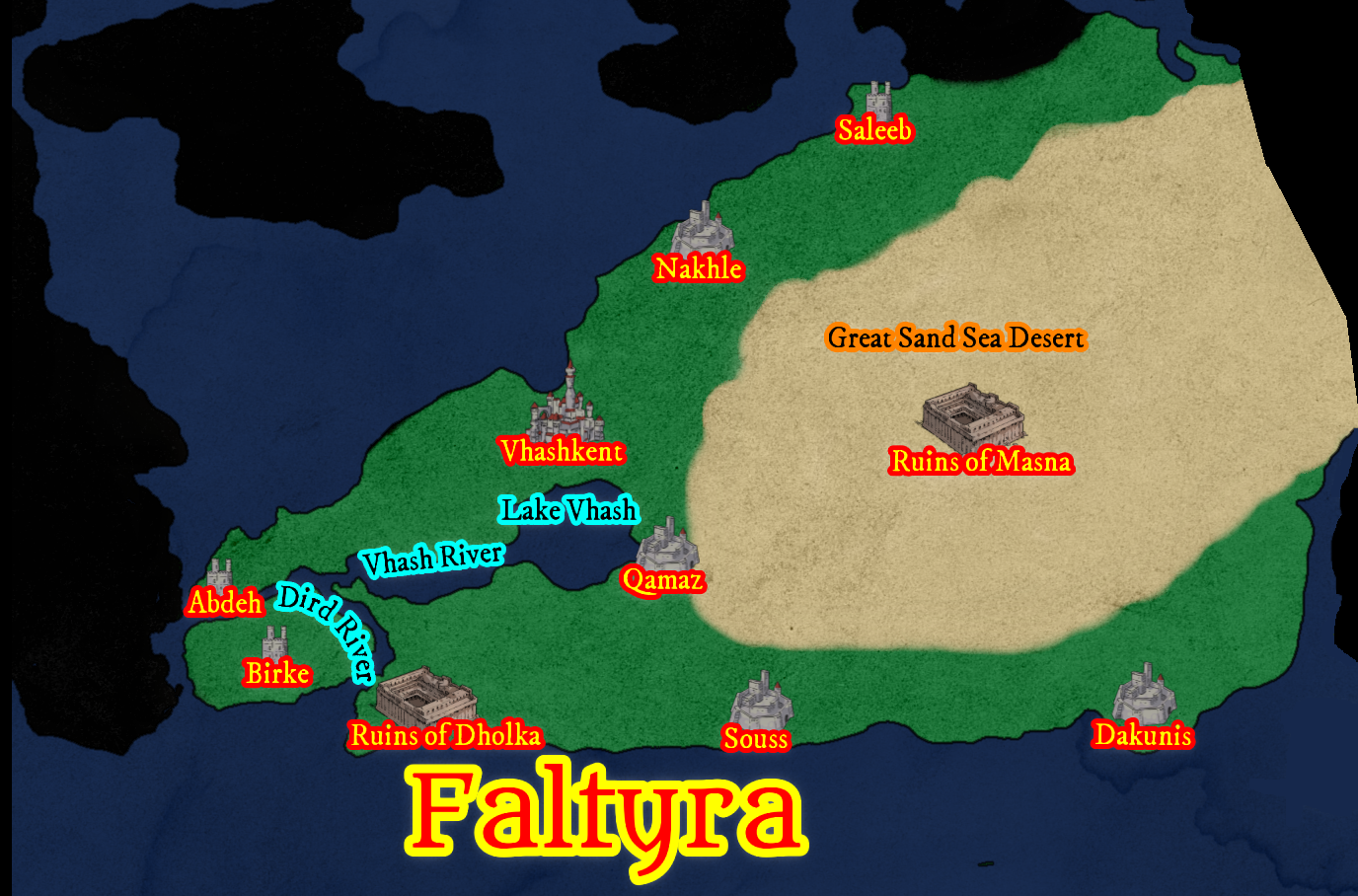
Cities of Faltyra
- Vhashkent: The city of Vhashkent stands as the gleaming heart of the Desert Province of Faltyra, and the very soul of the Faltyr Empire. It is a city where power, faith, and military might converge, its every stone and tower a testament to the strength and resilience of the empire. As the political and spiritual capital, Vhashkent is a city of immense cultural and religious significance, a place where emperors are crowned, dragon priests chant sacred rites, and traders from across the world converge to exchange riches from distant lands. Vhashkent is strategically positioned at the very edge of the desert's most desolate expanse, near a vital oasis that provides the city with the life-giving waters necessary to sustain it. While the desert's golden sands stretch endlessly beyond the city's walls, Vhashkent stands as a vibrant oasis city, thriving in the harshest of environments. The nearby oasis is not only a source of water but also serves as the lifeblood of the city's economy, providing agricultural resources and a key point for trade routes. The surrounding desert, though imposing, also offers protection, as its treacherous terrain is difficult for invaders to navigate, making the city a natural stronghold. Vhashkent is a fortress city, its towering walls and fortifications a symbol of the empire's military strength. The outer walls are crafted from massive blocks of black stone, mined from the nearby mountains, and are adorned with intricate dragon carvings that signify the city's connection to the Dragonwright faith. These fortifications are not only defensive but also serve to assert the dominance of the Faltyr Empire over the desert's wild expanse. At the center of the city rises the Palace of the Emperor, an imposing structure that commands the skyline. The palace is a monumental edifice of spires, adorned with dragon sculptures and gilded accents, reflecting both the divine right of the Emperor to rule and the city's deep spiritual ties to the dragons. Surrounding the palace is a sprawling network of government buildings, military barracks, and the sacred Dragon Temples, which are revered throughout the empire. These temples, where the most sacred of rituals take place, are places where dragon priests invoke the power of the dragons through ceremonial sacrifices, prayers, and dragon magic. The streets of Vhashkent are lined with markets, libraries, and cultural institutions that reflect the empire's wealth and devotion to the dragon gods. The Grand Bazaar, the largest market in the city, is a chaotic and vibrant space where goods from across the empire and beyond are exchanged. Rare spices, silks, and precious gemstones are sold alongside artifacts imbued with the power of dragons. The Temple of Vaelkor, dedicated to the first Dragon Emperor, towers above the city's heart, its golden spire visible from nearly every corner of Vhashkent. Vhashkent is not merely the political center of the Faltyr Empire; it is the spiritual nexus of the Dragonwright faith, the religion that binds the empire together. The Emperor, considered the living embodiment of the dragon gods on earth, rules from the heart of the city. Beneath the Emperor sits the council of Dragon Priests, powerful spiritual leaders who maintain both religious and secular authority. These priests oversee the sacred rites conducted in the dragon temples and enforce the laws of the empire, which are deeply intertwined with religious doctrine. As the seat of imperial power, Vhashkent is the epicenter of cultural activity in the empire. Festivals celebrating the gods, the seasons, and the dragonlords are held throughout the year, attracting pilgrims, nobles, and traders from across the empire. Dragon Tournaments, grand displays of strength and magic, are held in the city's coliseums, where champions from all corners of Faltyra compete for honor and glory. These tournaments are more than just a spectacle; they are a way for the Emperor to showcase their power and favor in front of the people. Vhashkent also hosts theatrical performances, artistic displays, and public ceremonies that celebrate the empire's dragon heritage and military victories. Despite being surrounded by the harshest desert terrain, Vhashkent thrives as a major trade hub, connecting the Faltyr Empire with distant lands. The Grand Bazaar is a melting pot of cultures and goods, where merchants from across the empire and beyond converge to exchange exotic spices, textiles, silks, precious gems, and rare artifacts. The city is known for its dragon-infused objects, items enchanted with the power of dragons, which are highly sought after by collectors, nobles, and religious figures. The oasis itself supports an agricultural industry that provides grain, fruit, and vegetables for the empire, and these goods are traded across the kingdom and beyond. The city is also known for its high-quality craftsmanship in producing dragon-themed art, jewelry, and magical items, which are prized not only for their beauty but also for their connection to the dragon gods. Vhashkent's location at the crossroads of major trade routes ensures that it remains a thriving center of commerce, despite the surrounding desert's arid and unforgiving nature. In addition to luxury goods, Vhashkent is a center for the production of dragon magic, potions, talismans, and enchanted items created using the mystical power of dragons. The influence of the Dragon Priests can be felt in all aspects of daily life, as they oversee the crafting of these powerful magical objects, which are sold to wealthy individuals and factions across the empire. In the heart of the desert, Vhashkent stands as a testament to the enduring power of the Faltyr Empire, a city where the divine, the political, and the mercantile worlds all intersect. It is a place where the past and present collide, where the power of dragons and the authority of the emperor guide the future of the empire.
- Qamaz: A historic trading hub, renowned for its cultural exchange and diverse population. Situated along key trade routes, Qamaz thrives on commerce, with merchants from across the empire and beyond gathering to trade goods, ideas, and technologies. The city's marketplaces are famous for their exotic spices and artifacts.
- Nakhle: A coastal city that thrives on maritime trade and acts as a gateway for goods and people coming from distant lands. Nakhle's bustling ports are always active, with ships from across the known world docking to trade in rare fish, pearls, and seafood. The city's architecture blends desert influences with maritime designs, making it unique among Faltyra's cities.
- Souss: A vibrant city with a rich agricultural history and a thriving craftsmanship industry. Known for its artisan workshops that produce everything from intricate pottery to finely woven textiles, Souss is also a key agricultural center in Faltyra, producing grain, fruits, and spices for both local consumption and export.
- Saleeb: A strategically located military city along the northern border of Faltyra, near the Desert of the Blighted Winds. Saleeb serves as the first line of defense against external threats and is home to elite warriors and military strategists. The city's fortifications and barracks are legendary, and it also serves as a training ground for the elite Imperial Guard.
- Dakunis: A city famous for its mineral deposits and mining industry, Dakunis is a vital source of metals, gems, and rare ores that fuel the empire's armament and magical research. The mines surrounding Dakunis are rich with dragon-infused minerals, which are prized for their ability to imbue objects with magical properties.
- Birke: A prosperous trade city known for its production of luxurious silks, spices, and exotic goods from across the empire and beyond. Birke is famous for its high-quality textiles, which are exported far and wide, as well as its bustling markets where merchants deal in everything from precious gems to magical trinkets.
- Abdeh: A fortress city guarding the southern entrance to Faltyra, Abdeh is a key strategic point in the defense of the province. Situated at the crossroads of the desert and more temperate lands, it serves as a military outpost and trade hub, ensuring that the empire remains protected from both external invasions and internal unrest.
- Ruins of Masna: Once a grand city and the seat of a powerful dynasty, Masna now lies in ruins, ravaged by time and conflict. The ruins are a site of pilgrimage for those seeking knowledge about the ancient dynasties and the mystical powers that once thrived in the region. Despite its decay, Masna still holds arcane secrets that attract scholars, adventurers, and treasure hunters alike.
- Ruins of Dholka: An ancient city, now in ruins, that was once a center for magical research and the study of dragon lore. The ruins of Dholka are shrouded in mystery and considered cursed by some. Nonetheless, scholars and adventurers frequently venture into its depths, hoping to uncover forgotten knowledge about the ancient magical practices that once flourished there.
Return to Maps and Floor Plans
Back to Main Page
- Major Crimes: