Kingdom of Kendrelaer

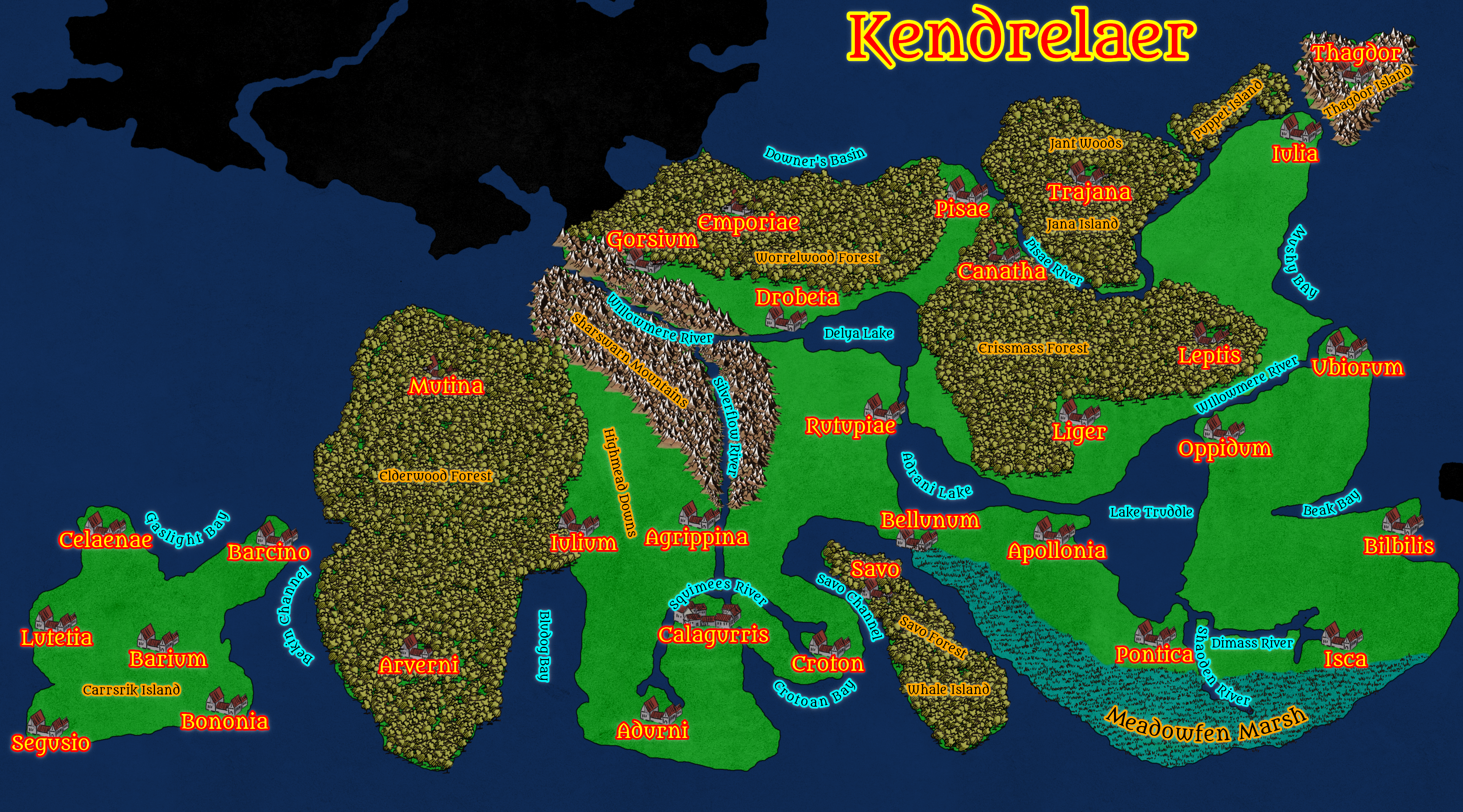
Kendrelaer is the heart of Halfling civilization, a peaceful, pastoral realm of rolling green hills, winding rivers, and golden farmlands. It is a place where time seems to slow, where the air smells of tilled earth and sweet apple blossoms, and where laughter drifts from windows warmed by firelight. Unlike the mighty kingdoms of Elves and Men, Kendrelaer has no grand armies marching in formation; its strength lies in its people's quiet resilience, hospitality, and harmony with the land.
While other nations rise and fall to the cadence of conquest, Kendrelaer endures, rooted in the soil, bound by kinship, and nourished by peace.
Geography and Landscape
The land of Kendrelaer stretches across a wide basin of gentle hills, fertile plains, and meandering waterways. Its soil is famously rich, said to be a gift of ancient earth spirits who blessed the Halflings with "the ground that never tires." The kingdom is a mosaic of vibrant green pastures, golden fields of grain, and orchards heavy with apples, pears, and cherries. Everywhere, the soft hum of life, bees in the meadows, birds in the hedgerows, and the gentle ripple of rivers, creates a sense of perpetual calm and abundance.
- Rolling Hills and Valleys: Each hillock bears cozy clusters of Halfling burrows and cottages, their round doors and stone chimneys giving a sense of warmth and charm. Smoke curls lazily into the sky at dusk, blending with the scent of fresh bread, flowering hedges, and tilled earth. The valleys below are carefully patchworked with golden fields, lush vineyards, and vibrant orchards, with winding paths and hedgerows dividing farms and grazing lands. Families often live and work in close proximity, creating a tapestry of communal life that flows seamlessly with the natural landscape.
- The Willowmere River: The kingdom's lifeblood, this broad and winding river snakes gently through the heart of Kendrelaer. Its waters sustain crops, power small mills, and allow trade via flat-bottomed riverboats carrying grains, fruits, and crafted goods. Bridges of wood and stone, often adorned with carved motifs of leaves or animals, connect river communities and add to the kingdom's pastoral charm.
- Climate: Kendrelaer enjoys a temperate climate, mild and predictable throughout the year. Winters are gentle, rarely harsh, and often dusted with snow that blankets fields and rooftops in sparkling white. Summers are warm but never oppressive, with golden sunlight rippling across the hills. Spring brings a riot of wildflowers carpeting meadows in blues, purples, and yellows, while autumn transforms the hills into a tapestry of gold, amber, and crimson, signaling the bounty of the harvest season. Rainfall is steady, nourishing the soil without flooding the fields, and gentle winds sweep the hills, carrying the scents of flowers, fresh grass, and ripening fruit.
Notable Regions:
- Highmead Downs: A region of gently rolling slopes and wind-blown grasslands, Highmead Downs is ideal for grazing sheep, ponies, and other livestock. Shepherds and farmers often dot the hillsides, their small cottages nestled into hollows to protect against the wind. Seasonal fairs are sometimes held on the Downs, where livestock are traded and games are played amidst the open air.
- The Elderwood: A small, ancient forest shrouded in mist and legend, Elderwood is considered sacred by many Halflings. The trees are tall and densely packed, with twisted roots and knotted branches forming hidden glades where rare herbs grow. Folklore claims that the spirits of the land whisper to those who walk its paths in silence, and small shrines and totems of carved wood mark places of reverence. Elders tell tales of brave ancestors and magical encounters within the forest, ensuring that the Elderwood remains a place of wonder and mystery.
- Meadowfen: Low-lying wetlands where reeds and tall grasses sway in gentle breezes. Herons, ducks, and other waterfowl populate the shallow pools, and wild mint and flowers perfume the air. The land here is fertile and rich, though marshy, and it serves as a quiet retreat for poets, herbalists, and dreamers who enjoy its serenity. Simple wooden bridges cross small waterways, and willow trees hang gracefully over the edges, their branches dipping into the water.
- Croton and Calagurris: Prominent settlements nestled among the hills and riverbanks. Croton is renowned for its orchards and cider production, while Calagurris serves as the heart of Kendrelaer, hosting the Council of Keepers and annual festivals. Cities like these are characterized by cobblestone streets, communal greens, and markets filled with the scents of fresh bread, roasted meats, and seasonal fruits.
Kendrelaer's geography is more than scenery, it shapes the way its people live. Halflings settle in harmony with the hills, rivers, and groves, building burrows and cottages that flow naturally with the land rather than altering it. The gentle hills provide both shelter and oversight, rivers nourish the soil and commerce, and forests and wetlands offer resources, recreation, and spiritual solace. The result is a kingdom of beauty, abundance, and quiet resilience, where every sunrise promises a new day of peace and productivity.
History
Kendrelaer was founded over five centuries ago, when groups of Halflings migrated from neighboring lands in search of fertile valleys and peaceful living. Legend tells that the first settlers were guided by visions of "the land that never tires," a promise of soil so rich that it would feed generations without fail. They followed winding rivers, crossed gentle hills, and eventually settled in the broad basin that would become the heart of the kingdom.
In the earliest years, the Halflings lived in scattered hamlets, farming the land and establishing orchards, vineyards, and pastures. Though small in stature and lacking large armies, they defended their homes through clever means: hidden paths, decoy trails, and coordinated militias capable of outwitting would-be invaders. Folklore is filled with tales of brave shepherds who turned back marauders with nothing but slings, bows, and cunning traps, cementing the Halflings' reputation as guardians of their quiet realm.
Over time, villages grew into thriving communities, and trade routes were established along the Willowmere River. Festivals, markets, and communal gatherings became central to Kendrelaer's identity, reinforcing bonds of family, friendship, and trust. Craftsmanship flourished alongside agriculture; pottery, weaving, woodcarving, and brewing became sources of pride and trade with distant lands.
The kingdom's governance evolved naturally from this communal lifestyle. Each city elected elders or "keepers" to oversee local matters, and a Council of Keepers formed to deliberate on issues affecting the entire realm. The High Keeper, chosen for wisdom and fairness, serves as a mediator rather than a ruler, embodying the Halflings' belief that leadership is service, not dominion.
Though Kendrelaer has seen few wars, its history is rich with stories of courage, cleverness, and unity. Its people value memory as much as the land itself, preserving the deeds of ancestors through song, tale, and celebration. From its modest beginnings to the prosperous, pastoral kingdom of today, Kendrelaer remains a bastion of peace and harmony, a place where generations of Halflings have cultivated not only the soil but also the spirit of community.
Architecture and Settlements
Halfling architecture in Kendrelaer is designed for comfort, practicality, and a seamless connection with the natural landscape. Buildings use locally sourced materials such as timber, stone, clay, and thatch, and their designs emphasize warmth, coziness, and charm over grandeur. Structures are often rounded, low to the ground, and built to complement the gentle hills, valleys, and riverbanks of the kingdom.
- Burrows and Hillhomes: Many Halflings live in burrows carved into hillsides, with round doors and windows framed by carved wood or stone. Inside, rooms are low-ceilinged but spacious enough to hold hearths, bookshelves, and handcrafted furniture. Warm rugs, colorful curtains, and potted plants create a homely atmosphere. The burrows often feature hidden nooks for study, relaxation, or play, and are designed to remain cozy in winter and cool in summer. Smoke spirals from stone chimneys, blending with the scents of cooking and fresh earth.
- Cottages and Farmsteads: In the flatter plains and fertile valleys, Halflings live in cottages made of stone or timber, with steeply thatched roofs and flower-laden gardens. Fruit trees and vegetable plots surround homes, and every yard is meticulously tended, blending utility with beauty. Barns, stables, and workshops are integrated into farmsteads, often built from the same stone or timber as the house, creating a harmonious aesthetic. Many cottages have small wooden porches where families gather to share stories and enjoy the sunset.
- City Layouts: Halfling cities are compact and communal, often clustering around a central green or village square. The green serves as the heart of social life: markets are held here, festivals are celebrated, and public meetings convene. Taverns, inns, and bakeries line the edges of the green, their doors welcoming and their chimneys always puffing smoke. Stone walls surround the cities and winding cobblestone streets and narrow footpaths connect the homes, with flowering hedges and low fences marking property boundaries. Bridges, stepping stones, and small canals often wind through cities, reflecting the importance of rivers and streams to daily life.
- Workshops and Artisan Spaces: Small workshops for weaving, pottery, brewing, and woodworking are interspersed among homes. These spaces are both functional and inviting, often with open doors and benches outside where neighbors gather to watch craftsmen at work. Villagers frequently exchange goods and services here, strengthening community bonds and ensuring that skills are shared across generations.
- Defensive Features: Though Halflings favor peace, villages are constructed with subtle defenses. Burrows may have concealed escape tunnels, fences may be reinforced with thorned hedges, and small watchtowers overlook key roads or river crossings. These features blend naturally with the environment, providing protection without marring the pastoral beauty of Kendrelaer.
- Integration with Nature: Almost every settlement reflects Halflings' reverence for the land. Gardens bloom with herbs and flowers, trees are preserved wherever possible, and homes are often partially sunken into the earth or built around natural features like boulders and groves. Streams and wells provide fresh water, while meadows and orchards ensure a constant supply of food and raw materials.
From burrowed hillhomes to flower-laden cottages, Kendrelaer's architecture embodies Halfling values of comfort, practicality, and harmony with nature. Each city feels alive, warm, and inviting, a reflection of the community that built it and the land that sustains it.
Economy and Trade
The economy of Kendrelaer is built upon the pillars of agriculture, craftsmanship, and trade, reflecting the Halflings' reverence for the land, skill in practical arts, and dedication to community. Every Halfling takes pride in the quality of their work, producing goods that are not only useful but also beautiful, durable, and imbued with care. Economic life is interwoven with seasonal rhythms, village festivals, and communal cooperation, making trade and labor a shared cultural experience.
- Agriculture: Fertile fields stretch across Kendrelaer's rolling hills and valleys, yielding abundant crops of wheat, barley, oats, vegetables, and fruits such as apples, pears, cherries, plums, and strawberries. Vineyards produce fine wines, ciders, and meads that are prized across neighboring realms for their subtlety, balance, and aroma. Orchards, gardens, and pastures are tended with devotion, and livestock such as sheep, goats, ponies, and dairy cows supply wool, milk, cheese, and meat. Halflings practice crop rotation, irrigation from the Willowmere River, and natural fertilization methods, ensuring that the land remains fertile for generations. Seasonal planting and harvest festivals further tie the rhythm of labor to cultural traditions.
- Craftsmanship: Every village supports workshops where artisans work in pottery, weaving, woodcarving, metalwork, leatherwork, brewing, and pipeweed production. Halfling craftsmanship is defined by precision, aesthetic beauty, and utility. Pottery is painted with natural pigments, furniture is carved with floral and pastoral motifs, and textiles are durable and intricately patterned. Pipeweed, carefully grown, harvested, and cured, has become a hallmark product of the kingdom, celebrated for its quality across the continent. Artisan guilds exist informally in each village, sharing techniques, coordinating apprenticeships, and maintaining high standards.
- Markets and Trade: Weekly market days form the economic and social heartbeat of villages. Farmers, artisans, and brewers set up stalls on the village green, offering fresh produce, handmade goods, and livestock. Kendrelaer's trade network extends via riverboats along the Willowmere River and small caravans along gentle roads to neighboring kingdoms. Exports include grains, cheeses, wines, ciders, pipeweed, textiles, pottery, and woodcrafts, while imports bring metals, tools, dyes, exotic spices, and luxury goods. Trade is conducted with honesty and goodwill; bartering and gifting are common, and reputation matters as much as coinage. Festivals often feature special trading fairs where rare or ceremonial goods are exchanged, strengthening alliances and friendships beyond the kingdom's borders.
- Self-Sufficiency and City Economy: Each city functions as a largely self-sufficient unit. Households grow food, tend livestock, produce basic clothing, and craft everyday items. This self-reliance ensures stability during poor harvests or disrupted trade routes and fosters interdependence within cities. Community barns, shared mills, bakeries, and workshops further enhance the cooperative spirit of the economy.
- Currency, Barter, and Trust-Based Exchange: While gold, silver, and copper coins are used in dealings with outsiders, internal commerce often relies on barter, favors, and personal trust. Ledgers may track debts, trades, or promises, but a Halfling's word is considered binding. A single act of dishonesty can damage not only an individual's reputation but the trust of the entire village. Economic transactions are therefore deeply entwined with social bonds, reinforcing the Halflings' cultural values of fairness, reliability, and mutual support.
- Seasonal and Specialized Industries: Certain villages specialize in particular products: one may focus on vineyards and mead production, another on wool and textiles, and another on pottery or pipeweed. Seasonal industries like fruit drying, jam-making, cider-pressing, and wool carding bring villagers together, ensuring that the community thrives both economically and socially. Seasonal festivals often double as trade fairs, allowing artisans and farmers to showcase their best work and negotiate sales and exchanges with visiting merchants.
Kendrelaer's economy is a reflection of Halfling values: diligence, skill, and community. Farming, craftsmanship, and trade are not merely means of sustenance but expressions of culture and tradition. Villages flourish through cooperation, quality work, and harmonious interaction with the land, creating an economy that is robust, sustainable, and intimately tied to the rhythms of Halfling life. Even as the kingdom engages with neighboring realms, its prosperity remains rooted in the earth, its people, and the enduring spirit of communal care.
Government and Leadership
Kendrelaer is governed by the Council of Keepers, a body of respected elders drawn from each village and district within the kingdom. These Keepers are chosen for their wisdom, fairness, and service to the community rather than wealth or lineage. Once a year, all Keepers gather at Hillhaven, a central village nestled atop a gentle hill, to deliberate on matters of trade, law, resource management, and the collective welfare of the kingdom.
The Council is led by the High Keeper, a position of honor rather than absolute power. The High Keeper is elected for their insight, diplomacy, and ability to mediate disputes, serving primarily as a facilitator and representative for Kendrelaer in dealings with neighboring realms. Leadership is by consensus: the High Keeper cannot impose edicts, and all significant decisions require the agreement of the Council. This ensures that governance reflects the collective will of the Halfling communities.
- Village Leadership: Each village elects its own Keepers or "village elders," who oversee local affairs, including crop management, resource allocation, festivals, and small disputes. Villagers are encouraged to participate in communal decision-making, attending meetings at the village green where debates, proposals, and votes are held openly and courteously.
- Justice and Law: Laws in Kendrelaer are simple, practical, and designed to maintain harmony. Disputes are resolved through mediation, restitution, and community service rather than punishment. Serious offenses are rare, but when they occur, the Council convenes to determine fair solutions, always with an emphasis on reconciliation and restoring trust. The Law of Arangoth, a collection of traditional customs and community-enforced rules, guides everyday life.
- Social Structure: Kendrelaer is a remarkably egalitarian society. Status is earned through wisdom, service, skill, and kindness rather than wealth, birth, or martial prowess. Families are valued for their contributions to village life, and elders are treated with reverence as repositories of history, stories, and practical knowledge.
- Defense and Militia: Each village maintains a volunteer militia for protection. These local defenders are trained in archery, slings, and small-scale tactics suited to defending the hills, valleys, and riverways of Kendrelaer. Coordination across the kingdom is managed by the Council of Keepers, ensuring a rapid and organized response to threats while avoiding militarization of Halfling society.
- Community and Festivals: Governance in Kendrelaer is intertwined with culture. Seasonal festivals, communal harvests, and village gatherings often double as forums for discussion, allowing citizens to voice concerns, propose improvements, and celebrate shared achievements. Governance is therefore a living, participatory process embedded in daily life.
Kendrelaer's government reflects the kingdom's core values: cooperation, wisdom, and harmony. Power is shared, leadership is earned, and every Halfling's voice matters. Decisions are guided by the principle that the welfare of the many outweighs the desires of the few, and that joy, prosperity, and peace are cultivated like a well-tended garden, through care, attention, and patience.
Though small in stature, the Halflings of Kendrelaer exemplify the truth that even the humblest of communities can achieve greatness through unity, fairness, and steadfast devotion to one another and the land they call home.
Defense and Military
Kendrelaer's peace is maintained not by large armies or conquest but through preparation, cleverness, and the unity of its people. The Halflings rely on strategy, intimate knowledge of their land, and community coordination to defend their homes, villages, and fertile valleys.
- Local Militias: Every village maintains a volunteer militia composed of able-bodied Halflings trained in slings, bows, knives, and improvised weapons. From a young age, Halflings learn to use these tools, not for aggression but for the protection of hearth and home. Militia members are adept at camouflage, stealth, and working together in small, coordinated groups to harass invaders or delay enemy advances until reinforcements can respond.
- Defensive Architecture: Villages are carefully designed with natural and man-made defenses. Homes built into hillsides may feature hidden tunnels and escape routes. Stone walls are low but reinforced with thorny hedges, concealed pitfalls, and clever snares. Bridges and roads are often built with removable planks or hidden obstructions to slow or mislead intruders. Even gardens and farmland may be arranged to obscure approaches or conceal traps.
- Terrain Advantage: Halflings know their hills, valleys, rivers, and forests intimately. Ambush points are chosen with care, choke points are exploited, and waterways can be used to block or channel enemy movements. Invaders unfamiliar with the landscape often find themselves exhausted, misled, or trapped without ever encountering the full force of Kendrelaer's defenders.
- The Watchers of the Green: A loose order of rangers, scouts, and trackers patrol the borders, riverways, and wildlands. These Watchers are skilled in observation, signaling, and reporting. They can track strangers, identify potential threats, and coordinate village militias before any danger reaches the heartlands. Many Watchers are also herbalists and wilderness guides, providing support to travelers while quietly safeguarding the kingdom.
- Community Defense: Defense is a shared responsibility. All Halflings, regardless of age or occupation, are taught basic survival skills, awareness, and how to respond in emergencies. In times of crisis, villages mobilize rapidly, using signal fires, horns, and other warning systems to alert neighbors. Cohesion, speed, and cleverness outweigh brute force in Kendrelaer's strategy.
- Psychological and Guerrilla Tactics: Halflings excel at misdirection, creating illusions of greater numbers or strength, leaving false trails, and using sound and light to confuse intruders. Enemy morale is often eroded before any physical confrontation, minimizing casualties and protecting the land from devastation.
While Kendrelaer maintains no standing army, the kingdom's villages, militias, and the Watchers of the Green form a resilient, adaptive, and highly effective defensive network. Peace is safeguarded by community cohesion, intimate knowledge of the land, and the Halflings' clever use of terrain, traps, and strategy. Though small in size, the people of Kendrelaer demonstrate that vigilance, ingenuity, and unity can protect even the most tranquil of realms.
Religion and Spirituality
The Halflings of Kendrelaer follow a gentle, nature-based spirituality, centered on harmony with the land, the seasons, and their ancestors. Faith is woven into daily life, guiding agriculture, celebrations, and communal bonds rather than dictating rigid doctrine or fear of punishment.
- Nature Worship: Halflings revere the spirits of the earth, rivers, forests, and hills. Sacred groves, riverbanks, and hilltops host small shrines where offerings of fruit, flowers, and handcrafted tokens are left. Seasonal rituals mark planting, growth, harvest, and the turning of the year, honoring the cycles that sustain life.
- Ancestor Reverence: Families honor ancestors through stories, songs, and feasts. Special days, often coinciding with festivals, are set aside to remember forebears and to seek guidance in matters of family, agriculture, and community. Elders are seen as living links to the past, and their wisdom is considered sacred.
- Community Shrines and Temples: Each village may have a modest shrine or sacred circle, often in the village green or near a natural feature. These spaces serve as gathering points for seasonal prayers, communal feasts, and rites of passage such as naming ceremonies, marriages, and harvest blessings. Though modest in appearance, shrines are richly adorned with symbols of fertility, growth, and protection.
- Festivals and Rituals: Religious observances are closely tied to agricultural and seasonal events. Planting festivals invoke blessings for fertile soil, springtime revels welcome the return of warmth and life, and harvest celebrations give thanks for abundance. Music, dance, and storytelling are integral, reinforcing both spiritual and communal bonds.
- Guides and Spiritual Leaders: While Kendrelaer has no formal priesthood, elders, shamans, or experienced farmers often serve as spiritual guides. They teach rites, preserve sacred stories, and advise the community on aligning daily life with nature's rhythms. Their guidance is practical as well as spiritual, blending observation of the land with moral and cultural wisdom.
- Harmony with the Land: Halflings believe that taking only what is needed, rotating crops, maintaining pastures, and caring for animals are sacred duties. Exploiting the land or harming the natural order is considered deeply disrespectful, and community decisions are often guided by this principle of balance and stewardship.
In Kendrelaer, spirituality is inseparable from everyday life. Religion teaches respect, gratitude, and care for both the earth and one another. Through festivals, shrines, storytelling, and seasonal rituals, Halflings cultivate joy, peace, and harmony, ensuring that their faith sustains not just the spirit but the thriving life of the community and the fertile lands they call home.
The Law of Kendrelaer
The Law of Kendrelaer is a living code rooted in fairness, communal responsibility, and reverence for the land. It guides both the practical and moral life of the kingdom, emphasizing cooperation, respect, and harmony over strict punishment. Laws are designed to maintain peace, protect resources, and ensure that every Halfling can live safely and prosperously.
- Community Responsibility: Every village is responsible for the safety, well-being, and prosperity of its inhabitants. Citizens must assist one another in times of need, whether through shared labor during harvests, aid during illness, or support in resolving disputes. Neglect of communal duties is considered a serious offense.
- Hospitality and Generosity: Halflings are bound by law and tradition to welcome travelers and provide food, shelter, or guidance when needed. Turning away a weary or hungry guest without just cause is seen as a grave breach of conduct and may require restitution or public apology.
- Stewardship of the Land: The kingdom's fertility and beauty are protected under law. Crops, orchards, forests, and pastures must be used sustainably, with care taken to preserve soil, water, and wildlife for future generations. Overharvesting, deforestation, or pollution is forbidden, and offenders are tasked with restoration efforts under the guidance of elders or the Council of Keepers.
- Dispute Resolution: Conflicts between individuals or families are first brought before village elders. The emphasis is on reconciliation, restitution, and restoring trust rather than punishment. Serious matters or unresolved disputes are referred to the Council of Keepers, whose decisions aim to benefit both the parties involved and the community as a whole.
- Protection of Life and Property: Theft, intentional damage to property, or threats to personal safety are addressed through compensation and communal oversight. Punishments are constructive rather than punitive, often involving labor, restitution, or service to the village to repair harm caused.
- Respect for Tradition and Culture: Festivals, communal gatherings, and sacred rituals are protected under the law. Interference with or desecration of these events is considered a serious offense, reflecting the kingdom's belief that culture and shared joy are as vital as crops or homes.
- Guiding Principles: At its heart, Kendrelaer's law emphasizes fairness, honesty, and kindness. Every Halfling is expected to contribute to the common good, respect the natural world, and act with integrity toward neighbors and strangers alike. Elders, the Council of Keepers, and community leaders interpret and apply the law with these values in mind, ensuring that justice serves both people and land.
The Law of Kendrelaer is less a set of rigid rules than a philosophy of life: that every action should strengthen community, preserve the bounty of the land, and maintain peace. It ensures that Kendrelaer remains a kingdom where justice, generosity, and harmony are as enduring as its fertile fields and rolling hills.
Population
Total Population: Approximately 2.5 million.
- Halflings: 100%
- Hobbit: 40% (1,000,000), Traditional halflings of the heartlands, known for their love of comfort, gardens, and good food. They dwell in cozy burrows and are deeply rooted in family and tradition.
- Nelwyn: 25% (625,000), Hardy and industrious, Nelwyn live in rural farming communities. They are renowned for their craftsmanship, brewing, and practical wisdom.
- Worrel: 20% (500,000), Forest-dwelling halflings who live in harmony with nature. Known for their agility, archery, and quiet ways, they often act as scouts or rangers.
- Kender: 15% (375,000), Curious and fearless wanderers who travel widely. Their adventurous spirit and boundless enthusiasm often lead them into (and out of) trouble.
Cities of Kendrelaer
Kendrelaer is dotted with small cities, each reflecting the Halflings' love of community, agriculture, and craftsmanship. While the kingdom is largely pastoral, its cities serve as hubs of trade, culture, and defense.
- Calagurris: The capital city of Kendrelaer, perched at the confluence of the Squimees and Silverflow rivers. It houses the Council of Keepers and serves as the kingdom's administrative and cultural heart. Cobblestone streets wind past burrows, cottages, and communal halls, while markets bustle with artisans, farmers, and traveling merchants.
- Agrippina: Surrounded by fertile plains and orchards, Agrippina is a prosperous trade center for grains, fruits, and dairy. Its weekly markets draw Halflings from nearby villages, and communal granaries store reserves for harsh winters.
- Adurni: Renowned for vineyards, orchards, and pipeweed fields, Adurni is a hub of craftsmanship and fine food production. Artisans here are famed for pottery, woven goods, and delicacies exported across Kendrelaer.
- Croton: A river city that thrives on trade and fishing. Its docks are lined with small flatboats carrying produce and crafts, and the town is known for its lively taverns and music-filled evenings.
- Savo: A coastal port and shipbuilding town. Fishing fleets and riverboats depart regularly, carrying goods to neighboring kingdoms. Local shipwrights craft vessels both practical and beautiful, reflecting Halfling attention to detail.
- Bellunum: A fortified city guarding the southern waterways. Known as the "Gate of the Marshes," it combines functional defense with pastoral charm, with flower-lined streets and small orchards inside the walls.
- Rutupiae: A watchpoint over the Adrani Lake, manned by local militia and rangers. Its hilltop lookout and wooden palisades ensure early warning of any threats while its inns welcome travelers and traders.
- Drobeta: A cultural center, known for theater, storytelling, music, and seasonal festivals. Local artisans gather here to exchange ideas and display their wares.
- Gorsium: Thriving on timber trade, Gorsium is surrounded by managed forests where Halflings harvest wood sustainably. Its craftsmen produce fine furniture, tools, and carved goods.
- Emporiae: Located in the northern forests, Emporiae is a hub for trade caravans, artisans, and hunters. Its markets are filled with furs, herbs, and crafted goods, attracting traders from distant towns.
- Pisae: A city of scholars, engineers, and Shipbuilders. Archives, workshops, and observatories make it a center for knowledge and innovation within Kendrelaer.
- Canatha: Surrounded by lush northern forests, Canatha is home to rangers, druids, and nature guardians. Shrines and sacred groves are common, and the city maintains strong bonds with surrounding villages to protect the wilderness.
- Trajana: Nestled in ancient woodlands, Trajana is a tranquil city where artisans and herbalists flourish. Its community emphasizes harmony with the forest and seasonal rituals.
- Leptis: A forest city blending timber architecture with natural beauty. It is famed for woodcarving, herbal crafts, and small communal festivals.
- Liger: A plains city at the forest edge, known for horse breeding, dairy farming, and hosting vibrant seasonal fairs.
- Oppidum: A hilltop settlement providing strategic oversight of surrounding farmland. Its fortified cottages and watchtowers combine safety with pastoral charm.
- Apollonia: A cultural haven celebrating art, music, and festivals. Amphitheaters and public squares host plays, concerts, and storytelling competitions throughout the year.
- Pontica: A lakeside port city, thriving on shipping, fishing, and trade. Its shipwrights craft fine vessels, and its markets teem with lake fish, fruits, and crafted goods.
- Isca: A small river fishing town, known for smoked fish and peaceful riverside life.
- Ubiorum: Surrounded by vast farmlands, Ubiorum is the breadbasket of Kendrelaer, producing grains, fruits, and dairy for export and local consumption.
- Bilbilis: An eastern coastal fortress city guarding trade routes and shipping lanes, with strong walls and well-trained local militias.
- Thagdor: A remote fortress in the northern mountains, acting as a bulwark against wild creatures and unknown dangers. Its militia is hardy, and its homes are fortified burrows and stone cottages.
- Iulia: A scholarly outpost in the northern highlands, known for libraries, observatories, and bardic colleges teaching music, history, and lore.
- Iulium: Another center of scholarship and engineering, producing maps, star charts, and crafted tools for navigation and agriculture.
- Mutina: A forest city celebrated for herbal medicine, apothecaries, and festival traditions tied to the woodland spirits.
- Arverni: Nestled deep in ancient forests, Arverni is known for woodland crafts, rangers, and community-led conservation.
- Barcino: A coastal trade hub connecting islands and mainland Kendrelaer. Shipbuilders, merchants, and fishers form the economic backbone of the city.
- Bononia: A peaceful town known for markets, open-air theaters, and local cuisine. Food fairs and music festivals draw visitors from across the kingdom.
- Barium: An agricultural hub producing grains, vegetables, and dairy products. Its markets are a cornerstone of regional trade.
- Celaenae: A port city renowned for navigation, astrology, and scholarly studies of the tides and stars. Seafaring and observation go hand-in-hand here.
- Lutetia: A lively city of festivals, theater, and the arts. Its squares, amphitheaters, and craft markets make it a center of Halfling culture and entertainment.
- Segusio: The westernmost port, a bustling hub for trade with distant lands. Its docks are crowded with merchants, traders, and Halfling riverboats carrying local goods abroad.
Return to Maps and Floor Plans
Return to Arethane |
|