Kingdom of Kithrenna

Geography & Setting
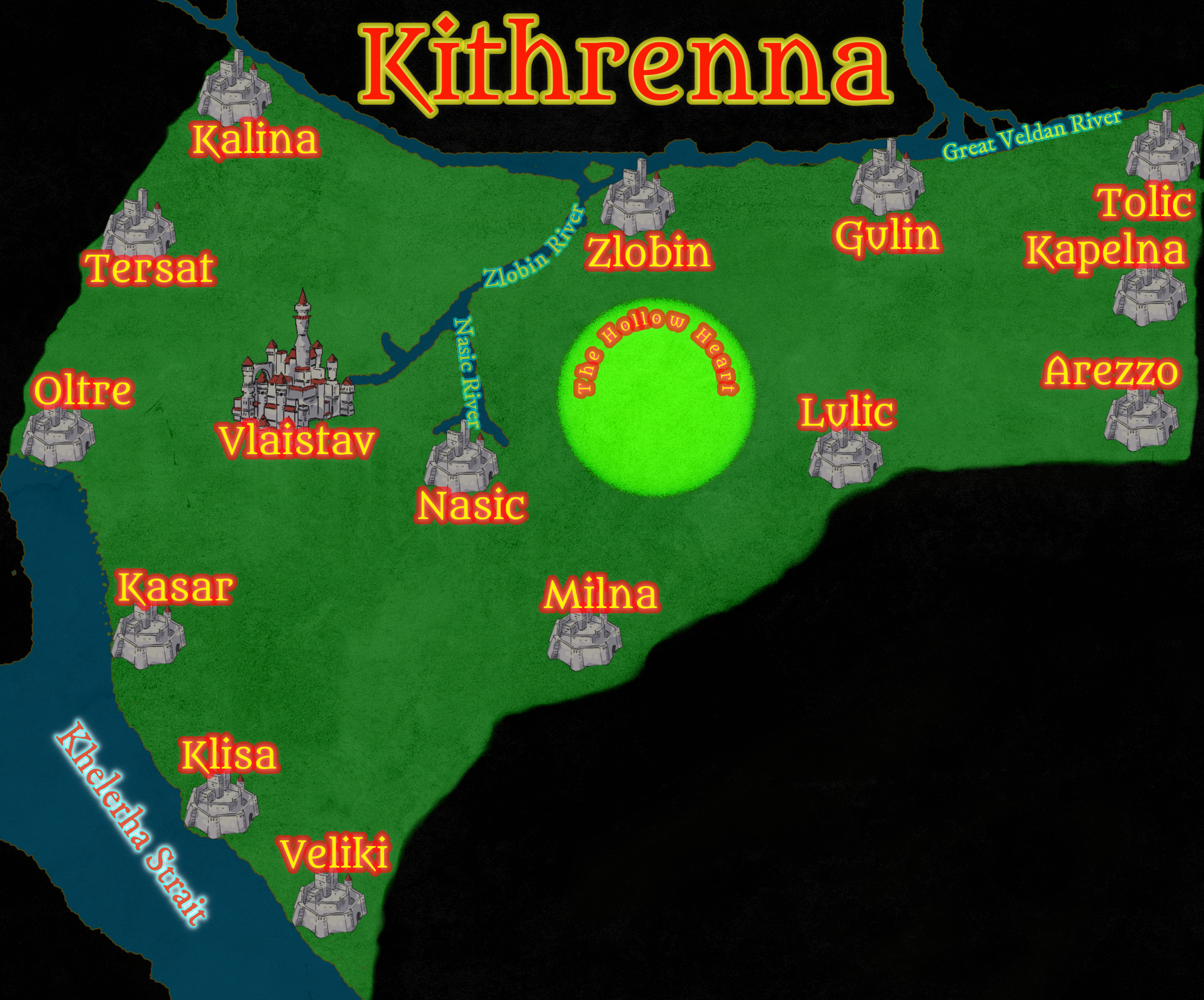
Kithrenna is a land defined by its mighty waterways and fortified cities. Unlike realms that sprawl across forests or mountains, Kithrenna is a kingdom of stone ramparts and flowing rivers, with no towns, only strongholds built to guard strategic river crossings, trade routes, and coastal access. The northern border is marked by the Great River Veldan, a colossal waterway forming a natural boundary with the Half-Elven kingdom of Rhyanne. Its marshy banks and swift currents both hinder invasion and facilitate commerce. Inland, the central river valleys form the Hollow Heart, a vast wilderness largely uninhabited, serving as a sanctuary for wild creatures.
Society & Culture
Kithrenna values chivalry, strategic mastery, and stewardship of its waterways. Knights and river lords pledge fealty to the Crown Regent, who governs from Vlaistav. Festivals honor the river's bounty with boat parades, waterside tournaments, and sacred rites for river spirits. Artisans and engineers develop innovations in rivercraft and fortification. Despite militarism, culture and commerce flow alongside martial tradition, forming a society where vigilance, honor, and ceremony intertwine.
History of Kithrenna
Origins
Long ago, Kithrenna was wild and fractured, a tangle of river valleys and floodplains inhabited by independent clans. The Veldan was both lifeblood and barrier, its shifting channels and marshy banks making large-scale settlement difficult. Clans lived semi-nomadically, relying on seasonal fishing, trade, and fortified hill camps.
Unification and Rise
Darius Vael united the river clans with diplomacy, marriages, and force, founding Vlaistav atop the bluffs and declaring himself Crown Regent. Trade along rivers and strategic crossings brought wealth and order. The kingdom transformed from fragmented clans to a centralized realm of fortified cities.
Harakan Annexation
Kithrenna's rise drew Harak's attention. Instead of conquest, Harak used bribery and selective military pressure, turning key river lords into vassals. For nearly two centuries, Kithrenna was a Harakan province, yet walls remained strong, councils met in secret, and independence never fully died.
The Age of Bastions
After regaining autonomy, Kithrenna fortified its cities. The Council of Bastions coordinated defense and governance. Coastal cities were strengthened against pirates. The military became professional, combining river fleet tactics with infantry and cavalry. Trade thrived under vigilance and discipline.
Conflict with Harak and Elizarain
Border tensions frequently erupted into skirmishes. Kapelna and Arezzo became key defensive points. These conflicts forged a hard, disciplined military, blending river and land strategies with knightly prowess.
Relations with Rhyanne
Across the Veldan, Rhyanne was a mix of ally and rival. Trade, shared patrols, and occasional espionage marked relations. Peace was cautious, always negotiated, reflecting centuries of history and mutual respect.
The Era of Renewal
Under Crown Regent Isolde Marvain, Kithrenna saw economic recovery, cultural flourishing, and riverine innovation. Festivals, engineering advancements, and artistic patronage renewed life, though cults, smugglers, and restless lords remain challenges to unity.
Legacy
Kithrenna's history is a story of transformation, from scattered clans to a kingdom of bastions and waterways. Its people embody resilience, honor, and the enduring power of the river that shapes their land.
The Hollow Heart
The central inner kingdom contains no bastions or villages. Instead, vast floodplains and river valleys serve as a wildlife preserve, home to buffalo herds, deer, and migratory birds. Seasonal flooding maintains lush meadows and wetlands, making it a sanctuary for both predators and prey. Rangers and river lords patrol occasionally to prevent poaching, but the land is largely wild, a living reminder of Kithrenna's natural heritage.
Relations & Tensions
North across the Veldan, Rhyanne keeps a respectful distance, peace held by shared patrols and centuries of memory. South and east, Harak and Elizarain press and parley by turns. Within, the Council of Bastions balances coastal profit against inland discipline. River cults murmur of omens in flood and drought, while smuggling networks and ambitious lords test the kingdom's fragile harmony. Diplomacy and vigilance maintain the flow of trade, security, and cultural continuity, but the currents of tension never fully settle.
Whispers in the Current
Smugglers run night-black barges beneath toll arches; foreign coin brightens old banners; zealots in reed-choked backwaters promise a river made wild again. Yet each thaw the lanterns return to the water, each harvest the granaries fill, and each winter the bastions hold. So long as stone stands where water runs, Kithrenna endures, a kingdom defined by rivers, fortresses, and the resilient people who live by their flow.
Population Summary:
- Total Population: 800,569
- Humans: 744,540 (93%)
- Dwarves: 32,023 (4%)
- Halflings: 24,023 (3%)
Cities and Towns
- Capital: Vlaistav rises from steep bluffs overlooking a secondary feeder of the Veldan. Concentric walls, towering keeps, and river docks define the city, blending governance, culture, and military power. The Throne of the Crown Regent stands at its heart, alongside the Council of Bastions where nobles and military leaders deliberate.
- Kalina: Sentinel of the northern Veldan, its stone walls rise like cliffs above the river. Kalina thrives on trade, its docks filled with cargo and river patrols ensuring the city's security.
- Zlobin: A fortress city controlling a key bend in the Veldan. Its walls have repelled Harakan raiders, and its markets bustle with goods ferried downriver.
- Gulin: Where the Veldan forks into tributaries, Gulin commands riverine trade and patrols. Stone quays and armored towers line the riverbanks, reflecting both commerce and vigilance.
- Tolic: Southernmost river city, guarding the approach to Vlaistav. Its lords excel at river fleet tactics, and boatmen train from childhood to navigate the swift currents.
- Nasic: Situated at the fork of a smaller tributary, Nasic is a single, commanding fortress overseeing the confluence. From its walls, watchmen guard the river, ensuring the safety of travelers and merchants without the need for chains or locks.
- Kapelna: On the rugged border with Harak, this garrison maintains constant vigilance, repelling raids and hosting the most seasoned mercenaries of the kingdom.
- Arezzo: Near the southern frontier, Arezzo blends military discipline with river trade, providing both protection and sustenance to the kingdom's borderlands.
- Milna: Along the eastern border with Elizarain, a staging ground for troops and river patrols. Its stone walls are a symbol of Kithrenna's enduring independence.
- Lulic: Neighboring Milna, it serves as a secondary fortress and supply depot, reinforcing Kithrenna's eastern defenses.
- Oltre: A maritime fortress controlling sea access, its harbors filled with merchant vessels and warships, ensuring trade and defense against seaborne threats.
- Kasar: Towering walls and vigilant garrisons dominate this coastal city. Its shipyards craft vessels famed across Laridian for both speed and durability.
- Klisa: Known for its lighthouse and watchtowers, Klisa directs coastal trade and signals warnings across the kingdom's shores.
- Veliki: A bustling port where trade with distant realms thrives, fortified to resist pirates and rival kingdoms alike.