Kingdom of Kolvydaer
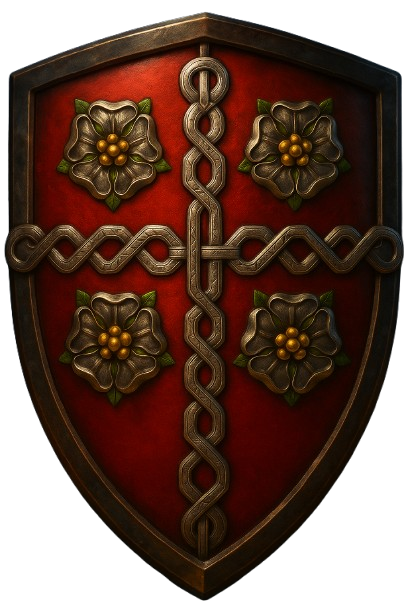
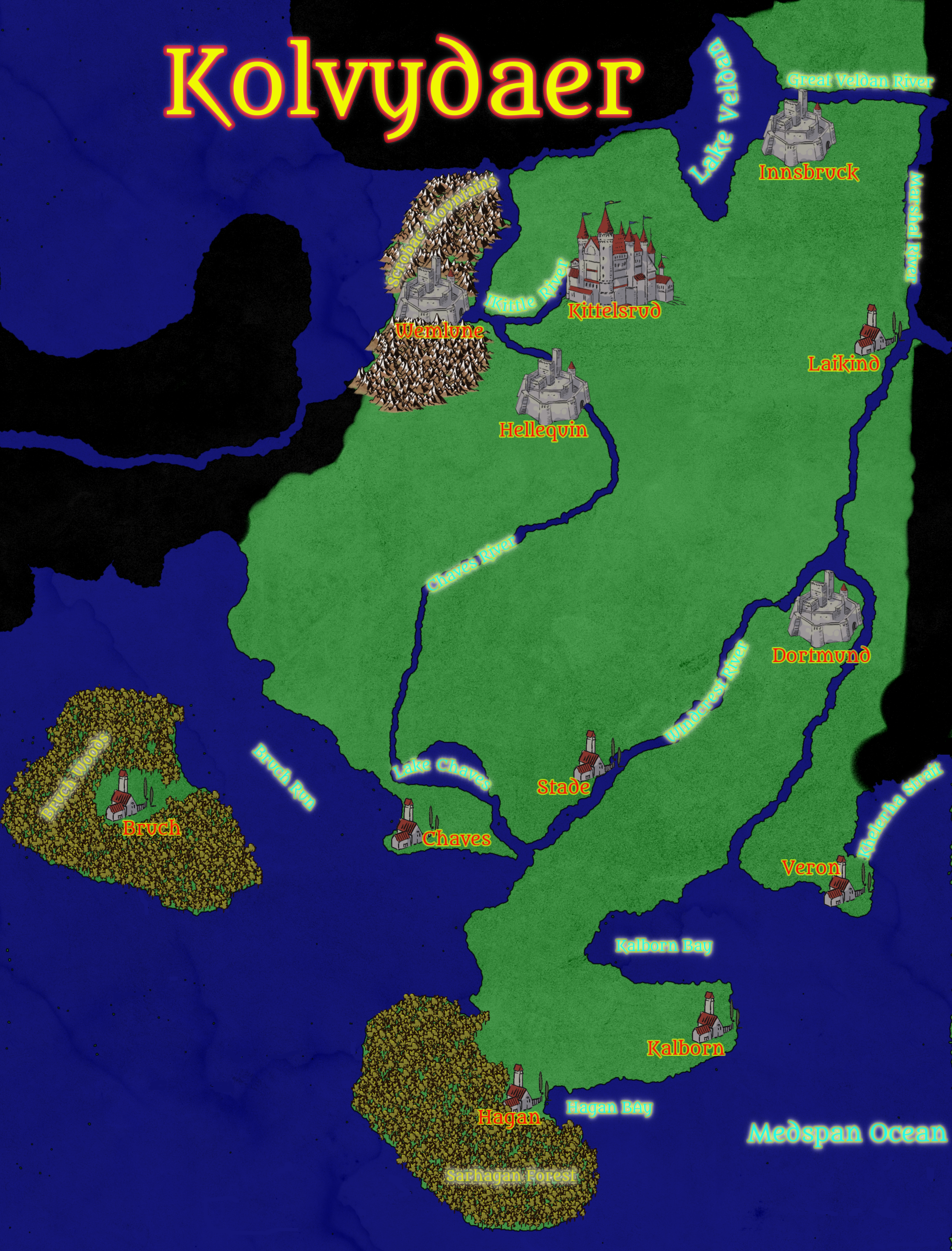
Kolvydaer is a human kingdom of great rivers, cold winds, stone towers, and flickering lamplight over cobbled bridges. Built on the ideals of craftsmanship, order, and guild authority, it stands as a bastion of civilization on the edge of wilder lands, a bridge between commerce, culture, and martial strength.
History
Kolvydaer's settlements arose along rivers and natural fords, controlled by merchant families and knightly clans who competed for trade and strategic advantage. The first Doge was elected from these prominent families, establishing a ceremonial leadership, while the High Guild Council managed the practical governance of the city-states.
For centuries, Kolvydaer existed as a vassal of the northern empire of Harak. The kingdom retained nominal autonomy but paid tribute, supplied levies, and followed imperial directives. The Doges upheld ceremonial loyalty, while the High Guild Council and mercantile families preserved secret trade networks and local influence.
When Harak faltered, torn by internal strife, noble uprisings, and civil unrest, Kolvydaer seized the opportunity to assert full sovereignty. Fortified cities, skilled militias, and mastery of rivers allowed the kingdom to declare independence. The empire's distant garrisons were unable to respond, and Kolvydaer emerged free, sovereign, and ready to chart its own destiny.
Government and Society
Kolvydaer is ruled by a Doge (or Dogaressa for a female ruler), whose role is largely ceremonial, representing continuity and tradition. True power lies with the High Guild Council, a parliament of merchant lords, knightly orders, abbots, and craftsmen's guilds. Decisions are negotiated through backroom deals, formal duels, and strategic alliances.
The kingdom is a patchwork of city-states unified under this structure, balancing commerce, law, and civic stability. Guildmasters, wealthy merchant families, and militant clergy hold considerable sway, but all operate within the ceremonial oversight of the Doge and Council.
Cultural Themes
- Architecture: Tall, narrow, slate-roofed buildings rise in densely packed cities. Canals thread through merchant quarters, while towering stone halls serve civic and religious functions.
- Society: Citizenry is organized around guilds, mercantile networks, and knightly orders. Status comes through service, skill, and loyalty to clan or guild.
- Religion: Dominated by the Church of the Dragonwright, with dwarven earth-priesthoods active in Wemlune.
- Military: Citizen militias defend urban centers; hired Free Companies and Knights-Prior support rural and border regions.
- Economy: Centered on textiles, metalwork, canal trade, and weapons manufacture. Dyes, glassware, and enchanted clockwork devices are prized exports.
Religion
The Church of the Dragonwright dominates spiritual life. Abbey-Temples in major cities combine militant defense with religious doctrine. Dwarven earth-priesthoods operate openly in Wemlune. Local shrines dot smaller towns, maintaining community rites and seasonal observances. Religion reinforces loyalty to both Doge and Council while preserving traditional moral and judicial frameworks.
Notable Factions and Orders
- The Gilded Assembly: Merchant league that effectively controls foreign trade and policy.
- The Iron Abbacies: Monastic orders of armed priests and scribes defending relics and shrines.
- The Brotherhood of Stone and Fire: Consortium of human and dwarven smiths with secret rites and weapon designs.
- The Silent Tithe: Shadowy network of clerical agents rooting out heresy and corruption.
Kolvydaer's Role
Kolvydaer bridges the wild and the civilized, trading with both Elven and Human realms while maintaining cautious neutrality in wider conflicts. Its rivers, canals, and fortified cities make it resilient and self-sufficient. Despite stability, whispers of guild corruption, political assassination, and secret armories hint at intrigue, suggesting the kingdom is always preparing for the next challenge or reckoning.
Population Summary
- Total Population: 1,500,000
- Humans: 1,410,000 (94%)
- Dwarves: 45,000 (3%)
- Concentrated in Wemlune and mining-forge towns. Specialists in metalwork, bridges, and military engineering.
- Halflings: 30,000 (2%)
- Found mostly in river districts and fertile floodplains, managing food markets, river barges, and small-scale trade.
- Half-Elves: 15,000 (1%)
- Living along northern borders. Often diplomats, guides, interpreters, or envoys in human society.
Major Cities
- Kittelsrud (Capital): City of spires, stone bridges, and stained-glass guildhalls. Seat of the Doge and the High Guild Rotunda.
- Innsbruck: Fortified trade city with deep canals and wine vaults. Famous for textiles and dueling traditions.
- Hellequin: Bastion of the Iron Abbacies, monk-knights defending cathedrals and relics.
- Dortmund: Industrial hub of bell-making, Armour and Weapon Smithing.
- Wemlune: Mountain city with granite halls, gemcutting, and masterwork steel, inhabited by dwarves.
- Bruch: Island town of fishermen and river traders.
- Laikind: Riverside town known for lanterns and glowing glassworks.
- Chaves: Center for parchment-making, bookbinding, and scribal guilds.
- Stade: Known for annual fairs and elite crossbow regiments.
- Veron: Isolated farming town with standing stones and ancient shrines.
- Kalborn: Iron-mining and smithing village near Wemlune, controlled by minor nobility.
- Hagen: Forest town with hunters, herbalists, rangers, and lingering Elven influence.