The Theocracy of Synarrin
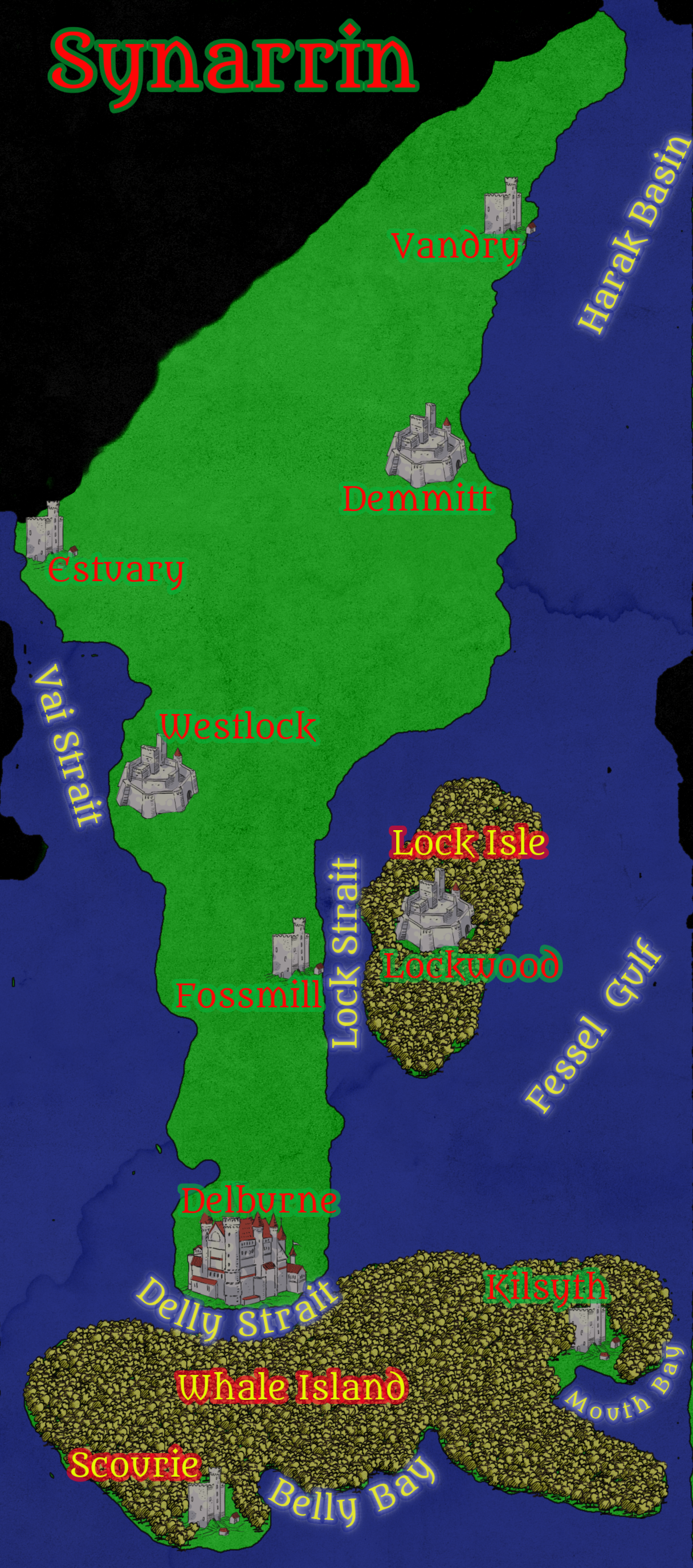 History of The Theocracy of SynarrinOnce a proud and prosperous province of the Kingdom of Harak, Synarrin's destiny was forever altered during the turbulent era of Harak's fragmentation. As the Corvase Dynasty, once the backbone of the kingdom, weakened under the strain of internal discord, the relentless ambitions of noble houses, and the bloody civil wars that ravaged the land, the southern coastal cities of Synarrin found themselves increasingly isolated. The once-unified kingdom was crumbling, its borders and institutions shattered by the machinations of power-hungry lords and the chaos of a disintegrating monarchy. In this time of uncertainty and decay, the clergy of the Church of Light and Dark, who had long held influence in these coastal regions, saw the deepening failure of mortal kings to maintain the Balance between the forces of Light and Dark. The rulers of Harak had fallen prey to their own greed, corruption, and infighting, losing the very principles that had once held the kingdom together. The cities of Synarrin, with their strategic positions along the coast and their strong faith, began to question the validity of the throne's authority. As the kingdom's rule weakened and the cries of rebellion echoed across the land, the high clergy saw an opportunity to reshape the fate of the region, one not bound by the faltering reign of kings, but governed by the divine will of the Balance itself. In a decisive and bold move, the high clergy, led by powerful and charismatic spiritual leaders, took a stand that would forever sever their ties to the crumbling throne of Harak. They declared Synarrin not as a province, but as an independent theocracy, where divine principles would guide the governance of the land, and the laws of men would be replaced by the eternal laws of Light and Dark. This declaration was not merely a political maneuver; it was a profound spiritual act, a return to the sacred balance. With this proclamation, Synarrin's transformation began, marking the start of what would be known as the Reclamation of the Flame. This bloodless religious schism did not come without resistance. Some saw it as a betrayal of Harak's legacy, an act of treason that would bring ruin to the region. Others viewed it as a moment of divine clarity, a necessary shift in the tides of history that would restore order and justice through spiritual means. The result, however, was undeniable: the coastal cities, once pawns in the game of noble houses, had become the center of a new and powerful religious state, where the will of the clergy would be law, and the twin forces of Light and Dark would govern all. The establishment of the theocracy was not just a political shift but a spiritual rebirth. Synarrin, freed from the constraints of mortal kingship, was now ruled by the Twin Arch-Hierophants, one representing the Light, the other the Dark, who embodied the dual nature of existence itself. Their reign was not one of military conquest or royal decree, but of divine mandate, ensuring that the Balance of Light and Dark was upheld in every aspect of life. And thus, Synarrin, once a province on the edge of Harak's power, was reborn as a sovereign theocracy, standing as a beacon of faith and an unwavering testament to the belief that only the divine, not the flawed ambitions of men, could guide the course of the land. With this profound act, the foundations of a holy dominion were laid, one that rejected the supremacy of earthly rulers and instead embraced the divine, where governance would be entrusted to the balance between these two cosmic forces. In Synarrin, the authority of the Church, manifest through the Arch-Hierophants, would be supreme. The laws of men and kings were replaced by the sacred and unyielding edicts of the Church, where the light of the sun could not outshine the shadow of the moon, and where the fire of creation was as essential as the decay of death. This theological reformation was not simply a political upheaval but a spiritual awakening, an affirmation that the world itself existed in a delicate equilibrium, with both forces of Light and Dark essential to the ongoing existence of all things. In declaring that no force could ever dominate the other, the Twin Arch-Hierophants made a clear statement: true governance was not about dominion, but about balance. In this new theocracy, neither Light nor Dark would be allowed to claim supremacy, each was to be a partner in shaping the destiny of the land. Since that fateful moment, Synarrin has stood as a beacon of this unyielding belief, fiercely independent from any external influence. The very structure of its society, its laws, and its culture have been designed to maintain this Balance, ensuring that no single force dominates the other. This commitment to the eternal Balance has not only shaped Synarrin's political landscape but has also influenced its daily life, from the way its people conduct business, to how they celebrate their festivals, to the rituals that permeate their everyday existence. Synarrin's people, too, have adopted this view. They understand that their nation is more than just a political entity; it is a living testament to the principle that true governance can only exist when the forces of Light and Dark are both honored, respected, and upheld. As such, Synarrin remains a fiercely self-reliant theocracy, a place where the eternal Balance is not a concept of convenience, but the very foundation upon which all things stand. Modern Synarrin: A Coastal TheocracySynarrin is a land shaped by the ever-present sea, where its cities, precariously perched on jagged cliffs and rocky shores, cling to the coastline as enduring symbols of faith, resilience, and divine will. With no major rivers or fertile inland expanses, the settlements of Synarrin are bound to the harsh, windswept coastal terrain, carving out their existence along the unforgiving edges of the sea. The land itself mirrors the unyielding spirit of its people, surviving and thriving amidst adversity, with every city standing as a testament to their unwavering belief in the Balance of Light and Dark. Every city within Synarrin is governed by the Church, with ultimate authority emanating from the hallowed city of Delburne, the sacred heart of the Theocracy. From here, the Twin Arch-Hierophants, the living embodiments of Light and Dark, rule not only as spiritual leaders but also as the supreme governing force of the nation. The Arch-Hierophants reside in the Sanctum of Flame and Shadow, a grand cathedral-like structure that serves as both a place of worship and the seat of governance. In this place of divine power, decisions are made, not through mortal politics or bloodlines, but through the will of the eternal Balance that guides the land. The Theocracy of Synarrin, shaped by divine influence and guided by the unshakable principles of the Church, is a realm founded on unyielding faith. Its people live according to the belief that true governance can only exist when the sacred forces of Light and Dark are both honored and upheld. In Synarrin, there is no crown but the flame of eternal truth, and no law but the sacred word of the Church. The authority of the Church is woven into every aspect of daily life, from the rituals performed at dawn to the laws that govern trade, justice, and war. In this land, faith and governance are inseparable, and the principles of Balance are the very foundation of the realm's existence. In this theocratic state, the cities of Synarrin are more than just urban centers, they are spiritual strongholds, each an extension of the divine will that flows from Delburne. Whether it is the coastal fortresses that guard against external threats, the monasteries that provide sanctuary and wisdom, or the market towns that sustain the faithful with goods and services, each settlement plays its part in maintaining the sacred order. The city streets are lined with holy symbols, and public life revolves around the rhythms of prayer, ceremony, and divine observance. Synarrin's people, whether they are noble or common, live by the guiding light of their faith, knowing that the Balance of Light and Dark must remain eternal for the survival and prosperity of their land.
Synarrin's Population BreakdownThe population of Synarrin is approximately 2.5 million people, with a diverse yet tightly knit demographic shaped by both religious devotion and coastal life. Below is a breakdown of the population by race and their respective percentages:
Within the population, the clergy hold significant influence, comprising nearly 30% of the total population (750,000). This includes not only priests and monks but also the various ranks of clerics, inquisitors, and missionaries who guide both the spiritual and practical governance of Synarrin. The remaining 70% (1.75 million) are laypeople, who support the Church's mission through their work in agriculture, trade, craftsmanship, and military service. Military MightSynarrin's military is as much a force of faith as it is of arms. Rooted in the principles of divine service, the Theocracy's military might is structured around the defense of the Balance, both from external threats and internal corruption. The armed forces are divided into several key groups, each with a specific role in upholding the divine law of the Church.
Languages
Religion: Church of Light and Dark
Exports, Industry, and Resources
Major Cities
Synarrin is a realm of unshakable faith, carved into the cliffs and forests of Laridian's southern edge. It was once the southern province of Harak, now, it is a theocracy of its own, governed by the balance of Light and Dark, with no crown but the flame, and no law but the sacred word.
|