Kingdom of Visrelund
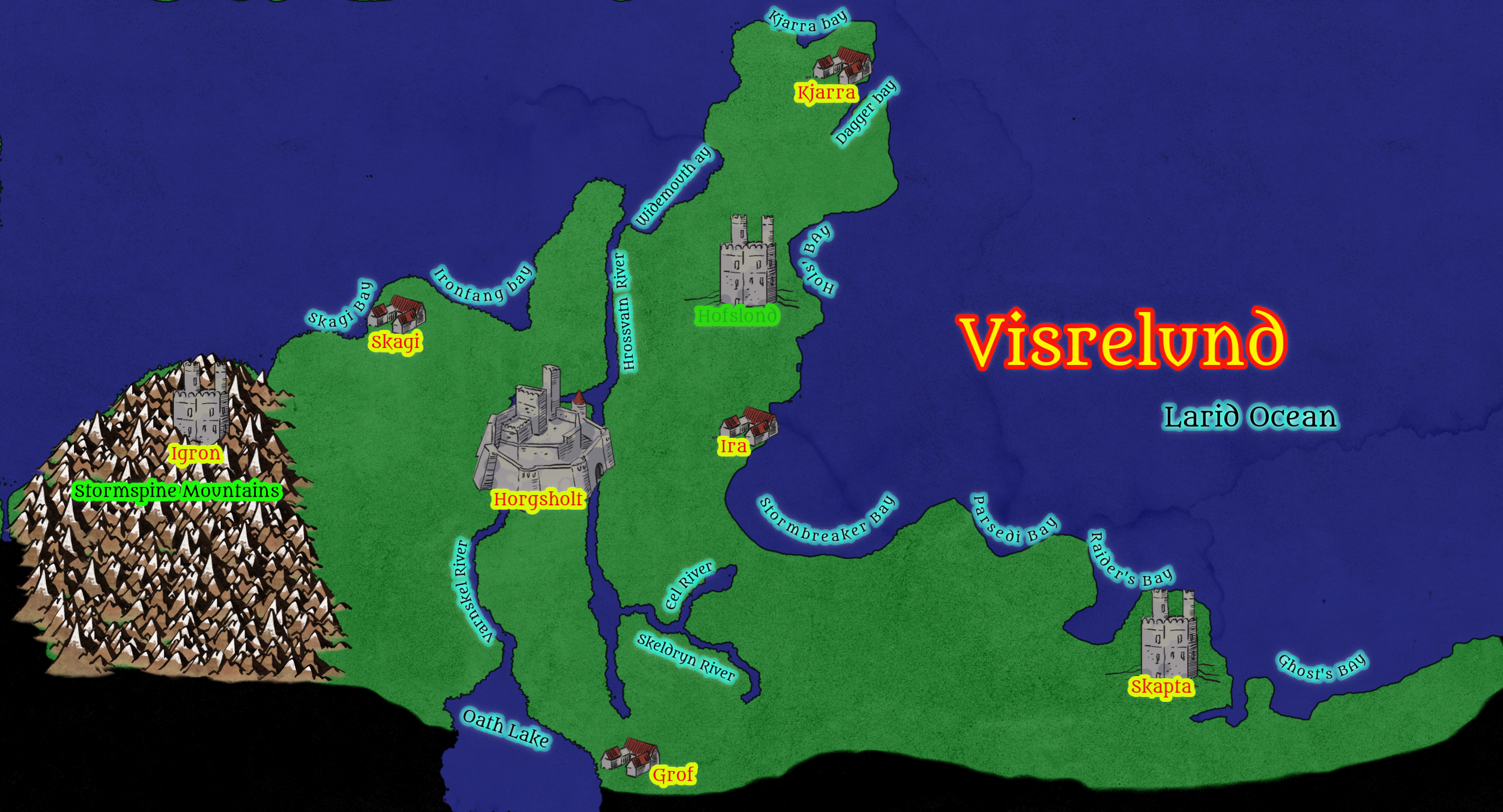
Visrelund occupies the northeastern reaches of Laridian, a realm shaped by salt, wind, and the relentless hand of nature. Jagged cliffs, narrow fjords, and hidden bays define the coast, while grassy plains and cold moorlands stretch inland. The mountains rise sharply, harboring Igron and Ursurik settlements. Rivers such as the Varnskel, Hrossvatn, and Skeldryn carve fertile valleys and provide passage from inland lakes to the sea.
Winters are bitter and long, with blizzards sweeping the moors and mountain passes. Summers are brief but bountiful, igniting sudden growth in pastures and fields. Fog and salt-laden winds frequently sweep the plains, shaping Visrelunders into hardy, resilient folk.
Humans dominate the coastal cities and inland towns, engaged in maritime trade, farming, and governance. Ursurik, bear-men of the mountains, serve as elite warriors, miners, and guardians of the northern passes.
History & Origins
Visrelund's origins lie in desperation and faith. Its first people were Celdaean exiles, outcasts driven from their ancestral homeland by brutal clan wars. They were men and women of broken lineages, storm-marked wanderers who carried little more than their weapons, their songs, and their ancestral fires in clay urns. With nowhere left to turn, they launched their longships into the tempestuous northern seas, guided only by omens in the stars and the whispers of the Aisir, the storm gods who had never abandoned them.
Their voyage was short but harrowing. Frostbite, and raging seas claimed many, but those who endured reached a jagged, wind-lashed coast. There, on a black-shingle shore beneath cliffs hammered by waves, they swore what would become known as the First Oath. By firelight and salt-wind, chieftains and priests bound themselves to one another and to the Aisir: never again to bow to foreign kings, never again to let the storm-gods fade, and never again to live divided by clan hatred. They would be Storm's Children, a people reborn in exile, tempered by hardship, and bound by sacred oath.
From these beginnings, Visrelund was forged not in peace, but in endurance and unity. The settlers raised crude halls, carved ships from the coastal forests, and began raiding the nearby waters for survival. Each voyage was both necessity and sacrament, proof that the Aisir's favor was with them. Raiding soon became more than survival, it became a measure of honor, strength, and spiritual devotion.
When the first Celdaean exiles arrived on the northeastern shores, they found the Ursurik already established in the mountain passes, northern moors, and river valleys. The Ursurik were a proud and territorial people, deeply attuned to the land and the rhythms of storm, snow, and sea. They lived in clan-based communities, guarding mountain forges, herds, and sacred stone circles, their culture rooted in honor, combat, and spiritual communion with ancestors and natural spirits.
At first, relations were cautiously wary. The Ursurik regarded the newcomers as fragile and inexperienced, their Celdaean customs strange and their longships alien to northern waters. Settlers, in turn, feared the Ursurik's size, strength, and reputation as fierce guardians of the mountains. Misunderstandings were common: disputes over hunting grounds, river access, and sacred sites led to tense standoffs, and at times, small skirmishes.
However, necessity quickly fostered cooperation. The exiles brought knowledge of shipbuilding, farming, and the Celdaean magic of winds and storms, which complemented the Ursurik's expertise in mountain warfare, hunting, and endurance. Shared threats, harsh winters, wild predators, and marauding northern tribes, encouraged alliances. Trade of tools, livestock, and crafted goods solidified bonds, while intermarriage began to weave cultural ties.
Over decades, the Ursurik and Celdaean settlers forged a mutual respect. Celdaeans taught coastal raiding and skaldic tradition, while Ursurik imparted survival skills for harsh winters and mountain combat. Spiritual practices merged: Ursurik rites of stone and ancestor veneration blended with Celdaean worship of the Aisir, creating a unified belief system that honored storm, mountain, and sea alike.
By the time the of the age of Clans, the Ursurik and settlers were no longer strangers, they were partners, forming the foundation of what would become Visrelund. The Ursurik lent their strength and knowledge of the land, the Celdaeans brought maritime skill and organized governance, and together they established a kingdom shaped by both mountain and sea, endurance and cunning, ritual and warfare.
In time, as the population grew, rivalries emerged once more. Families, once united in exile, fractured into clans, each competing for dominance of the fjords, bays, and inland plains. The Age of Clans was one of both bloodshed and brilliance. It was in this crucible that the traditions of the skalds were born, immortalizing victories and betrayals alike in verse. Warriors carved storm-runes into their flesh to channel the fury of the gods, and storm-priests rose to prominence as interpreters of fate, wielding both spiritual and political power.
Legends tell of the Battle of Stormbreaker Bay, where three great clans fought for seven days beneath lightning-filled skies until a storm-priestess declared the Aisir's judgment. In that moment, bloodshed ceased, and the victors took not only the land but the mandate of the storm-gods themselves. Such moments laid the foundation for the rise of High Jarls.
From the chaos of the Age of Clans, a new order emerged. The strongest leaders were not merely warriors, but those who carried both the blessing of the storm-priests and the loyalty of their clans. These became the High Jarls, sanctioned by merit, oath, and divine favor. Unlike kings who claimed blood-right alone, a High Jarl's legitimacy was constantly tested, by battle, by oath-keeping, and by the judgment of the skalds who ensured that deeds lived longer than flesh.
As High Jarls consolidated power, coastal cities like Horgsholt, Hofslond, and Skapta rose to prominence, while inland towns like Grof and mountain bastions like Igron secured the heartlands. Each settlement specialized, shipbuilding, smithing, raiding, horse-rearing, or spiritual guardianship, forming a web of resilience that bound Visrelund together.
Now, Visrelund is no longer the desperate refuge of exiles but a thriving realm of both sea and stone. Its ships are feared across the north, its warriors are marked by honor and storm-runes, and its faith burns brightly in every hall and hearth. Loyalty to kin, clan, and the Aisir defines every oath, while honor is measured as much in how one dies as how one lives. To outsiders, Visrelunders are seen as raiders, fierce and relentless. But to themselves, they are the Storm's Children, heirs of exile, masters of wind and wave, and guardians of an oath sworn in fire and salt that endures to this day.
Culture & Faith
Visrelunders live by a code of honor, kinship, and sacred duty, where every action is measured against the dual demands of community and the favor of the Aisir, the storm gods. Faith is woven into daily life: from the raising of a longship to the tending of the forge, from the care of herds to the weaving of sails, each task is performed as both craft and ritual.
Raiding is not merely a pursuit of wealth or glory, it is a spiritual undertaking. A successful voyage is seen as the Aisir's blessing, while misfortune at sea is interpreted as a test of courage, faith, and resilience. Shipwrights bless every keel with fire and salt, while smiths hammer their axes and blades to the rhythm of sacred chants, invoking ancestral spirits for strength in battle.
The people of Visrelund are tattooed with storm-runes, knotwork, and symbols of their lineage. Each mark tells a story of victories, losses, or sacred oaths, and is believed to channel divine protection and guidance. Storm-Speakers, trained from youth, read omens in the flight of birds, patterns of the wind, and visions from fire-dreams, advising High Jarls, warriors, and raiding captains on the favor of the gods.
Festivals, pilgrimages, and public rituals reinforce bonds between clans and towns. In Kjarra, the annual Raiders' Festival blends music, storytelling, and mock battles, uniting raiders, skalds, and merchants. Pilgrims travel to Grof to commune with inland spirits of fire, memory, and harvest, while coastal rituals honor the Aisir's command over sea and storm. These practices cultivate a profound sense of belonging, tying every Visrelunder, human or Ursurik, to a shared history and sacred duty.
Even in times of war or hardship, faith and culture remain inseparable from survival. Through ritual, song, and story, the people of Visrelund maintain their identity as the Storm's Children, heirs of exile, masters of the sea, and guardians of oaths sworn to kin and gods alike.
The Iceborn Orc Threat
From the frozen reaches far north, the Iceborn Orcs descend like a living storm, bringing frost, devastation, and terror to Visrelund's northern lands. Their raids strike the moors, mountain passes, and river valleys, leaving villages burned, livestock slaughtered, and survivors haunted by the sight of clawed, frostbitten warriors. Unlike other foes, the Iceborn are relentless, their cunning augmented by unnatural endurance against cold and hunger.
Visrelund's response is both disciplined and ritualized, combining strategy, faith, and community effort:
- Igron's Ursurik Warriors: The bear-men of Igron hold the high mountain passes, fortifying choke points and setting deadly ambushes. Their knowledge of snow, ice, and hidden trails allows them to strike swiftly and vanish before Orcish reinforcements arrive.
- Coastal Fleets: Longships from Horgsholt, Hofslond, and Skagi patrol northern bays and river mouths. Raiders familiar with both wind and tide intercept Iceborn detachments attempting to land, using hit-and-run tactics and coordinated volleys of arrows and javelins.
- Border Watch: A network of fortified posts and lookout towers along rivers, fjords, and valleys provides early warning. Storm-Speakers interpret snowstorms, animal patterns, and the northern lights to predict Orc movements, giving High Jarls the crucial time needed to marshal defenses.
Beyond military measures, the Iceborn threat has profoundly shaped Visrelund's culture. Sacred fires are lit along passes to protect travelers and warriors, runes are inscribed on weapons, hulls, and shields to ward against Orcish magic, and winter festivals reinforce unity through song, storytelling, and mock battles that train new generations of raiders. Trade with neighboring realms has increased, ensuring supplies of horses, furs, iron, and provisions to maintain northern outposts. Even in the harshest winters, these rituals and preparations sustain morale and cultivate a shared sense of purpose.
Ultimately, the Iceborn Orcs, though feared and deadly, have forged resilience, cohesion, and ingenuity among Visrelunders. Coastal towns, inland villages, and mountain bastions alike have adapted to living under the shadow of a relentless northern threat, ensuring that both human and Ursurik communities endure as the Storm's Children, ever vigilant and ever united.
Population Summary
- Total Population: Approximately 840,000
- Humans: 80% (672,000)
- Ursurik (bear men): 20% (168,000)
Cities & Towns
- Horgsholt (Capital): Perched atop cliffs overlooking Stormbreaker Bay, Horgsholt hosts the Great Hall of Oaths and the Temple of the Aisir. Skalds record deeds of warriors while shipyards launch fleets of longships. It is both political and spiritual heart, where High Jarls swear fealty and priests interpret divine winds.
- Hofslond: Hofslond, the Forge City, is famed for black-iron weaponry and coastal defenses. Its axes, blades, and spears are exported across Laridian. Forges here are sacred; each hammer strike is accompanied by prayers to the Aisir and ancestral spirits. Hofslond also serves as a training ground for raiders preparing for both sea and land campaigns.
- Skapta: A fortress-port at Saltfire Bay, Skapta blends military and spiritual authority. Storm-priests maintain sacred salt-fires and advise High Jarls on voyages, omens, and raiding strategies. The Salt Council interprets natural signs, ensuring Visrelund sails with divine favor.
- Kjarra: Kjarra thrives on mead-halls, trade, and festivals. The annual Raiders' Festival draws warriors, skalds, and merchants. Its bay serves as a harbor for returning fleets laden with spoils, and the town fosters both competition and camaraderie among raiders.
- Skagi: Skagi is the Boatwright's Haven, where longships are built with sacred ritual. Keels are laid with offerings, and masts are raised with song. Skagi's ships are considered blessed by the Aisir, essential for trade, exploration, and defense against northern threats.
- Ira: An isolated town of burial mounds and ghost-seers, Ira preserves the memory of the first Celdaean exiles. Pilgrims come seeking ancestral wisdom, and locals maintain ancient rites to commune with spirits. Though shrouded in mist, Ira is respected for its knowledge and spiritual insight.
- Grof: Nestled beside a fog-covered lake, Grof excels in horse-herding, brewing, and sacred stone circles. Pilgrims honor inland aspects of the Aisir, fire, harvest, and memory, strengthening bonds between coastal and mountain regions.
- Igron: The Mountain Bastion rises from the Stormspine Mountains. Ursurik clans guard northern passes, forges supply armor and weapons, and Deep Ancestor rites strengthen both people and land. Igron is harsh and proud, the northern shield against enemies and a center of mountain culture.
Religion & Faith
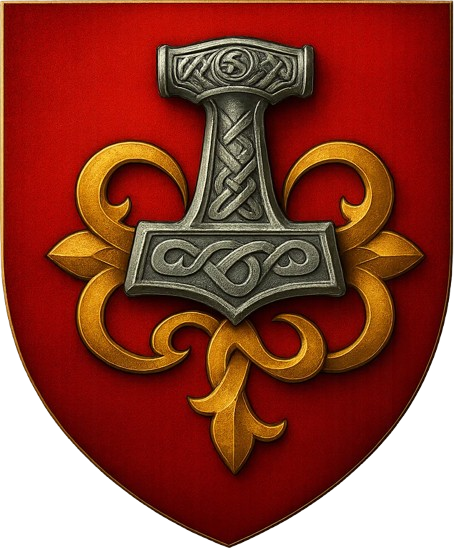
The people of Visrelund worship the storm god Thor above all. Revered as master of thunder, lightning, and the sea's fury, Thor embodies strength, courage, and protection. He is both a devourer and a guardian: his favor ensures victory in raids, safe passage across storm-tossed seas, and the endurance of communities through harsh winters.
Priests of Thor, often called Storm-Speakers, interpret his will through fire, thunder, the flight of birds, and the roar of waves. They guide High Jarls, bless fleets and weapons, and lead rituals that bind the people to Thor's might. Storm-Speakers are also historians, recording deeds and victories, ensuring the tales of warriors and clans endure in skaldic verse.
Religious practice permeates daily life. Shipbuilders invoke Thor's protection as keels are laid, smiths hammer blades with prayers to the storm, and farmers offer portions of harvest to guarantee survival during harsh seasons. Tattoos, runes, and knotwork are etched in honor of Thor, his blessings, and the ancestors who served him.
Festivals and pilgrimages celebrate Thor's power:
- Stormfall Festival: Held at Horgsholt to honor Thor's mastery of sea and sky, featuring ceremonial ship launchings, feasts, and displays of martial skill.
- Winter's Vigil: Marked in mountain strongholds like Igron, Ursurik warriors and their human allies light sacred fires, pray for protection against Iceborn Orcs, and recount ancestral deeds.
- Pilgrimages to Grof: Devotees travel inland to stone circles to honor Thor's influence over fire, harvest, and memory, reinforcing spiritual and communal bonds.
Through these practices, Visrelunders live in constant communion with Thor, shaping their culture, warfare, and governance. Strength, honor, and sacred duty are not mere ideals, they are the living embodiment of the storm god's will.
Relations with Neighbors
Visrelund maintains a complex and cautious relationship with its neighbors. With Beordmarr, trade and diplomacy are carefully balanced. Longships, black-iron axes, and salted fish flow south, while furs, armor, and prized horses move north. Mutual respect underpins these exchanges; both kingdoms are aware of each other's martial strength and the perils of northern raiders, yet both prefer the certainty of trade to the chaos of war.
Seasonal alliances are forged when external threats loom. The Iceborn Orcs, for example, have prompted coordinated patrols and intelligence-sharing, ensuring that both Visrelund's fleets and Beordmarr's northern militias can respond effectively to incursions. Such cooperation is always temporary, however, constrained by cultural pride, clan rivalries, and the ever-present memory of past conflicts.
Visrelund also maintains a cultural and historical connection to Celdaea, the ancestral homeland of the exiled settlers. While centuries have passed, the memory of Celdaean clan wars and religious persecution is preserved in skaldic verse, ritual, and law, serving both as a source of pride and a cautionary tale. Pilgrims sometimes travel south to Celdaean shrines, reinforcing a shared heritage while recognizing the political and spiritual independence of Visrelund.
Overall, Visrelund's foreign relations reflect a kingdom shaped by exile, resilience, and maritime skill: wary but pragmatic, proud yet adaptable, always ready to defend its coasts, clans, and sacred oaths.