Kingdom of Aranor
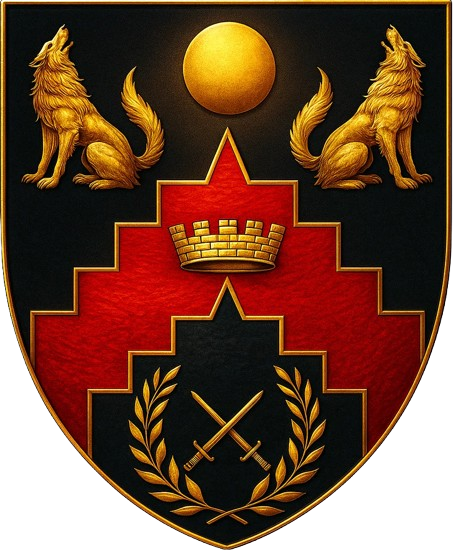
Aranor is a kingdom built on the principles of strength, chaos, and survival. Dominated by the Coyle, Flind, and Gnoll races, the kingdom is known for its harsh and brutal ways. Born from the ashes of a broken Wolven empire, Aranor has become a place where power is determined by force, and the strong dominate the weak.
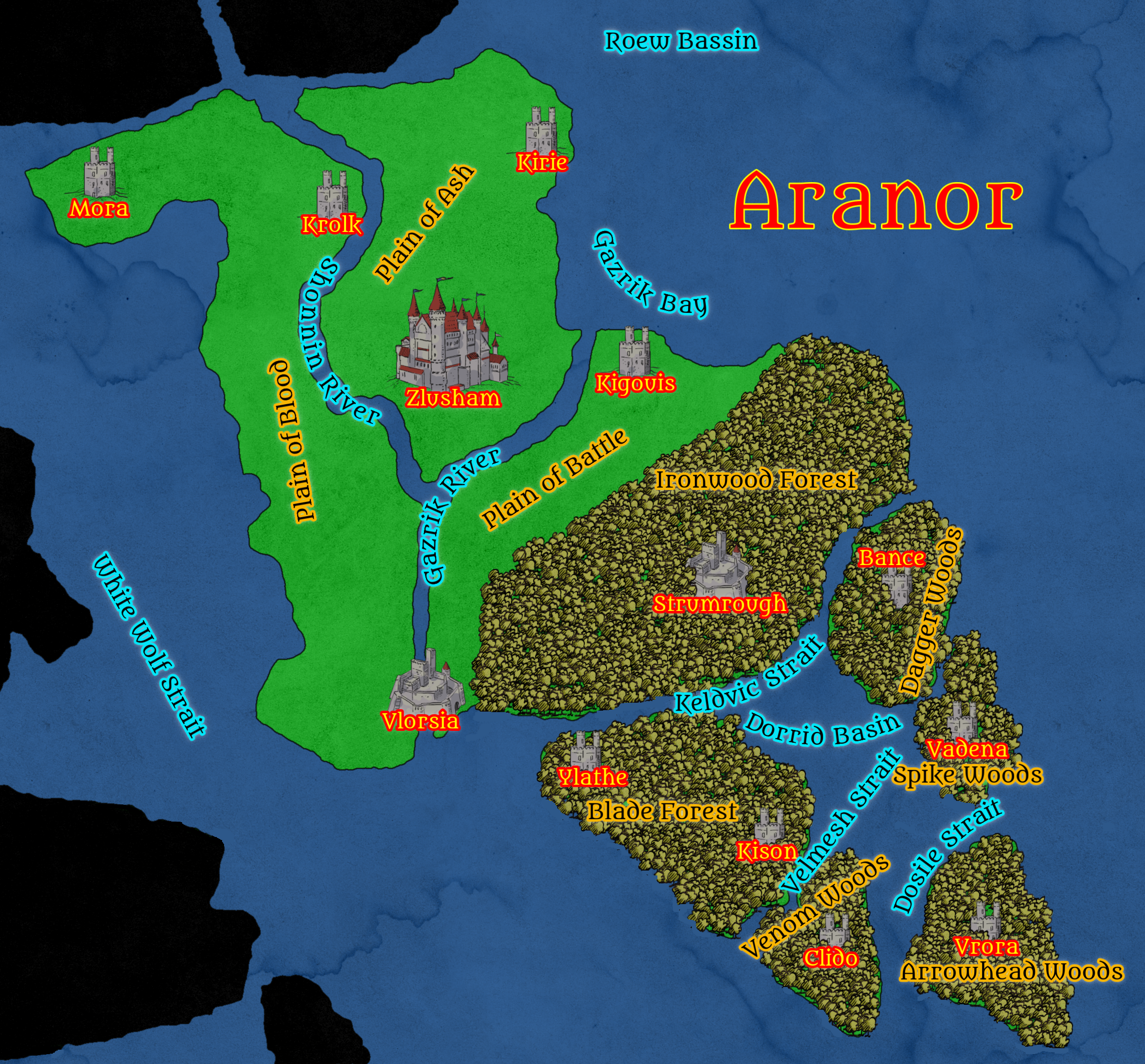
Aranor is a land of expansive plains and dense forests, with a landscape that is both harsh and unforgiving. The kingdom's geography plays a large part in its culture and way of life, as its inhabitants must contend with an environment that is as brutal as the kingdom's inhabitants.
Key Landmarks
The Blood Plains: A vast and desolate plain where most of Aranor's military activity occurs. The Coyle, Flind, and Gnolls frequently clash in this open expanse, leaving the ground stained with the blood of countless battles. The plains are filled with wild beasts and the remnants of long-forgotten wars, making it a dangerous place for those unprepared for conflict.
The Ironwood Forest: A massive, dense forest that stretches across the southern part of Aranor. The trees of Ironwood are exceptionally hard and valuable, making the forest a critical resource for the kingdom. The Coyle and Flind use the forest for its timber, while Gnolls hunt within its depths. The forest is known for its natural dangers, from predatory creatures to ambushes by rival clans.
The Hollowgrove: A shadowy, secluded area within the Ironwood Forest that is said to hold ancient secrets. The Coyle sometimes use this area for their dark rituals, and rumors of strange, supernatural phenomena abound. It is a place that both the Coyle and Gnolls avoid unless absolutely necessary.
Climate
Aranor's climate is varied but generally harsh. The plains experience extreme temperature shifts between summer and winter, with scorching heat in the summer and biting cold in the winter. The forested regions tend to be cooler and more temperate, but they are also prone to heavy rainfall and fog, creating a gloomy and oppressive atmosphere. The dense forests make travel difficult and often dangerous, with thick underbrush, wild animals, and enemy forces lurking in the shadows.
History of Aranor
Aranor's history is one of chaos, as the kingdom was born from the fractured remnants of the greater Wolven Empire. The Coyle, Flind, and Gnolls were once nomadic tribes, often in conflict with each other, but were eventually united under Wolven rule for the sake of conquest. However, the tensions between the races led to a rebellion, and the tribes rose up against their Wolven overlords, establishing Aranor as a kingdom ruled by those who understood the laws of strength and survival.The early years of Aranor were marked by constant warfare as the Coyle, Flind, and Gnolls fought for control of the kingdom. The Flind, with their brute strength and military prowess, dominated the early years, but the more cunning Coyle soon outsmarted them, and the Gnolls served as the shock troops in their endless campaigns.
The Rise of the Tyrant King
The kingdom was unified under the reign of Thalgor, a ruthless Coyle warlord who managed to bring the warring tribes together through sheer force of will. Thalgor's reign marked the height of Aranor's military strength, with the kingdom growing through conquest and terror. Thalgor imposed his brutal will on the kingdom, consolidating power and ruling through fear, violence, and bloodshed.
The government of Aranor is a brutal meritocracy based on strength and power. The Tyrant King rules with absolute authority, but his reign is often influenced by the Council of Warlords, the leaders of the various clans. These warlords are the true power in Aranor, each controlling a piece of territory and fiercely loyal to their own causes.
The Coyle hold the highest status in Aranor because of their cunning and political acumen. They often manipulate the other races, using espionage, trade, and diplomacy to further their interests. The Flind are the kingdom's enforcers, making sure that the Coyle's will is carried out through brute strength. The Gnolls are seen as expendable but are essential as shock troops in the kingdom's constant wars.
Clans of Aranor
The Coyle Clans: The Coyle are known for their intelligence and ruthlessness. They are the politicians, diplomats, and tacticians of Aranor, using their cunning to outmaneuver rivals and take control of vital trade routes. Their ability to adapt and manipulate makes them the most powerful race in the kingdom.
The Flind Clans: The Flind are the military might of Aranor. They are brutal warriors, known for their strength and unrelenting aggression. The Flind are used as shock troops and enforcers, ensuring that the Coyle maintain their grip on power.
The Gnoll Tribes: The Gnolls are the savages of Aranor, used for labor, raiding, and combat. They are often sent to the front lines in battle, where their savagery and overwhelming numbers make them a terrifying force. Despite their expendability, the Gnolls have an important role in the kingdom's military.
Economy and Resources
- Weaponry and Metalworking: Much of Aranor's economy is centered around the weapon industry. The Flind are master blacksmiths, creating brutal weapons such as spiked maces, flindbars, and war axes. The kingdom's abundant supply of iron from the Blood Plains and Ironwood Forest is crucial to its military might. These weapons are not only used internally but are also traded with other kingdoms for tribute and resources.
- Raiding and Pillaging: Aranor thrives on raiding and pillaging. The Gnolls lead these raids, terrorizing neighboring villages and kingdoms to steal wealth and enslave captives. The Coyle, ever the cunning strategists, facilitate these raids, using diplomacy and intimidation to gather tribute and resources from weaker nations.
- Timber and Trade: The Ironwood Forest provides much of Aranor's timber, which is used for building fortresses, crafting weapons, and creating enchanted objects. The kingdom also engages in limited trade with other kingdoms, especially in magical goods, weapons, and slaves. Aranor's trade is typically carried out under threat of force, with the Coyle manipulating trade deals to their advantage.
Influence and Relationships
- The relationship between Aranor and Roew: Aranor sees Roew as a kingdom defined by weakness and an excessive preoccupation with honor. The Wolven and Coyle cultures, though both canine in nature, are drastically different in their approach to warfare and governance. The Wolven of Roew, with their adherence to strict codes of honor and justice, are viewed by Aranor as overly rigid, bound by traditions that limit their capacity for ruthless action. The Coyle, though they share some of the same bloodline, follow a more strategic, diplomatic approach to war, often employing subterfuge and manipulation. Aranor, in contrast, is driven by chaos, survival of the fittest, and the immediate pursuit of power. This cultural and philosophical divide leads to frequent tensions between the two kingdoms. Aranor has long seen Roew as a target to test and provoke. The raids on Roew's borderlands are not only to secure resources but to provoke Roew into responding, allowing Aranor's forces to gauge their strength and reaction. These border skirmishes are frequent, with Aranor's warbands testing the defenses of Roew to see how much they can push without triggering a larger war. For the Wolven, the concept of honor and justice holds paramount importance. However, the Coyle of Aranor, with their ruthless strategies, often clash with the Wolven's sense of righteousness, as Aranor seeks to undermine or force Roew into submission. These ongoing clashes, both on the battlefield and in the diplomatic arena, reflect the deep cultural rift that exists between the two kingdoms, making any peaceful resolution difficult. The fight for respect and control of the borderlands remains an enduring conflict between the two.
- The relationship between Aranor and Keldshar: The kingdom of Keldshar, in stark contrast to the brutal and chaotic ways of Aranor, represents peace and harmony. The Kankoran of Keldshar, a relatively small but highly resilient people, have long embraced a way of life that emphasizes balance, peaceful coexistence with nature, and spiritual growth. Unlike the war-driven, aggressive nature of Aranor, Keldshar has remained a sanctuary of tranquility, rarely engaging in outside conflicts. The peaceful nature of Keldshar stands as an affront to Aranor, which thrives on the conquest and chaos that come with constant conflict. Aranor's leadership, particularly the Coyle warlords, have attempted to extend their influence over Keldshar, viewing its neutrality as a threat to the regional dominance they crave. Though Keldshar has remained neutral and largely avoided getting involved in the larger conflicts surrounding it, Aranor periodically seeks to disrupt this peace, either through covert manipulation, intimidation, or outright threats. While Keldshar has avoided direct military confrontation, the kingdom's peaceful stance makes it an easy target for Aranor's influence. The Coyle and Gnolls of Aranor occasionally attempt to sway Keldshar into alliances, offering protection in exchange for military support or resources, but Keldshar is generally resistant to these advances, preferring to remain uninvolved in the broader conflicts. Aranor's occasional threats against Keldshar, however, continue to put the smaller kingdom on edge, as it remains vulnerable to Aranoran aggression.
- The relationship between Aranor and Bal'Lordorron: Bal'Lordorron, a kingdom of military might and strategic diplomacy, has a complicated relationship with Aranor. Bal'Lordorron respects the strength and power of Aranor, acknowledging its ability to wage war and disrupt the natural order. However, Bal'Lordorron is also deeply wary of Aranor's chaotic and unpredictable nature. The kingdom, with its long-standing tradition of order, law, and strategic stability, finds it difficult to work with a kingdom that thrives on uncontrolled violence and disruption. The warlike nature of Aranor threatens Bal'Lordorron's pursuit of order and cultural advancement. While Bal'Lordorron is strong and capable in battle, it is also a kingdom of diplomacy and cultural sophistication, where strategic alliances and economic cooperation play as much of a role as military strength. Aranor's chaotic tendencies often lead to unpredictable outcomes in any attempts at diplomacy or negotiation. Any agreements made with Aranor are fragile and often broken by the aggressive and self-serving Coyle leadership. While Bal'Lordorron does acknowledge Aranor's military power, the kingdom remains suspicious of Aranor's leadership and its ability to maintain long-term stability. Aranor's disregard for treaties and agreements makes diplomacy with the kingdom difficult, and Bal'Lordorron is often forced into difficult political positions, balancing its need to protect itself and its interests while avoiding direct conflict with the unpredictable Aranoran warlords.
- Relations Between Aranor and the Kingdom of Terran: The relationship between Aranor and Terran is marked by tension, hostility, and mutual distrust, primarily due to their contrasting cultures, goals, and histories. Both kingdoms are powerful in their own right, but their approaches to governance, military strategy, and diplomacy differ greatly, leading to an uneasy coexistence. While Aranor thrives on chaos, brutality, and dominance, Terran values order, stability, and law. This cultural divide fosters continuous friction and occasional conflict.
- Military Conflict and Tension: Aranor's history of aggression, territorial expansion, and ruthless military tactics makes it a constant threat to its neighbors, including Terran. The Tyrant King of Aranor has made it clear that expansion is a primary goal, with constant raids and invasions into nearby territories. These actions, driven by the kingdom's need for resources, plunder, and power, have brought it into direct conflict with Terran on multiple occasions.
- Aranor's Military Aggression: Aranor is home to Coyle, Flind, and Gnoll warriors, all trained to conquer and kill. Aranor often sends warbands to raid the borders of Terran, hoping to pillage and weaken the kingdom. While these raids are usually limited in scope, they are frequent enough to keep Terran on high alert.
- Terran's Defensive Military Posture: In contrast, Terran's military focuses on defensive strategies, using fortifications, archers, and cavalry to repel any incursions from Aranor. Terran's well-trained Legions of the Sun maintain a constant watch along their borders, prepared for potential Aranoran raids or full-scale invasion. The mountainous terrain of Terran provides a natural defense, allowing Terran's forces to easily counter any military threat.
- Skirmishes and Border Clashes: The tension along the borders often leads to skirmishes, border raids, and occasional open conflict. Terran usually retaliates swiftly to protect its lands, leading to short but intense military engagements. However, neither side has yet been able to decisively defeat the other, and a long-standing cold war persists.
- Ideological Differences and Cultural Clashes: The cultural divide between Aranor and Terran is one of the primary sources of conflict. Aranor values strength, survival of the fittest, and brutality, while Terran values order, law, and civility. These contrasting ideologies make diplomacy difficult, and any peace talks are often short-lived.
- Aranor's Embrace of Chaos and War: The people of Aranor believe that strength and domination are the ultimate forms of power. Their religion, centered around the worship of war gods like Kargoth, encourages bloodshed, conflict, and territorial expansion. Aranor's political system, run by warlords and the Tyrant King, thrives on military conquest and chaos.
- Terran's Focus on Law and Order: In stark contrast, Terran has built a society around the principles of law and order. The kingdom is ruled by a monarchy, with a strong emphasis on justice, stability, and peaceful diplomacy. Terran's Pantheon of Rurga upholds concepts of truth and justice, and the kingdom places significant importance on governance, strategy, and a stable military presence. Terran views Aranor's reliance on force as a sign of weakness and instability.
These ideological differences create constant friction. Terran sees Aranor as a dangerous, unpredictable neighbor, while Aranor views Terran as weak and vulnerable, unwilling to engage in the necessary violence and conquest to survive in such a brutal world. - Trade and Economic Relations: Trade between Aranor and Terran is rare and often done under duress, with Aranor using intimidation or raids to force Terran into economic exchanges. Terran has no desire to trade with Aranor willingly, as it sees the kingdom as a threat and generally seeks to limit contact.
- Economic Disruptions: Aranor's raiding parties disrupt Terran's trade routes and agricultural sectors, making it difficult for Terran to conduct trade peacefully. While Terran exports agricultural goods, timber, and craftsmanship, Aranor tends to take whatever it can through force or coercion rather than through negotiated trade agreements.
- Occasional Trade Agreements: There are moments when the Coyle of Aranor, with their diplomatic cunning, have managed to broker temporary trade agreements, particularly involving mineral resources, timber, and slaves. These agreements are often short-term and fragile, with Aranor demanding steep prices for any goods it provides, and Terran trying to maintain its independence while balancing these strained exchanges.
- Though there have been attempts at diplomacy, the relationship between Aranor and Terran has rarely been peaceful. Terran has, at times, sought diplomatic solutions, hoping to maintain peace and stability. However, Aranor's refusal to follow rules and honor agreements has made such talks mostly futile.
- Terran's Diplomatic Stance: Terran has attempted to appease Aranor by sending envoys, offering treaties, and forming alliances with neighboring kingdoms to counterbalance Aranor's growing threat. The kingdom seeks to ensure peace through alliances and defensive pacts with other neighboring realms.
- Aranor's Diplomacy: The Tyrant King and his Council of Warlords have little interest in peaceful relations. Aranor's leadership is interested only in expansion, force, and subjugation of its neighbors. While temporary peace may be negotiated, it is usually done under threat, and the terms of such peace are often disregarded once Aranor gains what it needs.
- Periodic Ceasefires: At times, Aranor may agree to a temporary ceasefire, usually in exchange for goods or strategic advantages. These ceasefires rarely last, and Aranor will often break the terms if they believe they can gain more by doing so.
- The Shadow of War: Future Outlook: Looking to the future, the relationship between Aranor and Terran will likely remain one of tension and fragile peace. Aranor's constant drive for expansion and domination will inevitably lead to further military clashes with Terran, whose forces will continue to defend their borders while seeking diplomatic solutions.
- Potential Conflict: Should Aranor continue to build its military power and territory, Terran may eventually be forced into open conflict to protect its sovereignty. However, Terran is deeply committed to maintaining peace through alliances, and it will likely attempt to delay war by forming stronger coalitions with other kingdoms in the region.
- A Cold War: The two kingdoms may enter into a prolonged cold war, marked by border skirmishes, intelligence gathering, and political intrigue. Neither side may seek a full-scale war immediately, but the constant threat of violence will persist.
Roew views Aranor as a chaotic, war-driven kingdom, but Aranor sees Roew's adherence to honor and justice as a weakness to be tested, often engaging in border raids and cultural clashes.
Keldshar, with its peaceful nature and neutrality, stands in stark contrast to Aranor's aggressive, expansionist ways. While Keldshar seeks to avoid conflict, Aranor occasionally threatens and seeks to undermine its peace.
Bal'Lordorron respects Aranor's strength, but its rigid commitment to order, stability, and cooperation is at odds with Aranor's chaotic, disruptive nature. Bal'Lordorron often struggles to negotiate with Aranor as its diplomacy is often undermined by Aranor's military unpredictability. The relationship between Aranor and Terran is one of constant conflict and uneasy peace. Aranor views Terran as a weak, defenseless kingdom, while Terran sees Aranor as a dangerous, unpredictable force. Their military engagements, cultural differences, and economic rivalries ensure that their relationship remains strained, with Terran striving for peace and diplomacy and Aranor aiming for conquest and destruction. Ultimately, Terran's future dealings with Aranor will likely be shaped by the balance of military strength and strategic alliances.
In each of these relationships, Aranor's inability to maintain stability and its focus on conquest lead to a fragile balance with its neighbors. Each kingdom must constantly adapt to Aranor's unpredictable behavior, and the tension between them will likely continue to simmer as long as Aranor's ambitions remain unchecked.
Aranor is a kingdom where power and survival reign supreme. Its people live by the brutal principle that only the strong survive, and its constant state of warfare and internal strife fuels its economy and growth. While it remains small compared to its neighbors,
Aranor is a kingdom that commands respect through its sheer brutality and military might. It is a land of chaos, where only the strongest can rise to power and where might makes right.
Religion in Aranor: A Kingdom of Brutality and Power
In Aranor, religion is not about peace, love, or enlightenment, rather, it is about strength, domination, and the survival of the fittest. The people of Aranor believe in gods and forces that embody the very essence of violence, chaos, and war. These gods are often reflected in the harsh realities of their world, and their worship is tightly interwoven with the kingdom's brutal, anarchic society.
The Gods of Aranor: The Pantheon of Chaos and Might
Aranor's religious beliefs center around a pantheon of deities that symbolize aspects of strength, destruction, and domination. These gods are not benevolent figures but rather forces of nature and power, often demanding tribute in the form of blood, sacrifice, and conquest. The Coyle, Flind, and Gnoll races each have their own deities, but all the gods are unified by their focus on war, survival, and power.
Key Deities in the Aranoran Pantheon
- Kargoth, the Iron Fist (God of Strength and War) Kargoth is the most widely worshipped god in Aranor, revered by Coyle, Flind, and Gnolls alike. He is the god of strength, battle, and the unyielding will to conquer. Kargoth represents the embodiment of martial prowess, demanding that his followers fight, dominate, and impose their will upon others. Rituals for Kargoth often involve brutal displays of combat and strength, such as gladiatorial battles, trials of strength, and blood sacrifices in his name. His symbol is a raised fist, clutching a weapon, often depicted in iron or obsidian.
- S'varax, the Ravager (Goddess of Destruction and Chaos) S'varax is the goddess of destruction, chaos, and entropy. Her followers believe that to embrace destruction is to embrace freedom from order, and thus she is often worshiped during times of war or rebellion. Coyle and Flind particularly honor her as they seek to dismantle structures of power that would seek to control them. S'varax is depicted as a monstrous, multi-armed figure, each hand holding a different weapon, blades, axes, and whips. Her followers engage in ritualized destruction, where villages or settlements are raided, burned, and destroyed in her name.
- Thorg, the Beastlord (God of Beasts, Survival, and Sacrifice) Thorg is a primal god worshipped by the Gnolls and some of the more animalistic Coyle tribes. He is the god of beasts, survival, and the bloodlust of the hunt. His followers believe that survival is the highest calling, and that every day is a battle against the forces of death. Thorg demands that his followers constantly prove their worth, whether through hunting dangerous creatures, battling enemies, or performing sacrifices. His symbol is a wolf's paw print, often tattooed or painted on the skin of his followers.
- Vraask, the Warforge (God of Metal and War Machines) Revered by the Flind and Coyle who specialize in forging weapons, Vraask is the god of metal, war machines, and the craft of weapons. His followers often perform rituals of blacksmithing, forging weapons and armor in his name, with the belief that the process of creation is also an act of war. Vraask is associated with the destructive power of war machines, siege weapons, and the forging of legendary weapons that can turn the tide of battles. His symbol is a hammer striking an anvil, and his followers create elaborate offerings in the form of weaponry and metal sculptures.
Religious Practices and Rituals
Religion in Aranor is not about worshiping gods out of devotion but rather appeasing the forces of power and war to ensure victory and strength. The rituals are violent, destructive, and often involve acts of war or sacrifice. The people of Aranor believe that their gods demand bloodshed, and this is reflected in their religious practices.
- Blood Sacrifices and Rituals of War: The most common religious ritual in Aranor involves blood sacrifices. Whether in battle or in more ceremonial contexts, followers of Kargoth, S'varax, and Thorg offer sacrifices of animals, enemies, or even their own kin to please the gods. The most sacred of sacrifices is during the Blood Moons, rare lunar events when the followers believe the gods are most likely to accept their gifts of violence and destruction.
- The Sacrifice of the Weak: During times of war or famine, the followers of Thorg or S'varax may perform ritual sacrifices to appease their gods. The weak or the sick are often chosen for these sacrifices, symbolizing the brutal natural order of Aranor, where only the strong survive.
- The Trial of Steel: A common ritual to Kargoth is the Trial of Steel, where warriors engage in duels or large-scale battles to earn favor with the god of strength. These are brutal, no-holds-barred contests, often ending in death. The battlefields where these trials take place are seen as holy ground.
Festivals of Chaos and Blood
There are several festivals and holy days celebrated throughout the kingdom of Aranor, though these celebrations are marked by violent and chaotic displays. These festivals are seen as ways to honor the gods and prove the strength of the kingdom's warriors.
- The Day of Blades: A major festival dedicated to Kargoth, where the Coyle, Flind, and Gnolls come together to compete in a grand tournament of combat. The winner is crowned the “Champion of Kargoth” and is often given a blessed weapon forged in the god's name.
- The Feast of Blood: A festival to honor S'varax, where warriors, shamans, and warlords take part in brutal raids and raids on villages, destroying everything in their path. It is a violent, chaotic celebration of destruction, often involving public executions, displays of brutality, and the offering of captured enemies as sacrifices to the goddess.
Temples and Shrines
The temples of Aranor are grim, foreboding structures, built from dark stone or iron, often adorned with weapons, skulls, and bloodstained altars. They are places of both worship and military strategy. The largest temple in Aranor is dedicated to Kargoth, and it serves as the seat of power for the Coyle and Flind warlords. Smaller shrines dedicated to S'varax and Thorg can be found scattered throughout the Ironwood Forest and Blood Plains, where followers can offer their sacrifices in private.
Religious Leaders and Clergy
Religious leaders in Aranor are not priests in the conventional sense but are often warrior shamans or tribal leaders who channel the power of the gods through their strength, violence, and leadership. These leaders serve both as spiritual guides and military commanders, ensuring that the will of the gods is carried out on the battlefield and in the rituals.
- The Warlord Priests: These are powerful individuals who have risen through the ranks of Aranor's society by their strength and faith. They are both warriors and religious leaders, performing sacrifices, leading armies, and ensuring the gods' favor in battle. They often bear the title of “Blood Priest” or “War Priest.”
- The Shamans of Thorg: Particularly within Gnoll tribes, shamans play a crucial role in religious practice, interpreting the will of Thorg through visions, dreams, and communion with the spirits of the land and animals.
Religion in Aranor is a tool of domination and survival. The gods of Aranor demand strength, bloodshed, and the destruction of the weak. The people of Aranor do not seek peace or enlightenment from their gods, but rather the power to destroy and conquer. In a kingdom built on survival and chaos, the gods offer the guidance to live, and die, by the sword.
Military of Aranor: A Kingdom Built on Blood and Power
The military of Aranor is the beating heart of the kingdom, brutal, merciless, and forged in the fires of war. In Aranor, strength is the ultimate form of authority, and the military is the embodiment of the kingdom's core values: survival, conquest, and dominance. The Coyle, Flind, and Gnoll races make up the backbone of the kingdom's military, each contributing their own unique skills to the war machine.
The Structure of Aranor's Military
Aranor's military is not just an army but a way of life, where every individual is trained to fight, kill, and survive. The army is built around warbands led by warlords, and every soldier is part of a brutal hierarchy determined by strength and battlefield success.
The Tyrant King's War Council
At the pinnacle of the military hierarchy is the Tyrant King, who commands the entire kingdom's military forces. The Tyrant King is a figure of absolute power and can issue orders without question, commanding warlords, generals, and even the lower ranks. The Tyrant King's orders are enforced by the Council of Warlords, a group of the most powerful and influential military leaders from the Coyle, Flind, and Gnoll factions. These warlords control specific regions and warbands, reporting directly to the Tyrant King.
Warlords and Clan Leaders
Each of the major factions in Aranor is ruled by a warlord who commands the warbands of their respective race. These warlords are known for their strength, cunning, and battlefield experience. They are highly respected by their followers and are often seen as both military and spiritual leaders, guiding their warriors in battle and ensuring the will of their gods is carried out.
- Coyle Warlords: The Coyle excel in tactics, manipulation, and espionage. They are the strategists of Aranor, using their intellect to outmaneuver the enemy. Coyle warlords often lead from the shadows, using spies, ambushes, and covert operations to achieve their goals. Their military forces are typically made up of skirmishers, archers, and raiders, skilled in both ranged combat and surprise attacks.
- Flind Warlords: The Flind are the brute force of the kingdom, the hammer that smashes through enemy lines. They lead the heaviest infantry, heavily armored warriors armed with flindbars, spiked maces, and battle axes. Flind warlords are the most physically imposing of Aranor's leaders, and their warbands focus on direct, brutal combat. The Flind also have elite shock troops who ride on war-beasts or war-mounts, further adding to their terrifying presence on the battlefield.
- Gnoll Chieftains: The Gnolls are the foot soldiers and shock troops of Aranor. Led by Gnoll chieftains, they make up the bulk of Aranor's army. They are relentless, savage, and overwhelming in numbers. Gnolls are usually armed with battle axes, swords, or spears, and their warbands rely on sheer aggression and numbers to break enemy lines. Gnoll chieftains inspire their troops with a bloodthirsty zeal, urging them to destroy, burn, and pillage as they advance.
Key Units in Aranor's Military
The military of Aranor is divided into specialized units based on the strengths of the Coyle, Flind, and Gnoll races. Each unit plays a key role in maintaining Aranor's dominance and ensures that its forces are flexible, deadly, and unyielding.
- The Blood Raiders (Coyle Raiders and Skirmishers): The Coyle are known for their agility, cunning, and guile. The Blood Raiders are elite raiders and skirmishers who excel in hit-and-run tactics, ambushes, and flanking maneuvers. They specialize in stealth attacks, often infiltrating enemy territory, setting traps, and causing chaos. Coyle warbands are highly mobile, often fighting on horseback or using light armor for agility. These raiders are also adept at siege sabotage, breaking into enemy camps under cover of night to disrupt supply lines or destroy important structures.
Tactics: Surprise strikes, intelligence gathering, ambushes, and scouting.
Strengths: Stealth, ambush, intelligence gathering.
Weaknesses: Lack of heavy armor, vulnerable in direct combat. - The Iron Fangs are Flind shock troops that represent the overwhelming force of Aranor's military. These warriors are heavily armored and armed with flindbars, spiked maces, and battle axes, making them devastating in direct combat. The Flind are known for their brutality, and the Iron Fangs serve as the kingdom's front-line warriors. They are trained for siege warfare, flanking, and breaking enemy formations with sheer force. Flind warbands are often accompanied by war beasts, large, savage creatures that instill fear in enemies.
Tactics: Heavy infantry assaults, siege warfare, shock attacks.
Strengths: Power, armor, endurance.
Weaknesses: Slow and less flexible than Coyle or Gnoll forces. - The Bloodhowlers (Gnoll Shock Troops): The Gnolls are the backbone of Aranor's military, and the Bloodhowlers are Gnoll shock troops that charge into battle with reckless abandon. These warriors are savage, unrelenting, and ferocious in combat. Gnoll warbands rely on overwhelming numbers and the sheer savagery of their attacks to break the enemy. The Bloodhowlers are most often used in frontline assaults, where their size and aggression can be used to crush the enemy. Gnolls are also capable of operating as skirmishers when required, setting ambushes or flanking from the woods or plains.
Tactics: Brutal charges, overwhelming force, direct assault.
Strengths: Numbers, aggression, savagery.
Weaknesses: Lack of discipline, vulnerable to tactical strikes. - The Ravager Cavalry (Flind and Coyle Cavalry): Flind and Coyle warbands use cavalry units called Ravager Cavalry. These mounted warriors use war mounts (usually warhorses or beasts) to engage in fast-moving cavalry charges, hit-and-run raids, and flanking attacks. Flind cavalry is highly effective for smashing through enemy lines or raiding villages, while the Coyle cavalry is often used for scouting, capturing prisoners, or harassing enemy forces during larger engagements.
Tactics: Flanking, harassment, quick strikes.
Strengths: Speed, maneuverability, tactical surprise.
Weaknesses: Vulnerable if caught in a prolonged battle. - The Fleshgrinders (Gnoll Skirmishers and Archers): The Gnolls are often used as archers and light infantry, with the Fleshgrinders being a key unit of Gnoll skirmishers who specialize in ranged combat. Armed with bows, crossbows, and javelins, these Gnolls harass and pelt the enemy with arrows from a distance. The Fleshgrinders often work in tandem with Coyle raiders to create a devastating multi-pronged attack, using ranged combat to soften the enemy before closing in with melee troops.
Tactics: Hit-and-run, ranged attacks, harassment.
Strengths: Precision, agility, mobility.
Weaknesses: Lack of close-combat power.
Training and Recruitment
Training in Aranor is brutal, demanding the utmost physical strength, mental toughness, and adaptability. Children born into the Coyle, Flind, or Gnoll clans are trained in combat, survival, and military strategy from an early age. Military training involves a mix of individual combat and group tactics, with a strong emphasis on survival and domination. Warriors must earn their place in society through battle, with higher positions of power granted only to those who prove their strength in combat.
Key Military Roles
- Warlords: Leaders of individual clans and warbands.
- Generals: High-ranking officers who lead entire armies and answer to the Tyrant King.
- Shock Troops: Elite warriors of Flind, Coyle, and Gnoll clans who engage in direct combat.
- Scouts and Raiders: Coyle-led units focused on stealth, intelligence, and sabotage.
The military of Aranor is a living embodiment of the kingdom's philosophy: power through chaos, violence, and survival. The Coyle, Flind, and Gnoll races each contribute their unique strengths to create a terrifying, relentless force capable of overcoming any obstacle. Aranor's army is not just a fighting force, it is a kingdom's lifeblood, built on the unyielding principles of domination and bloodshed.
Population Breakdown
Total Population of Aranor: 200,000
- Coyle: 100,000 (50%)
- Flind: 60,000 (30%)
- Gnoll: 40,000 (20%)
Cities
- Zlushham (Capital City): The capital city of Aranor, Zlushham is the heart of the kingdom's power, serving as the political and military center. The Tyrant King and the Council of Warlords reside here, making it the most fortified and controlled city in the kingdom.
- Mora: Mora is a major military stronghold, home to the largest Flind and Coyle garrisons in Aranor. Known for its impressive defenses and strategic position, Mora is a key point for launching raids into neighboring territories.
- Krolk: Krolk is a rough and untamed city on the edge of the Ironwood Forest. It is a haven for Gnolls and Flind warriors, with the Gnolls using it as a base for their raiding parties. The city's economy thrives on plunder and the resources from the nearby forests.
- Kirie: Kirie is a city built near the Blood Plains, known for its constant skirmishes and bloodshed. It serves as a staging ground for Coyle warbands and Flind forces. The city's name is feared in nearby kingdoms, as it is a symbol of relentless warfare and brutality.
- Kigouis: Kigouis is a key city for the Coyle, where espionage, sabotage, and manipulation are the primary tactics. The Coyle control much of the trade and military strategy here, using it as a way to consolidate power and weaken rival factions.
- Vlorsia: Vlorsia is a trade hub for Aranor, where plundered goods and slaves are exchanged. Though a relatively peaceful city compared to the others, it serves as a key center for economic activity. The Coyle use it as a means of controlling the kingdom's wealth, often striking trade deals under threat of violence.
- Strumrough: Located near the Ironwood Forest, Strumrough is a fort city where Flind and Gnolls are stationed to secure the forest's timber and resources. It is a critical location for Aranor's military, providing materials for weapon forging and fortifications.
- Ylathe: Ylathe is an isolated city, known for its strategic positioning near mountain passes. It serves as a fortress for Flind warriors and provides a staging area for Gnoll raids on the Blood Plains. The city's cold, rocky landscape mirrors the harshness of the people who inhabit it.
- Kison: Kison is a city of Gnoll warriors, often used for training and gathering warbands. It is located near the southern edge of Aranor, providing a defensive outpost against any potential invasions. Gnoll tribes frequent Kison to recruit soldiers and prepare for raids.
- Bance: A smaller, more rustic city on the plains of Aranor, Bance is a strategic point for controlling the southern regions of the kingdom. It is primarily inhabited by Gnolls, who use it as a base for nomadic raids and as a supply point for war parties traveling across the plains.
- Vadena: Vadena is a city that serves as a Coyle-controlled port on the edge of the kingdom. Though Aranor is not a maritime power, Vadena allows the Coyle to exert influence over the waterways, providing the kingdom with opportunities for maritime raids and controlling coastal trade routes.
- Clido: Clido is a city of raiders and mercenaries, often home to Coyle and Gnoll forces that prefer to work as independent warriors. The city serves as a meeting ground for various warbands, mercenary groups, and Coyle spies, where dangerous alliances are forged.
- Vrora: Located in the heart of Aranor, Vrora is the spiritual and ceremonial center of the kingdom. It is home to the War Priests who perform dark rituals in the name of Kargoth, the god of strength and war. Vrora is also a training ground for the kingdom's elite soldiers, particularly those destined to lead the most brutal campaigns.
- Military Conflict and Tension: Aranor's history of aggression, territorial expansion, and ruthless military tactics makes it a constant threat to its neighbors, including Terran. The Tyrant King of Aranor has made it clear that expansion is a primary goal, with constant raids and invasions into nearby territories. These actions, driven by the kingdom's need for resources, plunder, and power, have brought it into direct conflict with Terran on multiple occasions.