Kingdom of Bal`Lordorron
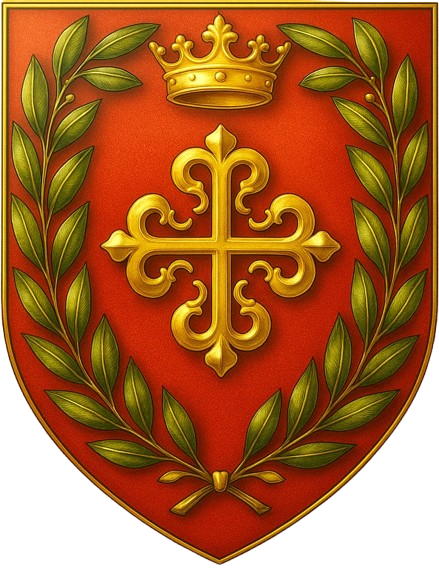
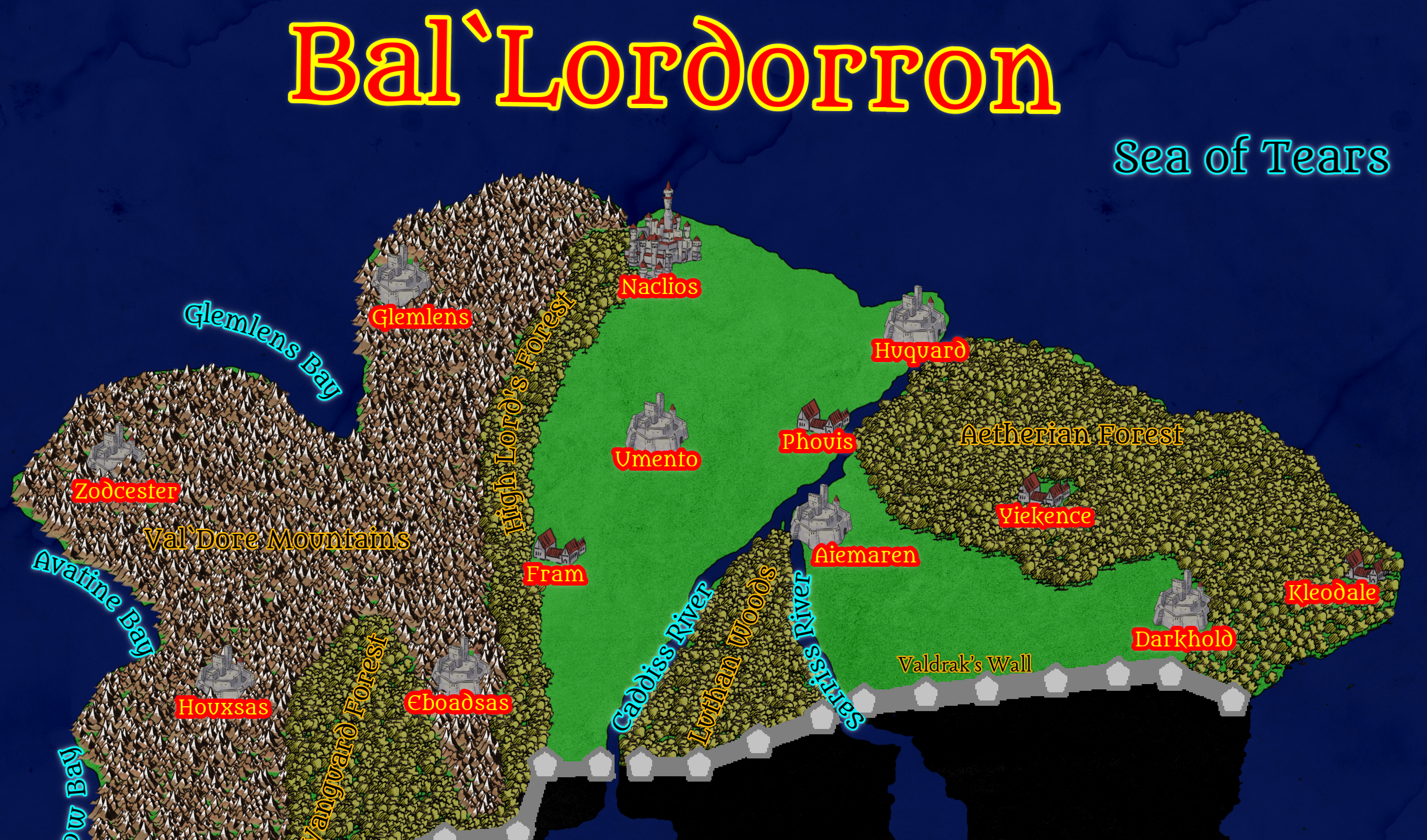
Bal`Lordorron is a kingdom of unmatched prosperity, culture, and military strength, nestled in the northern reaches of the Yeaoshan Continent. The kingdom stretches across diverse landscapes, from fertile plains to majestic forests, towering mountains, and glittering rivers. Its geography offers abundant resources, making it a hub for agriculture, trade, and craftsmanship. With a long-standing tradition of peace and progress, Bal`Lordorron is one of the more respected realms in the known world.
A Kingdom of Harmony and Resilience, Shaped by Shadows
In the heart of the storied realm of Bal`Lordorron stands Naclios, the resplendent capital city once known as Lordor, a name now spoken with reverence and sorrow. Once a jewel of civilization, Lordor was shattered during the cataclysmic Sundering, a magical upheaval that fractured the land and its people. But from ruin rose resilience. Naclios, reborn from the ashes, now gleams with purpose, a testament to the indomitable spirit of its citizens. Its marble spires and gilded halls echo with the voices of history, while its bustling avenues pulse with the lifeblood of a kingdom restored.
Presiding over this renaissance is the High King, descendant of ancient dynasties, whose rule is tempered by wisdom and forged in the crucible of past trials. He is not alone in his stewardship. A grand council, composed of noble houses, seasoned military strategists, arcane scholars, and emissaries from every corner of the realm, guides the kingdom's fate. This council ensures that no voice is unheard, no province forgotten, and that Bal`Lordorron's interests are safeguarded both within its borders and beyond.
Across the kingdom, cities flourish like blossoms after a long winter. Glemlens, with its vibrant bazaars and merchant guilds, hums with trade and innovation, drawing caravans from distant lands. Houxsas, perched atop the cliffs of the Arcantine Reach, is a sanctuary of magical learning, where ancient tomes and living spells shape the minds of tomorrow's magi. Each city, each village, contributes to the kingdom's tapestry, woven with threads of culture, commerce, and camaraderie. The people, though marked by the trauma of the Sundering, have embraced a new ethos, one of merit, unity, and shared destiny. The divide between noble and commoner has narrowed, replaced by mutual respect and a collective pursuit of greatness.
Yet beneath this golden age lies a shadow that refuses to fade. Dorterran, the fallen sorcerer whose ambition tore the veil between worlds, may be gone, but his legacy endures. The rift he opened still pulses in hidden corners of the land, warping reality and birthing anomalies that defy explanation. In the haunted glades of the Forest and the mist-shrouded ruins, magic behaves erratically, sometimes wondrous, often perilous. Whispers of Dorterran's cults persist in the dark, their rituals cloaked in secrecy, their allegiance to the void unbroken.
The nobility and council remain ever watchful. Though the kingdom thrives, its peace is a delicate bloom, vulnerable to the frost of old evils. Arcane sentinels monitor ley lines for signs of instability, and the military trains relentlessly, ready to quell any resurgence of the darkness. The people, too, carry this vigilance in their hearts, passing down tales of the Sundering not as mere history, but as sacred warning.
Bal`Lordorron is a realm of paradox, prosperous yet haunted, united yet wary. Its landscapes are etched with memory, the stones of Naclios still bear scorch marks from the final battle, and the trees whisper secrets to those who listen. Magic and history are inseparable here, entwined like the twin rivers of the kingdom's soul. The Sundering may have ended, but its echoes shape every decision, every dream, every dawn.
In this land of light and lingering shadow, the people of Bal`Lordorron endure, not by forgetting the past, but by honoring it. Their resilience is not just survival; it is defiance. A promise that no matter how deep the darkness, the kingdom will rise again, stronger, wiser, and ever watchful.
Culture, Arts, and Innovation
Bal`Lordorron is a land where creativity and knowledge flourish. Glemlens, renowned for its artistic achievements, is alive with music, theater, and visual art. The kingdom's artists and poets are highly respected, and their works are displayed in galleries and performance halls across the kingdom. In Phouis, grand festivals celebrate not just the arts but also the cultural diversity of the realm, attracting travelers and dignitaries from distant lands.
The kingdom's devotion to learning extends beyond the arts. In Eboadsas, the Arcane Conservatory is a center of magical study, attracting the greatest minds in the arcane and alchemical arts. Scholars, mages, and alchemists come to learn, teach, and discover new magical practices, ensuring that Bal`Lordorron remains a leader in both magical and technological innovation.
The people of Bal`Lordorron blend magic with industry. In Huquard, engineers and artificers work tirelessly to create mechanical wonders, clockwork devices, advanced weapons, and intricate machines, that improve daily life and strengthen the kingdom's military prowess. This marriage of magic and technology fuels the kingdom's growth, ensuring that it remains on the cutting edge of progress.
Strength and Military Might
The military of Bal`Lordorron is a proud and disciplined force, trained not only in martial combat but also in strategy, diplomacy, and leadership. Houxsas serves as the heart of the kingdom's military, its imposing fortresses and academies producing the finest generals and tacticians. The kingdom maintains a formidable standing army, ready to defend its borders at a moment's notice, and a powerful navy based in Huquard, which controls important sea routes and ensures the kingdom's dominance over the seas.
Bal`Lordorron's military strength is not limited to its soldiers. The kingdom's cities are fortified with towering walls and grand citadels, and its strategic location allows its forces to swiftly respond to any threat. The people of Bal`Lordorron take great pride in their defense forces, knowing that the kingdom is protected by some of the most skilled soldiers and sailors in the world.
A Society Built on Prosperity and Tradition
The social structure of Bal`Lordorron is stratified but harmonious. Nobility plays an important role in governance, but the common folk are far from oppressed. The kingdom's economy thrives on the skilled labor of its artisans, merchants, and farmers, all of whom contribute to the kingdom's greatness. Umento, a city at the heart of the kingdom's agricultural sector, provides abundant food and other essential resources, ensuring that no one in Bal`Lordorron goes hungry.
Oniufville, a city known for its masterful craftsmanship, produces some of the finest weapons, armor, and tools in the kingdom. The blacksmiths here are revered for their skill, and their creations are prized across the continent. The city's artisans work with pride, knowing that their creations are part of Bal`Lordorron's legacy.
The kingdom's marketplace is a vibrant place, filled with rare goods and everyday essentials alike. Fram, a city at the crossroads of trade routes, serves as a major commercial hub. Goods from across the continent pass through its gates, and its traders and merchants are known for their savvy and resourcefulness.
A Land of Magic and Mysticism
Magic permeates every aspect of Bal`Lordorron's society. In Aiemaren, the magical capital of the kingdom, powerful mages study the mysteries of the arcane, unraveling secrets of the cosmos and discovering new forms of magic. The city is built on ancient ley lines, which fuel its magical power and attract scholars from far and wide. The study of magic here is taken seriously, with schools dedicated to both arcane and divine arts, ensuring that the kingdom's magic is as diverse as it is powerful.
The kingdom is also home to druids and nature mages, who safeguard the natural world. Umento, a city nestled deep within enchanted forests, is dedicated to the preservation of nature. Here, the balance between civilization and nature is honored, and the people work in harmony with the land, ensuring that the kingdom's resources are preserved for future generations.
A Time of Peace and Prosperity
In the present, Bal`Lordorron is a kingdom that stands at the peak of its power. Its people are united by a sense of purpose and pride in their shared history and future. The kingdom's cities are hubs of activity, filled with culture, innovation, and opportunity. From the intellectual pursuits in Eboadsas to the military might of Houxsas, Bal`Lordorron is a land that is not only rich in resources but also in spirit and ambition.
The kingdom is respected by its neighbors and feared by its enemies. It is a place where peace and prosperity reign, and its people enjoy the fruits of centuries of careful leadership, cultural growth, and technological advancement. Bal`Lordorron is a kingdom that looks toward the future, knowing that its strength lies not only in its military might and wealth but also in the unity and creativity of its people.
History of Bal'Lordorron
Bal'Lordorron's origins stretch back to the days before the modern kingdoms of Yeaoshan, when a band of valiant warriors, united under the banner of Rurga, forged the kingdom in her name. The first rulers were believed to be chosen by the goddess herself, a divine calling that saw them lead their people in the pursuit of honour, strength, and order. The kingdom grew through military conquest and spiritual guidance, as the people upheld the code of Rurga, a strict code that valued truth above all else.
Over the centuries, Bal'Lordorron expanded, its territory reaching from the frozen northern reaches to the warm southern shores. The kingdom's fame spread far and wide, and its armies, warriors who pledged their lives to Rurga, were among the most feared on the continent. Its knights and paladins, bound by the sacred code of honour, stood as the kingdom's stalwart protectors.
Despite internal struggles and external threats, Bal'Lordorron endured, guided by the faith of its people and the unyielding will of Rurga. The nobility held sway over vast estates, ruling with both divine right and martial power. The kingdom's capital, Naclios, became a beacon of civilisation and devotion to the goddess, while its knights and warriors were revered not just for their strength, but for their unwavering dedication to truth and honour.
Culture of Bal'Lordorron
The kingdom's culture is intrinsically linked to the worship of Rurga, the goddess of war, justice, and honour. Rurga's teachings permeate every facet of society, from the noble houses to the common folk. The concept of chivalry is not just an ideal; it is a divine calling, and the kingdom's warriors, soldiers, and knights are expected to live and die by its tenets.
The Nobility and Royalty:
At the top of the cultural hierarchy, the Human nobility of Bal`Lordorron exercises total control over the kingdom. The monarch, currently King Wyrithar IV, governs with near absolute power, supported by a council of powerful Human lords, high-ranking Elven scholars, and noble families. The nobility lives in luxury, dwelling in massive estates and grand palaces. Their culture emphasizes honor, loyalty, and military prowess, with many nobles engaging in martial training alongside their political duties.Military Honor and Discipline:
Bal`Lordorron prides itself on its military discipline and prowess. The kingdom's culture places a high value on strength, bravery, and loyalty to the monarchy and the kingdom. The military is considered a noble profession, and Humans, Dwarves, and Elves form the backbone of the kingdom's army. Orcs, Goblins, and Trolls are forced into the military as expendable soldiers, while the nobility often participates in grand tournaments, duels, and battles to showcase their strength and honor. Military campaigns are not only for territorial expansion but also serve as a means of maintaining the ruling class's dominance over the enslaved races.The Role of Magic and Artistry:
Elves are deeply involved in the kingdom's artistic and magical culture, though their influence has diminished over the centuries. High Elves and Wood Elves contribute their magical knowledge and artistic talents, helping shape the kingdom's academic, architectural, and cultural achievements. Magic is revered but largely reserved for the elite, especially in cities like Eboadsas, Glemlens, and Umento, where magical research and study thrive. Elven artistry, music, and literature are considered important cultural symbols, though the nobility often keeps such intellectual pursuits separate from the lives of the common people. The elves, though respected for their wisdom and magical prowess, occupy a social niche somewhere between the nobility and the subjugated races. They serve as advisors, diplomats, and commanders, but they are expected to abide by the kingdom's rigid laws and adhere to the same chivalric code as their human counterparts.The Halfling Influence:
Halflings hold a unique and important place in Bal`Lordorron. Known for their agricultural expertise, craftsmanship, and trade, Halflings have built a reputation for being skilled traders, brewers, and farmers. Their villages and towns are known for their lush fields, delicious food, and lively taverns, where people of all classes gather to socialize and share stories. Halfling culture values simplicity, hard work, and community, and their annual festivals celebrate food, family, and good cheer. Though not part of the ruling class, Halflings are far better off than the enslaved races, and their presence is crucial to the economic stability of the kingdom.Indentured Servitude
In Bal'Lordorron, the social hierarchy is built upon a rigid but fair system where every citizen is expected to uphold Rurga's principles of honour, truth, and justice. The society is heavily martial in nature, with a strict code of conduct that governs not only the nobility and warrior class but also the lower classes.
The kingdom's Indentured Servitude system is a form of social contract, where individuals who cannot afford the costs of their living or who have committed minor crimes can serve their betters in exchange for shelter, food, and training. These individuals, known as Indentured Servants, are not slaves, but are bound by an agreement to work for a set period in return for their debts or transgressions. They serve in various roles, from agricultural labourers to artisans, and occasionally even in domestic or military services.
Path to Citizenship
What distinguishes Bal'Lordorron's system of Indentured Servitude is the opportunity for redemption and the eventual path to citizenship. Servants are granted the possibility to earn full citizenship through service, loyalty, and adherence to the laws of the kingdom. This system encourages personal growth, development, and eventual freedom, while ensuring that every individual plays a part in the greater success of the kingdom.
Service Commitment: Most indentures last for a period of 5-15 years, during which the individual is required to work diligently and without question. While their status is restricted, they are given opportunities for learning, skill development, and eventual social mobility.
Observance of the Code: To gain citizenship, a servant must prove themselves loyal to the kingdom's laws, including adherence to the Chivalric Code of Rurga. This includes upholding honour, truth, and justice in all their dealings. Misconduct or breaking the law is grounds for either a harsher punishment or extension of servitude.
Military Service: For many, the path to citizenship is through military service. A servant who enlists and serves in the army or knighthood of Bal'Lordorron earns a significant amount of respect and opportunity. Those who prove themselves in battle or undertake quests in the name of Rurga are often granted citizenship immediately upon their return.
Education and Training: Many indentured servants, particularly those in more peaceful roles, receive training in various arts and crafts, such as blacksmithing, farming, or other trades that contribute to the kingdom's wealth. Those who excel are often granted noble patronage to further their education and are eventually freed, often with the title of freeholder or skilled craftsman.
Freedom Upon Completion: Upon completing their term of service and remaining loyal to the laws, an indentured servant becomes a full citizen of Bal'Lordorron. They are granted the rights of property ownership, the ability to join the military, and, if they wish, the opportunity to join one of the Knighthood Orders that serve the goddess Rurga.
Ethnic and Social Groups
While the system of indentured servitude does involve individuals from all walks of life, it is important to note that Bal'Lordorron has long embraced a multi-ethnic society. The kingdom has a well-established tradition of assimilating foreign peoples, provided they prove themselves loyal to Rurga's laws.
Humans, as the dominant race, hold the most power, but Elves make up a significant portion of the nobility and priesthood, especially in areas related to magic and leadership.
Halflings form a large part of the lower class and serve as skilled labourers, farmers, and tradespeople. Their work is highly valued, and many eventually rise to positions of importance in Bal'Lordorron's society.
Orcs, Goblin-like Creatures, and Trolls who come to the kingdom seeking a better life through service are often put under the system of Indentured Servitude. Over time, they can earn their citizenship by proving themselves worthy of the rights and privileges afforded to Bal'Lordorron's citizens.
It is important to note that the kingdom's policies are harsh on those who violate the laws. Criminal acts, particularly those of betrayal, treason, or dishonour, result in severe penalties, sometimes including an extended term of Indentured Servitude or exile.
This system ensures that Bal'Lordorron remains a well-ordered and just society, where those who fall into servitude have a path to redemption. Those who serve the kingdom with honour and adhere to the laws are eventually rewarded with the full privileges of citizenship, a key feature in maintaining stability and prosperity under the watchful eyes of Rurga.
Festivals and Traditions
- The Day of Triumph (Victory Day): The Day of Triumph is the kingdom's most important celebration, marking the military victories and territorial conquests of Bal`Lordorron. On this day, the nobility holds grand feasts, tournaments, and parades through the streets of Naclios, with Humans and Elves displaying their strength and skill. The event is a symbol of the kingdom's superiority and military might.
- The Harvest Festival: Celebrating the bounty of the land, the Harvest Festival is a joyful occasion marked by feasting, dancing, and music. Halflings take center stage, showcasing their culinary expertise and farming skills. Humans and Halflings come together in the fields to celebrate a successful harvest, while Elves perform songs and dances to honor the spirits of the earth.
- The Winter Solstice: The Winter Solstice is a time of reflection and solemnity. It is a time when the Human nobility and Elven scholars gather in the great halls of Naclios to honor their ancestors and prepare for the challenges of the coming year.
Art and Architecture
The architecture of Bal`Lordorron is a reflection of the kingdom's grand ambitions. Naclios, the capital, is home to towering castles, ornate palaces, and sprawling marketplaces. The architecture of the nobility is majestic, with vast stone buildings, marble statues, and grand courtyards. The Elven influence is evident in the kingdom's artistic and architectural achievements, with elaborate carvings, stained glass windows, and enchanted gardens gracing the kingdom's most prestigious buildings.
Religion: Worship of the Pantheon of Rurga
At the heart of Bal'Lordorron's culture lies the worship of the Pantheon of Rurga, and specifically Rurga the goddess of war, justice, and truth herself. Known to the elves as Larini, she is the divine force that guides the kingdom's people, offering strength and wisdom to those who fight in her name.
The Chivalric Code
The worship of Rurga is based on a strict code of conduct, known as the Chivalric Code. To follow Rurga is to commit oneself to a life of honour, truth, and service. The Code dictates that warriors, knights, and paladins must always uphold justice, protect the weak, and fight only when necessary. To lie is to dishonour oneself and incur the wrath of the goddess, and any breach of the code is met with swift punishment, usually in the form of a trial by combat or penance.
The Knights of the Checkered Shield, the kingdom's elite order of paladins, are the most dedicated followers of Rurga. They serve as both spiritual guides and military leaders, offering their strength and wisdom to the kingdom while upholding the sacred code. The knights are respected by all, their honour and bravery celebrated through great tournaments and battles fought in Rurga's name.
Temples and Rituals
Temples to Rurga are grand, awe-inspiring structures, often located near battlefields or in the hearts of the kingdom's cities. These temples are centres of both spiritual devotion and military training, where young aspirants are trained in the ways of the sword and the divine. The faithful gather to worship, participate in mass, and receive counsel from the priesthood.
One of the most significant rites of passage for young warriors is the Tirannon, a final trial before they are accepted as full-fledged knights of the realm. This ritual involves a vigil, where the aspiring knight must spend twenty-four hours in a temple, meditating and praying, before receiving their armour and sword in a ceremony of Rurga's blessing.
Religious Divisions
Human Worship of Rurga: The Human worshippers of Rurga see war as an essential part of their identity. Their faith is central to the kingdom's military ethos, and they view all conflict as part of the divine will of the goddess. For Humans, Rurga is a goddess of glory, dominance, and victory, and their devotion is expressed in constant preparation for battle.
Elven Worship of Larini: The Elves view Larini as a more nuanced figure. While they respect her as the goddess of strategy and protector of warriors, they focus on the art of war rather than the glory of conquest. For the Elves, her guidance is sought more for wisdom and tactical advantage than for victory through sheer force.
Military and Warfare
Bal'Lordorron is a kingdom built on the strength of its warriors. Military service is a sacred duty, and to fight in the name of Rurga is to honour the goddess and protect the realm. The kingdom boasts a powerful and disciplined military, with heavily-armoured knights leading the charge on the battlefield.
The kingdom's most revered warriors belong to the Knights of the Checkered Shield, a holy order devoted to Rurga. These knights, often mounted on majestic warhorses, are considered the kingdom's finest soldiers. They engage in both regular combat and tournaments, where they prove their skill, valour, and devotion to Rurga. Tournaments are held in the capital, Naclios, and serve as both entertainment and a means of selecting the kingdom's most honourable warriors.
Kingdom of Bal`Lordorron Population Breakdown
Total Population: Approx. 2,500,000
- Humans: 55% (1,375,000): Humans are the ruling race in Bal`Lordorron, holding the majority of political, military, and economic power. Human society is divided into several social strata, with the noble families in charge of the largest cities and the common folk serving in various industries, from farming to the military. Humans make up the ruling class, merchants, artisans, and most of the kingdom's army.
- Halflings: 25% (625,000): Halflings are essential to the economy of Bal`Lordorron, serving as farmers, traders, and craftsmen. Though they are not part of the elite ruling class, they hold an important place in society and enjoy a relatively stable and comfortable lifestyle. Many Halflings reside in the rural areas, working the land and contributing to the kingdom's food supply, while others live in bustling trade cities.
- Elves: 5% (125,000): The Elves of Bal`Lordorron are largely High Elves and Wood Elves, with a history of magical and scholarly excellence. They are respected but hold a more minor role compared to the Humans, often acting as advisors, teachers, and diplomats. While they are integral to the kingdom's cultural and magical development, Elves no longer hold significant political power, their influence limited to intellectual, artistic, and magical pursuits.
- Dwarves: 10% (250,000): Dwarves are the kingdom's master craftsmen, engineers, and miners. They are concentrated in cities like Zodcester and Houxsas, where they create the weapons, armor, and fortifications necessary to maintain the kingdom's military and industrial strength. Dwarves are highly valued for their skills in metallurgy, stonework, and siege weaponry.
- Orcs, Goblins, and Trolls : 5% (125,000): Orcs, Goblins, and Trolls are endentured servants in Bal`Lordorron, serving as laborers, soldiers, and gladiators. They perform the most menial, dangerous, and degrading tasks, including working the fields, building fortifications, serving as soldiers, and maintaining infrastructure. These races live under brutal conditions and are kept in check by the kingdom's elite through fear and constant surveillance.
- Gnomes: 5% (125,000): Gnomes make up a small portion of the population. They live primarily in urban centers, serving as artisans, workers, and scholars in lower positions within the social hierarchy.
Cities of Bal'Lordorron
- Naclios (Capital): The heart of the kingdom, Naclios is both the political and spiritual centre of Bal'Lordorron. It is home to the royal palace, the Grand Temple of Rurga, and the headquarters of the Knights of the Checkered Shield. The city's towering spires and grand plazas are a testament to the kingdom's might and devotion. Naclios hosts frequent tournaments, where knights demonstrate their strength, skill, and loyalty to Rurga.
- Glemlens: A coastal city known for its bustling ports and strategic naval importance, Glemlens serves as the kingdom's maritime hub. Shipbuilders here are renowned for their craftsmanship, and the city's warriors are skilled both on land and at sea. The city is also a major center for training new recruits in naval combat, preparing them for battles that might come from the ocean.
- Zodcester: Nestled in the mountains, Zodcester is a city built on strength and resilience. Known for its military academies and defensive fortifications, it is here that the kingdom's most elite soldiers are trained. The city's heavy walls and training grounds are a constant reminder of the kingdom's martial strength. The Order of Hyvrik, one of the foremost chivalric military orders, has its headquarters here.
- Houxsas: Located in a deep Mountain valley, Houxsas is a spiritual city where many go to seek the guidance of Rurga. The Temple of Rurga here is famous for its powerful oracles and priests who offer divine counsel. Many warriors and knights come to Houxsas to prepare spiritually before going into battle.
- Oniufville: Positioned in the Western mountains, Oniufville is a stronghold city, built to protect the kingdom from invaders. Its massive fortifications and trained garrison make it one of the kingdom's most militarized cities. Oniufville is also known for its Gryphon Riders and border patrols, which keep watch over the wilds and unknown regions.
- Eboadsas: A peaceful mountain city, Eboadsas is home to the kingdom's most renowned artisans and healers. The city is famous for its temples dedicated to Rurga, where warriors come to seek healing before returning to the front lines. Eboadsas is also a center of learning, where the finest minds study medicine, magic, and the arts.
- Fram: Known for its great feats of engineering and its strong agricultural base, Fram is a bustling city at the crossroads of commerce. Its farms feed much of the kingdom, and the city's blacksmiths are famous for forging the weapons and armour used by the kingdom's warriors. Fram's leaders are known for their practical approach to governance, blending military discipline with agricultural prosperity.
- Umento: Located in the heart of the kingdom's fertile plains, Umento is the primary agricultural city of Bal'Lordorron. The city's wealth comes from its vast farms, which supply food to the rest of the kingdom. Umento is also known for its large population of monks and scholars, who devote their lives to the study of Rurga's teachings.
- Phouis: A city surrounded by dense forests and lush valleys, Phouis is the centre of Bal'Lordorron's hunting and logging industries. Many of the kingdom's finest trackers and hunters hail from here, and the city is known for its warriors who are skilled in guerrilla warfare and ambush tactics. Phouis also has a renowned tradition of archery, with competitions held to determine the kingdom's best marksmen.
- Huquard: Located in the north, on the coast, Huquard is a port city renowned for its advanced weaponry and military and navel tactics. The city is a hub for the kingdom's war councils and strategy meetings. Its well-educated generals and tacticians often influence the broader military decisions of Bal'Lordorron, and it is a focal point for the study of siege warfare and battle strategy.
- Aiemaren: A city of artisans and mystics, Aiemaren is known for its magical schools and the craftspeople who produce enchanted weaponry for the kingdom's warriors. The city's temples to Rurga are places of great pilgrimage, where devotees seek blessings for their travels. The Order of the checkered shield, is based here, where they train and prepare for battle.
- Yiekence: Yiekence is a strategic city located in the deep forest. Tthe city is a Elven Stronghold. Yiekence's warriors are known for their speed and agility, specializing in skirmishes and raids.
- Darkhold: A fortress city on the border, Darkhold serves as a military outpost against any invaders or dangers that lurk beyond the kingdom's reach. Its forbidding walls and watchtowers ensure that only those loyal to the crown are allowed entry. Darkhold's soldiers are among the fiercest, hardened by constant battles with external threats.
- Kleodale: A serene city located on the banks of the ocean, Kleodale is known for its scholarly pursuits and its connection to Rurga's teachings. The city houses many prestigious academies where the sons and daughters of the nobility receive their education in both the arts of war and the study of divine law. Kleodale also serves as a sanctuary for those seeking refuge or spiritual guidance.
Social Hierarchy and the Chivalric Code
The kingdom's social structure is rigid, and each individual is expected to know their place in the hierarchy. At the top are the noble houses and the Knights of the Checkered Shield, who are held to the highest standards of honour. Below them are the common folk, who are expected to adhere to the code of chivalry in their daily lives. Those who fail to uphold the code face severe punishment, either through trial by combat or penance.
Bal'Lordorron remains a kingdom shaped by its devotion to Rurga. Its people live by the tenets of truth, honour, and justice, and its warriors are ready to fight and die in the name of their goddess. With Rurga's blessings, the kingdom stands as an unshakable force of order in a world that is often anything but just.