Kingdom of Drak`Thul
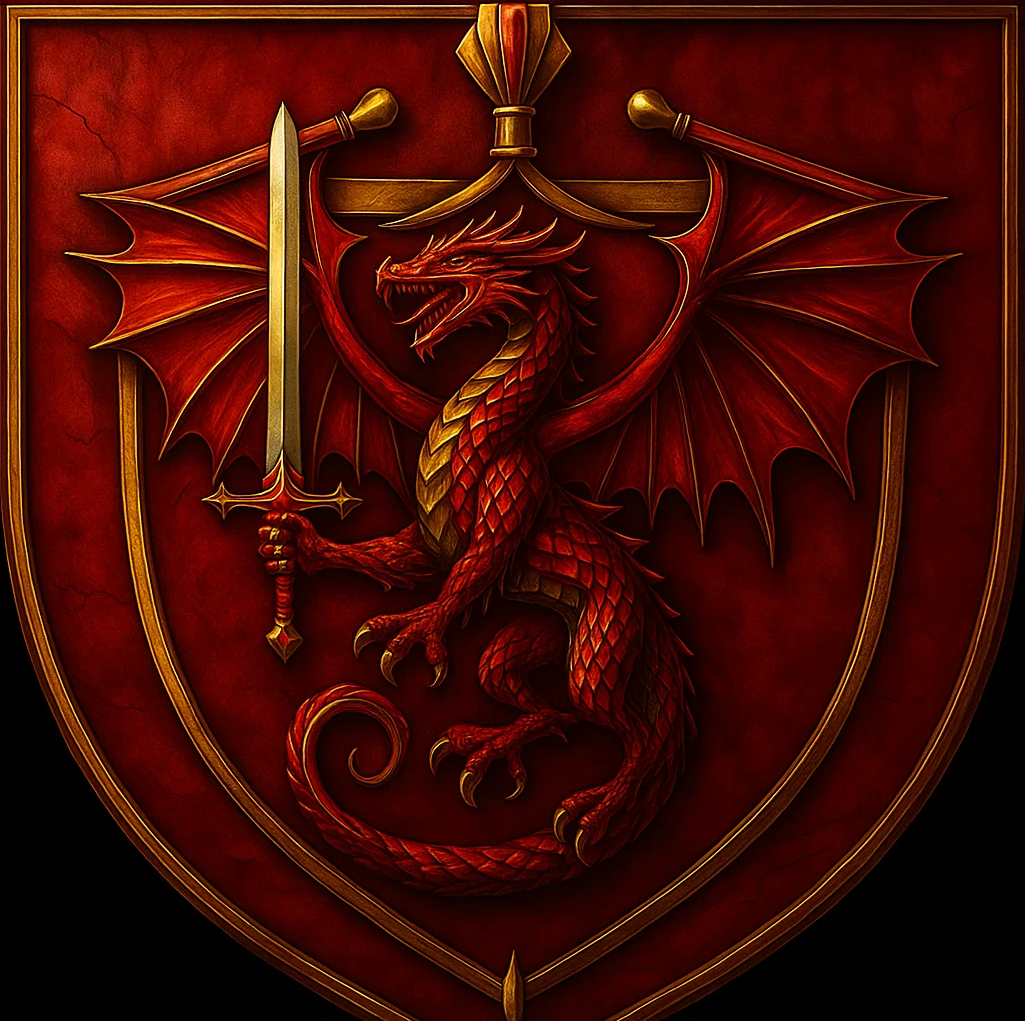

Long before the Drak'Thul people came to the land, the Dwarves ruled a mighty kingdom known as Kharaz'Drak. The dwarves, known for their mastery of stone, metal, and magic, established a vast empire within the Kharaz'Khaz Mountains, which stretched across the fertile plains of what then was called Firaxain and the magical ley lines that powered their great forges. Kharaz'Drak was a civilization built on craftsmanship, industry, and a deep connection to the earth, with towering mountain citadels, vast underground halls, and deep tunnels carved into the very bones of the land.
Their kingdom was a beacon of prosperity, with thriving forests, bountiful rivers, and mines filled with precious metals, gems, and magical ores. Artisans and rune-masters forged weapons of unimaginable power, and magical constructs powered their city-states and strongholds. Their devotion to fire, stone, and metal was near-religious, and their connection to the natural world was both spiritual and pragmatic.
The Cataclysm: The Fall of Kharaz'Drak
But this mighty kingdom fell not to an enemy's army, but to a dark and malevolent force that arose from deep beneath the earth. What was once thought to be a deep, well-guarded cavern, a source of magical power, became the doom of the dwarven people. An ancient evil, long sealed away beneath the mountains, awakened, something older than the dwarves themselves, a dark force tied to fire, stone, and chaos.
Many of the dwarven lorekeepers speak in whispers of the Demon of the Deep, a Ballrog, or possibly a Greater Demon of Fire, whose arrival shattered the foundations of the dwarven kingdom. This demonic entity was not merely a creature of darkness, but one of primordial evil that thrived on destruction and chaos. It was said that the dwarves, in their pride and hunger for greater power, had unknowingly disturbed an ancient curse, one that would bring ruin to their civilization.
As the Demon of the Deep awakened, it released an inferno of magma and flame from deep within the mountains, consuming entire cities in seconds. Lands once fertile became barren and lifeless, and the great forges, which had once powered the dwarves' cities, became instruments of destruction, turning the very stones against the people who had shaped them. Lava flooded the cities, and terrifying earthquakes shattered the very mountains themselves, making it impossible to escape the oncoming storm.
The Fall of the Dwarven Kingdom
In the wake of this cataclysmic destruction, the dwarves fought desperately to contain the evil that had awoken beneath their feet. Great battles were waged in the darkest halls of the mountains, but the Demon of the Deep proved too powerful. It corrupted the very earth, turning it against the dwarves, and unleashed a demonic horde of fiery servants and twisted creatures, consuming what was left of the dwarven resistance.
The Kingdom of Kharaz'Drak, once the pride of the dwarven race, was reduced to ruins. The ancient cities were either scorched to ash or buried beneath molten stone, and the mighty dwarven citadels crumbled into the earth. The Sons of the Forge, the elite dwarven warriors, fought to the last, but even they could not hold back the darkness that had been unleashed.
In the end, the Dwarves were either wiped out or driven into exile. The Great Forge that had once been the heart of their civilization was swallowed by lava, and their runes and craftsmanship were lost to the flames of destruction. The demonic forces, led by the Ballrog, tore through the mountains, leaving nothing but ruins and death behind.
The Aftermath: A Kingdom Lost
By the time the Draconians arrived on the land of Drak'Thul, the Dwarves were already gone. The once-great kingdom was now nothing more than a forgotten ruin, scattered across the land, with only ancient, scorched cities and collapsed fortresses remaining to tell the tale of the dwarves' fall. The Demon of the Deep was never fully eradicated, and some say its power lingers beneath the mountains, still waiting for the right moment to return.
The Draconians, in their quest for a new home, found the land of Drak'Thul scarred by the aftermath of the dwarves' fall. The deserts, volcanic wastelands, and smoldering ruins that littered the continent were all that remained of the dwarves' once-mighty empire. The fire and stone that had been their life force now lay in ruins, twisted and corrupted by the evil that had once lain dormant beneath the earth.
The Legacy of Kharaz'Drak
Though the dwarves were gone, their legacy still endures in the land of Drak'Thul. Their craftsmanship, runes, and magical artifacts remain hidden beneath the earth, waiting to be discovered by those brave enough to seek them. Ancient dwarven forges are said to still burn beneath the volcanic mountains, guarded by the spirit of the earth and the lingering influence of the Demon of the Deep.
The ruins of Kharaz'Drak are scattered across the land, places of darkness and mystery, where adventurers and treasure hunters dare to explore in hopes of discovering lost dwarven relics. However, these ruins are not always welcoming, as the curse of the Demon still lingers in the land, and those who venture too deeply into the mountains often find themselves consumed by the very evil that brought about the dwarves' destruction.
Some believe that the dwarves' greatest secret, a magical artifact capable of controlling the elements or even undoing the cataclysm, still lies hidden in the depths of the mountains, awaiting a new wielder to reclaim the power of the dwarven empire.
History of Drak`Thul
In the shadow of ancient stars and the echoes of a world long lost, the Kingdom of Drak'Thul rose from the ashes of divine betrayal and draconic tyranny. It is a land forged not by the hands of men or elves, but by the claws and breath of the Draconians, dragon-blooded beings born of fire, magic, and war. No other race walks its sacred soil. No outsider calls its cities home. Drak'Thul is a kingdom of dragons' children, and its legacy is carved into obsidian cliffs, sung in the roar of battle, and whispered in the breath of flame.
Long ago, in the Before World, the Draconians were not free. They were created, twisted into being by the cruel will of chromatic dragons and their dark priests. Born from corrupted dragon eggs, each Draconian carried the essence of their progenitor; fire, lightning, poison, cold, acid. They were bred for war, shaped for obedience, and cast into endless conflict. The earliest among them, the Proto-Draconians, were flawed, malformed, and often discarded. Yet even in their imperfection, they bore the spark of something greater.
The Sundering changed everything. A divine cataclysm shattered the Before World, tearing apart the heavens and scattering the remnants of civilization across the void. Amid the chaos, the Draconians escaped their bondage. Cast adrift, they found themselves upon a new world, Otara, a land untouched by their former masters, rich in mystery and promise. Here, they shed the name given to them by dragons and took up a new mantle: the Drak'Thullan, the Children of the Dragon's Flame.
The Drak'Thullan were not unified at first. They were scattered, broken, and burdened by the weight of their past. But the fire of their blood would not be extinguished. In the ruins of ancient dwarven cities and the bones of forgotten empires, they began to rebuild. Clans formed around shared ancestry and breath, each honoring the legacy of their draconic origin. The Purebloods, those born from the original fifteen dragon types, were revered as nobility, their traits seen as divine gifts. The Viraem, born of intermingled bloodlines, made up the majority, emulating the Purebloods in culture and discipline.
It was King Thorvak Flamebinder, a Bozak of unmatched valor and wisdom, who first united the clans. His vision was clear: a kingdom not of slaves, but of sovereigns. Under his leadership, the Drak'Thullan forged a society rooted in honor, tradition, and martial excellence. Clan loyalty became sacred. Every Drak'Thullan bore the weight of their ancestors' deeds, and every action reflected upon their lineage. To dishonor one's clan was to dishonor the kingdom itself.
The monarchy, descended from Thorvak's line, rules from the volcanic heart of Voraxith, the capital city of the territory known as Voraxither. Here, obsidian towers rise like dragon spines from the earth, and the Dragonspire Citadel watches over the land with eternal vigilance. The Flamebinder Keep, a fortress of gold-veined stone and ancient runes, houses the royal family and the Arcane Court, a council of sorcerers and warlords drawn from the Pureblood clans.
Beyond Voraxither, the kingdom stretches across eight other territories, each shaped by the breath and blood of its people. Zargta, with its obsidian cliffs and iron forges, is home to the Hammerborn Clan, whose weapons are said to sing with the voice of dragons. Firaxain, the golden valley, feeds the kingdom and nurtures its diplomats and philosophers. Xavolthir, cloaked in moonlit groves, is the cradle of magic and ancestral communion. Bvaskil, the desert wastes, breeds stealth and survival, its warriors striking from shadow and mist. Tyroxthul, the storm peaks, trains siege masters and lightning-wielding champions. Orakzorn, the firelands, burns with molten fury, its people crafting armor in the heart of volcanoes.
Each territory is ruled by its own clan chief, yet all swear fealty to the monarch. The Elder Council, composed of the wisest and most honored among the clans, advises the throne and settles disputes. Though the monarchy holds supreme authority, it is the strength of the clans that sustains the kingdom.
The Drak'Thullan are not merely warriors. They are artisans, philosophers, and priests. Their craftsmanship rivals that of the dwarves, their wyrmscale and elderscale armors prized across the world. Their weapons, forged from bone and rock, are not only tools of war but symbols of honor. Their art, though bold and functional, carries the soul of dragons, scales, claws, and elemental fury etched into every blade and shield.
Religion flows through Drak'Thul like magma beneath the earth. Most revere Moranthus, the Platinum Flame, a deity of justice, mercy, and light. His paladins and clerics walk the land as beacons of hope and discipline. Others still worship Tiamat or Styphon, clinging to the old ways or seeking power through darker paths. A rare few follow Zandragal's Children, a neutral sect that sees all dragon gods as facets of a single divine truth. In the wilderness, animistic traditions endure, honoring the spirits of ancient dragons and the breath of the world itself.
The Drak'Thullan do not forget their past, but they do not dwell in it. They speak little of the Before World, preferring to look forward. Otara is their home now, and its soil is sacred. They have met other dragon-blooded beings, Dragonborn, but find them strange and distant, lacking wings and tails, and rejecting the legacy of True Dragons. The Drak'Thullan respect strength, but they revere heritage. To them, the blood of dragons is not a curse, it is a covenant.
In battle, the Drak'Thullan are unmatched. Each subrace brings its own fury to the field. The Adamaaz strike from shadows, their fire breath igniting the night. The Aurak weave spells and psionics, dominating minds and bending reality. The Bozak lead with lightning and strategy, their bolts tearing through enemy lines. The Ferak charge with brutal force, their jagged blades soaked in blood. The Kapak assassinate with venom and silence, while their sisters heal with sacred saliva. The Sivak shift shape and blend into the world, scouts and spies without equal. The Viraem, though common, fight with the pride of kings, their fire breath a testament to their resilience.
Every Drak'Thullan is trained from youth. By fifteen, they are warriors. By four hundred, they seek death in battle, preferring a glorious end to the slow decay of age. Their lives are short by choice, but their legacies endure. Their names, Drakus Flameclaw, Sylara Frostheart, Tharok Bloodwing, are etched into the stones of their cities and the hearts of their kin.
Today, the Kingdom of Drak'Thul stands strong, but not unchallenged. The memory of the True Dragons lingers. The cults of Tiamat stir in the shadows. The clans, though united, harbor rivalries. And beyond the borders, empires covet the power of dragon blood. Yet the Drak'Thullan endure. They are the flame that will not die, the roar that echoes across mountains, the children of dragons who chose freedom over servitude.
Their kingdom is not just a place, it is a legacy. And that legacy burns eternal.
The Kingdom of Drak'Thul, forged in the fires of draconic legacy, is divided into nine powerful territories, each ruled by its own clan and centered around a regional capital. At the heart of the realm lies Voraxither, the first territory to be formed after the unification of the clans. Its capital, Voraxith, is the seat of the monarchy and the spiritual and political center of the kingdom.
Draconian Population Breakdown (Total: 9,310,000):
- Bozak: 67,188 (0.72%)
- Aurak: 63,410 (0.68%)
- Sivak: 44,452 (0.48%)
- Marun: 45,905 (0.49%)
- Maugh: 38,944 (0.42%)
- Kapak: 38,157 (0.41%)
- Kobaaz: 34,320 (0.37%)
- Ferak: 30,797 (0.33%)
- Adamaaz: 21,125 (0.23%)
- Baaz: 22,038 (0.24%)
- Bahor: 20,932 (0.22%)
- Turak: 17,016 (0.18%)
- Uxin: 15,519 (0.17%)
- Sesk: 10,177 (0.11%)
- Tragg: 11,824 (0.13%)
- Viraem: 8,786,396 (94.36%)
The Current Political Landscape
The Regions of Drak`Thul
| |||||
|